
Guatemala accumulates decades of lag in infrastructure and mobilitysays Jorge Briz, president of the Guatemalan Chamber of Commerce; However, the announcement of the strategic projects for the metropolitan area represents an opportunity to begin to reverse this delay, as long as the works transcend the changes in administration and become permanent policies of the State, said the union representative during an interview for Free Press Radio.
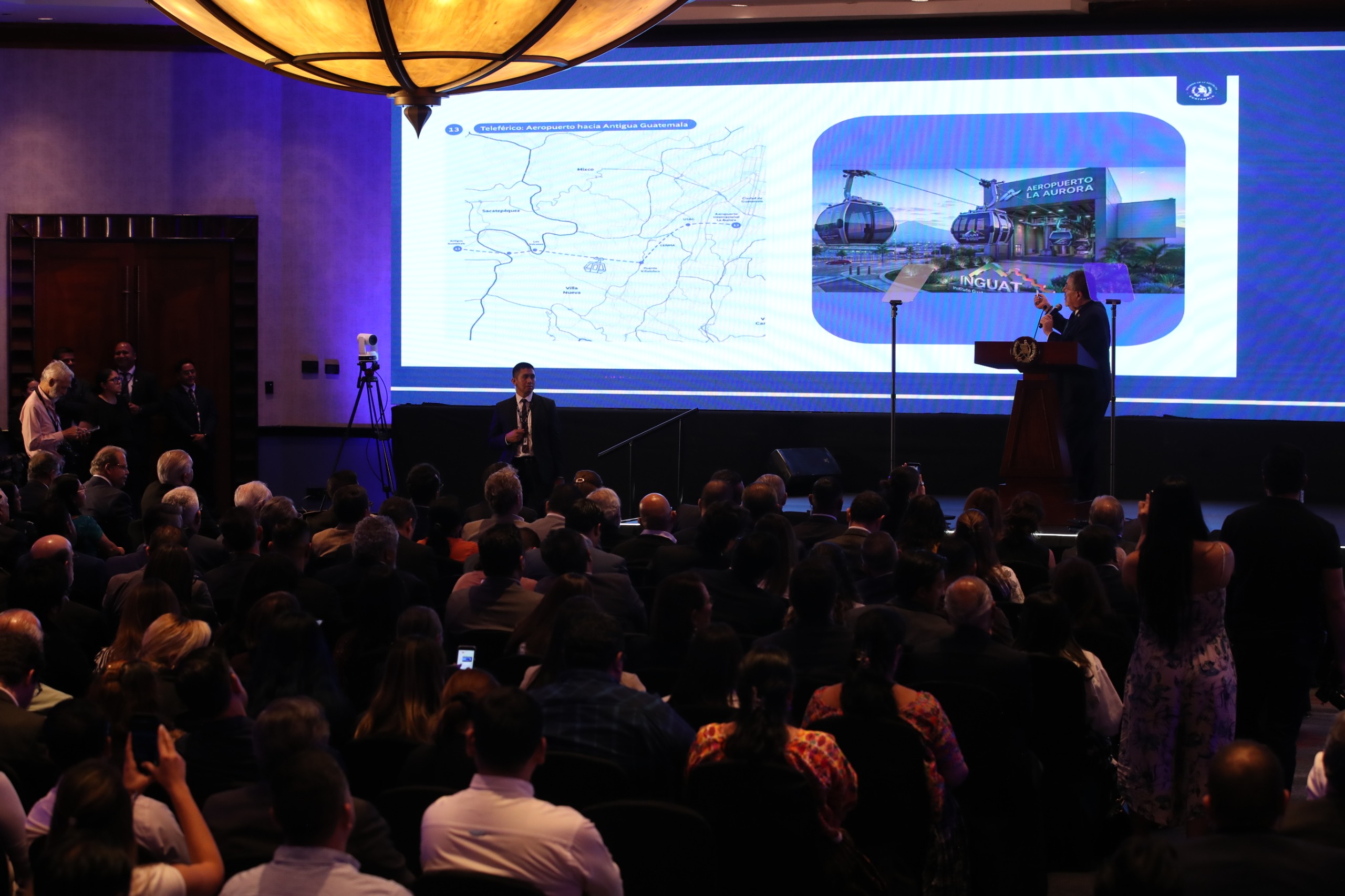
During the meeting “Guatemala is transformed”, organized by the Guatemalan Chamber of Commerce, in which the Government presented transportation and connectivity projects together with municipal authorities and Executive officials, Briz stated that the country needs to move from promises to execution and prevent investments from being left unfinished again due to political decisions.
What is your assessment of the presentation of infrastructure projects?
During the event, President Bernardo Arévalo presented 13 priority projects to modernize the metropolitan transportation system and assumed a clear commitment to execute them. Some works are already underway and others are moving forward with the signing of agreements to begin in the shortest possible time. The capital’s mayor, Ricardo Quiñónez, also presented complementary projects, so there is a more comprehensive vision on how to address the mobility problem.
What difference do you see compared to other announcements made in previous years?
The difference is that now several projects already have agreements, financing or processes initiated. As the president explained, some have international agreements, others with approved loans and several have already begun their execution. This generates a different expectation because it is not just about ideas, but about projects that are beginning to have technical and financial support.
You have said that infrastructure can no longer be seen as a government issue. Because?
Because this is already a State problem. Guatemalans waste around 54 days a year trapped in traffic and many people spend between three and four hours a day commuting. This reality affects the quality of life, reduces productivity, reduces competitiveness and also limits the time that families can share. If we don’t solve this problem, it will get worse every year.
What are the works that you consider most urgent?
All projects are important because they are designed to work in an integrated way. However, the MetroRiel could be one of the first to materialize, since progress was reported in the agreements for its development. The second phase of the Belize Bridge, which includes a second level on the Martí Causeway, and the Metropolitan Ring are also strategic, because they will allow a good part of the traffic that currently crosses the capital to be decongested.
The announced projects require million-dollar investments. How to ensure that these resources are used correctly?
The first thing is to understand that the country does have resources to develop these works. We are talking about projects that involve investments of hundreds or even billions of dollars, but we must also remember how many public resources have been lost over the years due to corruption. If these funds had been administered correctly, many of these works would already exist.
How important is it for these projects to work as a system?
It is essential. The MetroRiel, for example, includes interconnection stations and will be accompanied by the incorporation of new buses to feed the transportation system. The idea is that the different works do not function in isolation, but rather as a network that facilitates the mobility of thousands of people every day.
There are less than two years until the current government ends. Is this effort late?
I would say that we are late, but not 18 months, but about 30 years. Guatemala has been talking about these projects for decades without executing them. The important thing now is that many already have signed agreements or advanced processes and that the works begin as soon as possible. It is better to start now than to continue putting them off indefinitely.
How to prevent a change of government from stopping the works?
That is the great challenge. In Guatemala it has been common for one government to start projects and the next to abandon them. What is now being sought is to create institutional and legal mechanisms to guarantee its continuity. There must be a commitment from the Executive, the Legislature, the Judicial Branch, the municipalities and the private sector so that these investments continue, regardless of who is in power.
Do you think these projects should be part of the next electoral campaign?
They should not be used as campaign promises. What the candidates must assume is a public commitment to respect and continue this roadmap. Guatemala no longer needs more advertisements; needs the works to be executed and completed. That is what the population expects.
What role do transparency and the fight against corruption play?
They are decisive. Resources exist, but historically they have been used inefficiently. We must strengthen transparency, combat corruption and prioritize investment over operating expenses.
Is there a risk that legal actions or political decisions will delay the works again?
That risk always exists, and that is why it is important that institutions act responsibly. It would not be convenient for projects of national interest to be paralyzed by unfounded actions; legal certainty is needed.