
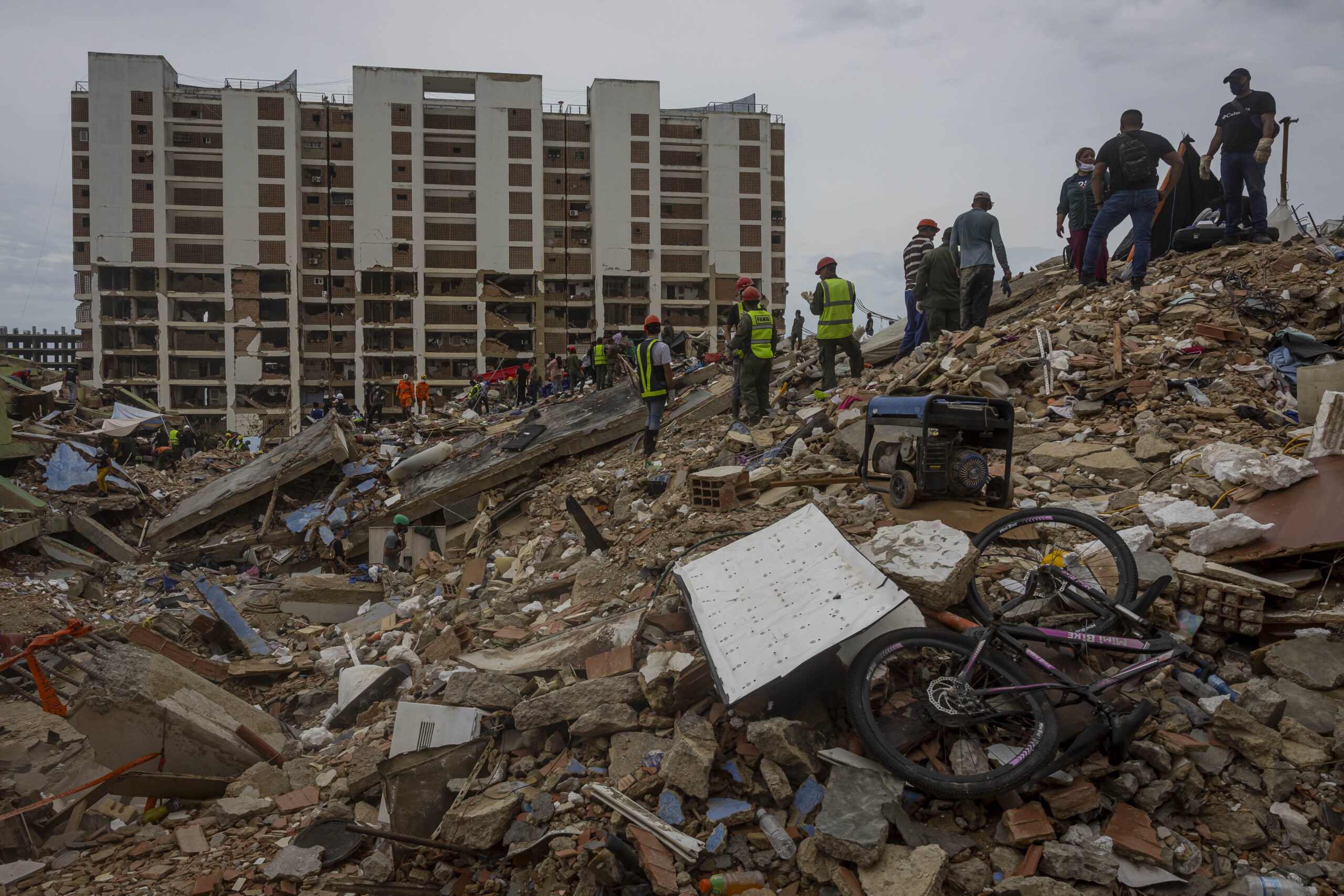
Eleven days have passed since two earthquakes affected several regions of Venezuela on June 24. The natural disaster, to date, has claimed the lives of more than 2,600 people, according to the country’s authorities.
The earthquakes have left more than 12 thousand people injured, around 15 thousand without housing and more than 86 thousand families assisted by the authorities. In addition, 189 buildings completely collapsed and hundreds more were damaged, while rescue teams managed to pull more than six thousand people alive from the rubble, according to the international news portal. D.W..
However, in the midst of the tragedy, stories of solidarity and support have also emerged in the community, such as that of Khatara Aponte, a 12-year-old girl who was rescued alive in La Guaira and who today maintains a bond of friendship with the man who helped her get out of the ruins.
This case was documented by the media N+ Univisionwho a week after the disaster visited the minor and Jhorman Piñero, the volunteer who participated in her rescue, to learn how the relief operation became a bond that both describe as part of their family.
Trapped in the rubble
Khatara was trapped under the rubble of a building in La Guaira along with her mother, who, according to the minor, urged her to run to the stairs before the structure completely collapsed. The girl managed to get down, but the debris fell on her a few steps from the exit of the building. “I had five steps left to reach the building’s gate and be able to get out,” he says.
“I wanted to close my eyes and do like my mother, not wake up,” says Aponte, since her mother did not manage to survive.
While waiting for rescue, Khatara never stopped talking. His brother, who heard his voice among the remains of the construction, guided the relief teams to the place where he was. The rescue lasted 14 hours.
Jhorman Piñero, one of the volunteers who worked to free her, said that he located the minor by the sound of her voice and that he had to repeatedly enter the rubble area to make his way to her.
According to what he said, the experience marked him to the point that today he cannot conceive of stopping accompanying her. “I can’t abandon the girl. I mean, I already believe that she is already part of my family,” he says.
Piñero explained that, after the rescue, Khatara’s grandmother told him that she had no way to pay him for what he had done, to which he responded: “No, they already paid me; it was when I arrived and the girl heard me, recognized my voice, said my name and asked me to come in.”
Currently, Khatara’s family is engaged in farming and seeking to rebuild their life with limited resources. Piñero has kept in touch with them and visits the minor in the hospital with the intention of being part of her support network during the recovery process.
A large scale tragedy
The earthquakes of June 24, with an epicenter in the states of Yaracuy and Carabobo, are considered the deadliest of the last century in Venezuela.
The United Nations (UN) estimates that there could be up to 50,000 missing people in the affected region, although the Government of Venezuela has not offered an official figure in this regard.