Almost three decades after several Latin American countries signed peace agreements or left behind dictatorships and civil wars, the question of what to do with that past remains open. The armed conflicts that marked the region during much of the 20th century did not disappear from public conversation with the signing of a document: they transformed into disputes over memory, truth and justice that continue to define, to this day, the relationship between States and their citizens.
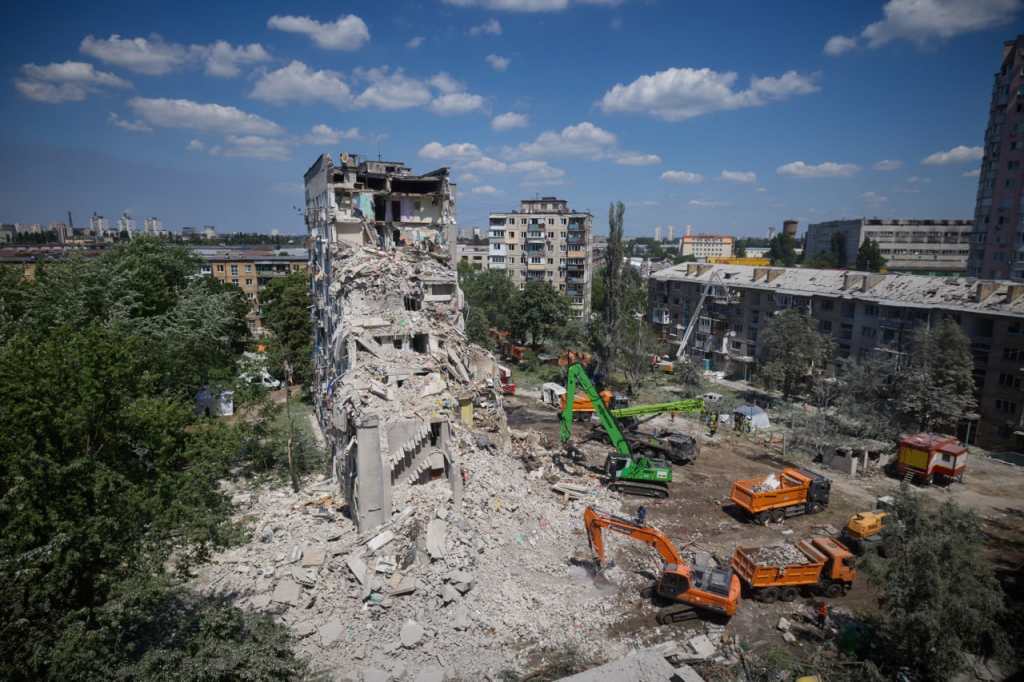
At the same time, the signing of a peace agreement does not always mean the end of violence. In different countries in the region, new forms of conflict have emerged, led by fragmented armed groups that no longer seek to take political power, but rather to control territories, illegal economies and entire populations.
Added to this are phenomena such as misinformation on social networks, political polarization and the use of technologies such as drones, which have changed the way in which armed and also symbolic disputes are fought.
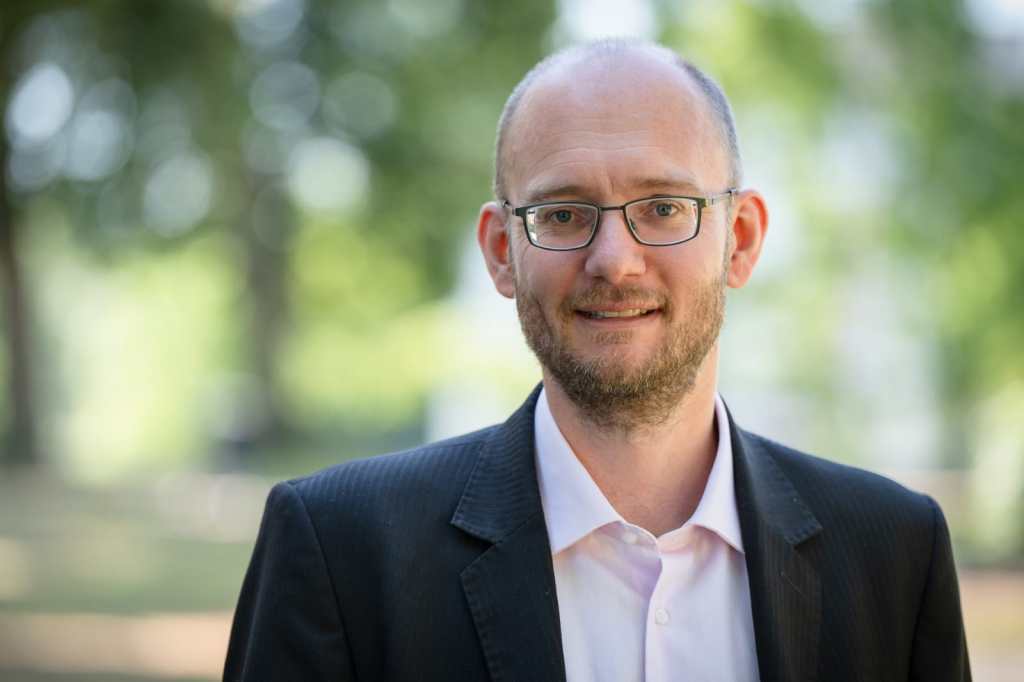
Understanding these dynamics, and the conditions that allow a country to build lasting peace, is the focus of the conversation with German political scientist Stefan Peters, a researcher who has studied these processes in Latin America.
Why does the memory of conflicts continue to be a field of political dispute decades after peace agreements have been signed or democracies have been recovered?
Memories are always plural in all societies, because they have a lot to do with perceptions and perspectives about what has happened. Many times we think that memory has only to do with the past, and of course it has to do with the past, but also with the situation in the present and with our perspective towards the future. We say “never again”, something that is repeated in Guatemala, in Germany, in Argentina and in many other places, but the big question is never again what. What do we want to remember so that it is not repeated, and that is something that many times we do not want to thematize. In societies, especially after violent and traumatic pasts, that question is in dispute in the present, with different levels depending on the country.
The disputes are not the same in all cases; Sometimes there is certain consensus, but those consensus always remain fragile. Sometimes we think that we have faced the past, but I believe that it is a task that we can never consider accomplished, because new generations or new events arrive that make us look at the past with different nuances. New debates may arise, or evidence may appear that calls into question things we took for granted, and there are also often disputes about interpretation.
Many countries manage to end a war, but do not necessarily build a lasting peace. What are the minimum conditions for a country to be able to leave a conflict behind without continuing to reproduce its causes?
The first thing we have learned is that there are no one-size-fits-all answers: we have to look at the particularities of each context.
What I do believe is needed, first of all, is memory, but also truth, justice and, probably, reparations. In peace and conflict studies, and also in practice, there is a lot of talk about guarantees of non-repetition, although it makes me uncomfortable to talk about guarantees, because unfortunately we do not have them: we can do it very well and there can still be a repetition of violent acts. What we can look for is to reduce the probability of that happening.
Another issue is the structural factors linked to the causes of conflicts, wars, and violence. With this I am not saying that they are justified, but we need to understand why one, two or several groups decided to take up arms in a civil war. This does not imply that their reasons were correct, but we do have to analyze what problems exist within a country: they may be strong inequalities in land ownership, lack of political participation or corruption that prevents things from changing. That depends a lot on the country and the context.
We need to understand the causes of violence and find a way to create not only agreements—which are very important—but also address what comes next: implementation, structural changes and, to a certain extent, changes in mentality, which is probably the most difficult thing to work on, which occurs in the medium and long term, but no less important.
You participated in research on the concept of “violent peace.” How would you explain this term and what signs allow you to identify that a country is experiencing peace only in appearance?
By violent peace I mean a situation in which there is a peace process in place, with an agreement that is being implemented—sometimes faster, sometimes less—but that fails to reduce violence in all parts of the country.
In some parts of Central America, after the peace agreements, there were situations of much more organized violence, but coming from other types of groups, such as gangs.
This phenomenon generates a paradox: a country is in a peace process and, at the same time, the security situation of the population does not necessarily improve. This has several effects: on the one hand, the violence itself, and on the other, the disenchantment of sectors of the population with the peace process itself. Many times, behind this disenchantment, is the fact that the structural causes have not been addressed; hence the importance of attention from public policy.
Although many armed conflicts have decreased, are we facing new forms of conflict that require other ways of building peace?
First of all, it must be said that the conflicts have been transformed. For a long time, in international relations and peace studies, we looked at how many war planes or tanks one country had against another, how many missiles, in conflicts between two States. I’m not saying that that’s not important to have an idea of military power, but now drones, relatively cheap, much more than a war tank, totally change the way those wars are fought. And not only that: public opinion, through social networks and so-called bots, has also become a terrain of dispute, with attempts to misinform, sow fear and hatred, or even attack infrastructure such as electricity or the internet itself. We are much more connected, but we are also more vulnerable.
“We are much more connected, but we are also more vulnerable”
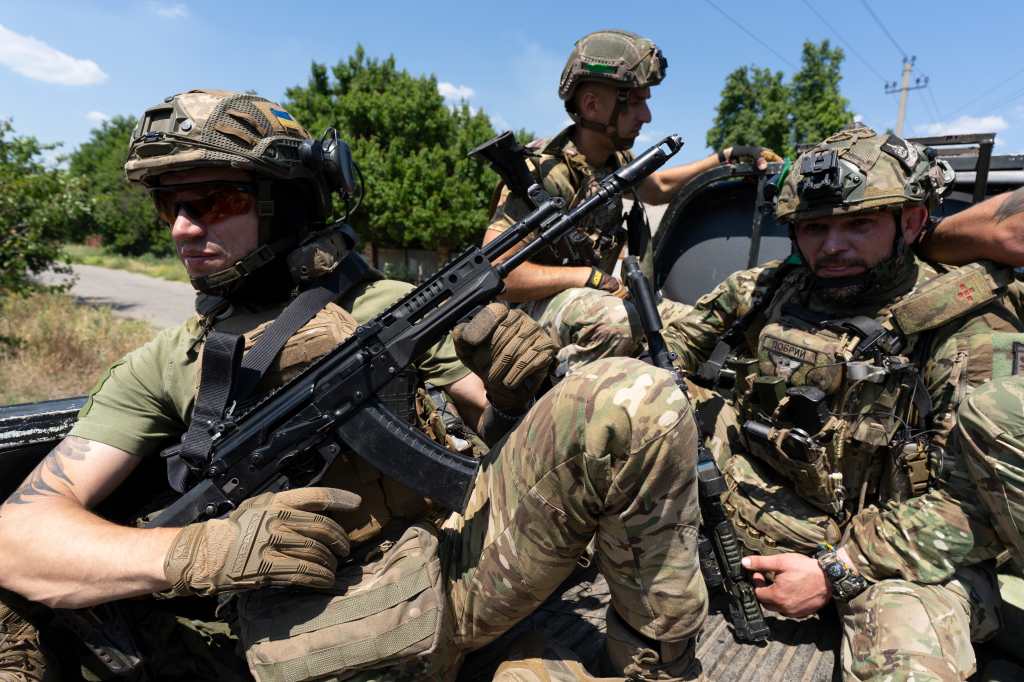
If we look at certain internal conflicts, and I know this more from Latin America, for a long time we understood them as the dispute to seize power through weapons. Today we see that many armed groups are much more fragmented—think of the urban violence observed in different parts of the region—and that they do not necessarily seek to take power or change the government. They seek control of certain territories, neighborhoods or corridors, which allows them to make money through extortion, drug trafficking, illegal mining or human trafficking.
The responses that have been given have not been very successful. One has been the construction of giant prisons, where many people are locked up, sometimes without due process or the corresponding guarantees, in inhumane conditions and with consequences from which they will never be able to escape; There the State itself ends up violating human rights, that is, the problem is attacked by becoming part of the monster.
Another difficulty is that the most classic military strategies do not work well because it is often not clear who is a combatant and who is not. And in negotiations we tend to think that the interest of these groups is more ideological in the traditional sense, but a group that controls an entire neighborhood is also political: it decides when you can go out, how you can dress or what you can say. It is a different type of politics than we usually imagine, but it is still politics.
New forms of dialogue and negotiation are needed to dismantle these structures, preventing others from appearing to occupy that same space when an agreement is reached with one group.
In societies like Guatemala, a false dilemma often arises between memory, justice and reconciliation. Is it possible to achieve national reconciliation without truth or recognition of the victims?
I don’t know much about the Guatemalan case in particular, although I have read about it and have exchanged with some colleagues who work more closely on the subject. That said, I believe that reconciliation without recognition and without truth is very difficult, almost impossible, because it would lack one of its basic points: it is difficult for those who exercised violence to ask for reconciliation from the victims without contributing to the truth, without recognizing their pain. And understanding the pain of the other requires empathy, something that in contexts of armed conflict tends to be lost very quickly, while images of hate or discredit towards the other are built.
“A reconciliation without recognition and without truth is very difficult, almost impossible“
These images are created quickly—not only in Guatemala; Something similar happened in the Rwandan genocide, where they spread very quickly through the media—but dismantling them, especially when they have also been strengthened by violence, is much more difficult and usually takes decades. Nor is it something that happens without work: an Argentine colleague, Elizabeth Jelin, always talks about the work of memory, something that does not fall from the sky. There is a responsibility of the State, without a doubt, but the State cannot decree that society recognize what happened either; That is a job for the entire society, with all its complexities and internal disputes, although it is essential to reach reconciliation.
Stefan Peters in Guatemala
The German academic will be part of the XXIII International Book Fair in Guatemala (Filgua), and will also visit two universities in the country to meet with students from the different institutions.
On Saturday the 11th, at 5 p.m., he will participate in the talk “Between memory and oblivion: controversies around the past in Latin America.” A panel that he will share with Otilia Lux and Sabine Eismann, from the German Embassy.
On Sunday the 12th, at 6 p.m., he joins the round table “From the idea to the publication, creation and dissemination of scientific knowledge in Latin America.”
On Monday he will visit the Universidad del Valle de Guatemala and the Rafael Landívar University, where he will hold meetings with students and researchers.
Stefan Peters
German political scientist, specialist in peace processes, transitional justice and historical memory in Latin America.
*Academic director of the Colombo-German Institute for Peace (CAPAZ) since 2018
*Doctor summa cum laude in Political Science from the Universität Kassel (2012)
*Professor of International Relations and Peace Studies at the Justus-Liebig-Universität Gießen
*Visiting professor at universities in Colombia, Argentina, Cuba, Puerto Rico and South Africa
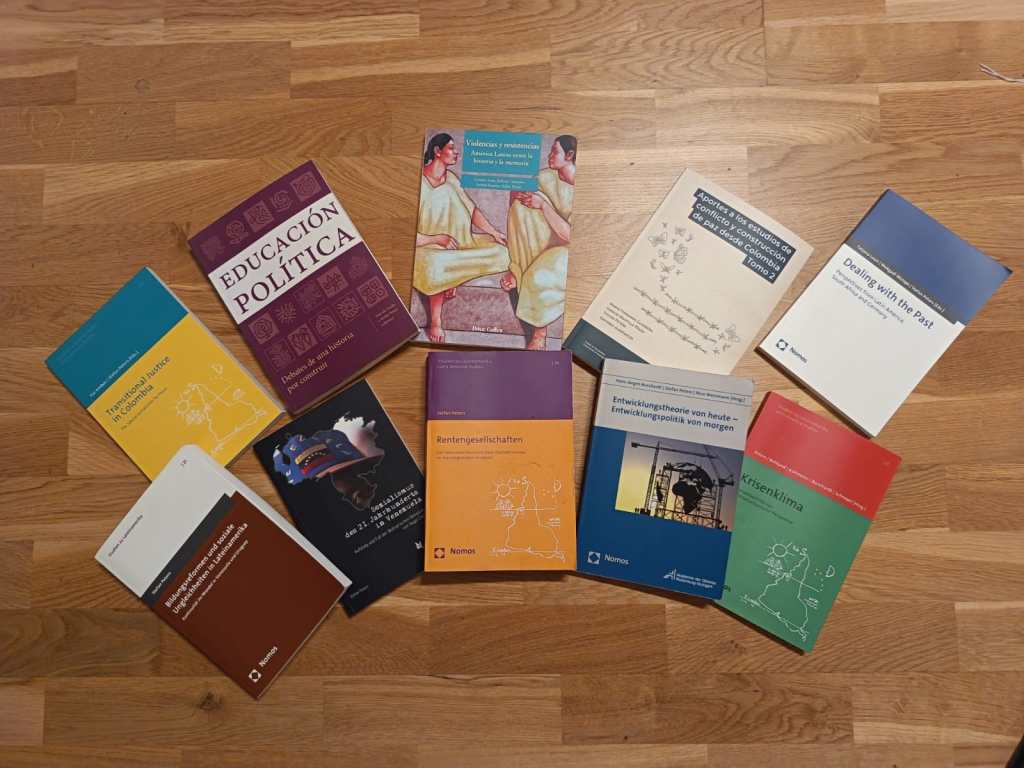
*Author and editor of more than 20 books on memory, extractivism, inequality and peacebuilding