
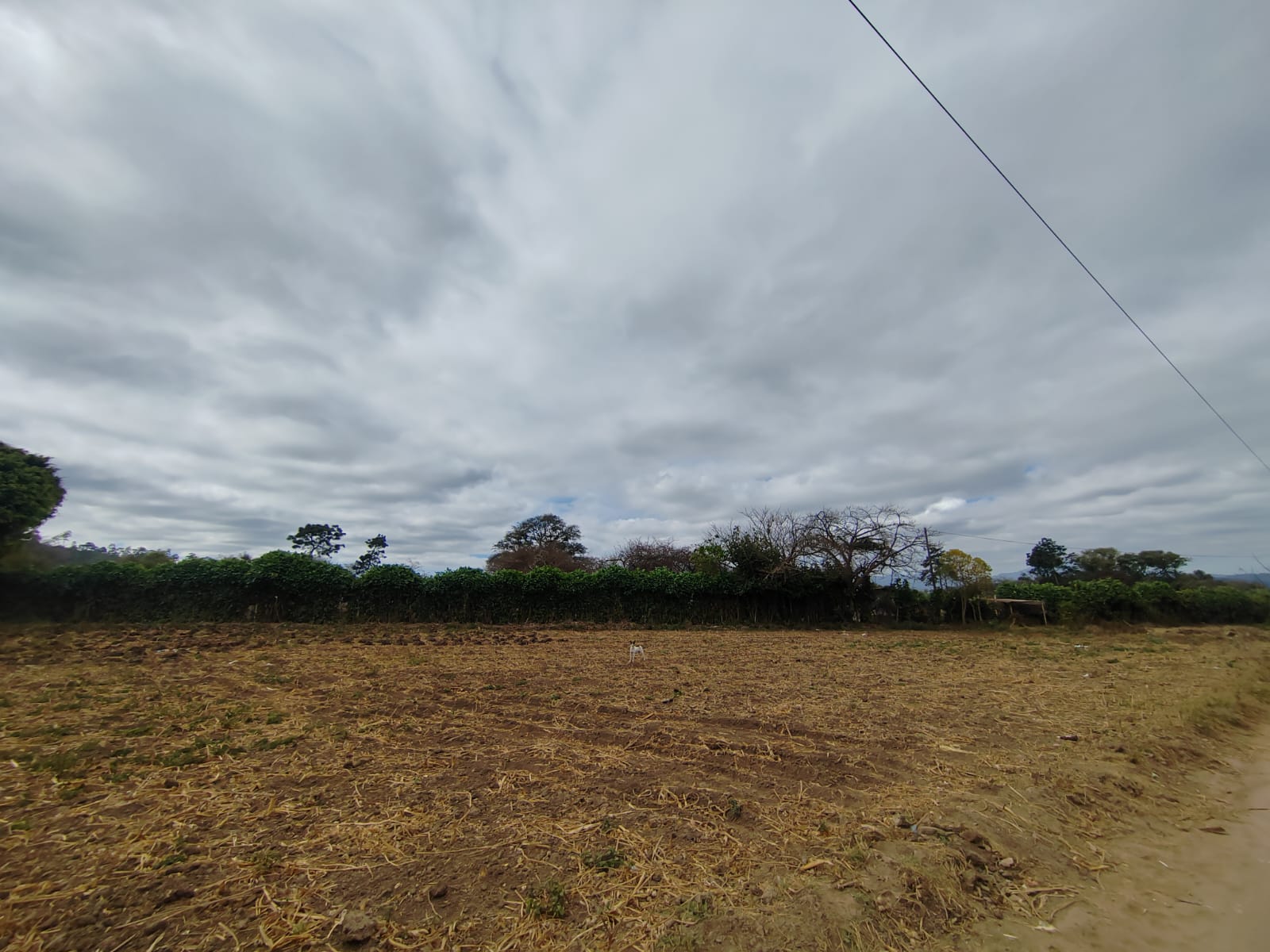
Guatemala faces the risk of a food crisis due to a water deficit and extreme temperatures that threaten the production of basic grains, due to an unusually prolonged heat wave and the impact of the El Niño phenomenon in Central America, reported authorities from the Ministry of Agriculture, Livestock and Food (MAGA).
The dog days are the period of the year in which the highest temperatures are recorded. It is characterized by extreme heat, decreased rainfall and clear skies.
The director of Geographic, Strategic Information and Risk Management (Digegr) of MAGA, Rafael López, explained that the lack of rain recorded since May has left the country’s soils in a critical situation.
He added that Guatemala is just beginning the heatwave period, the duration of which could put food security at risk by extending longer than usual.
“The most worrying thing for this year is that it has the characteristic of being a prolonged heat wave. We are talking about a heat wave lasting more than 40 to 42 days or a little more,” the official explained.
He specified that the combination of lack of water and extreme heat will cause severe plant stress in crops.
Added to this situation is the consolidation of the El Niño phenomenon, whose probability of occurrence exceeds 98%, which will raise temperatures above 35 degrees Celsius in different regions of the country.
“We can have the case of loss of germination, that yellowish color change in plants, which is chlorosis, or slow growth and abortion in grains that can also occur,” López explained.
The official indicated that, although the Ministry monitors 119 categories of crops, the priority is to protect corn and beans, as they are the basis of Guatemalans’ diet.
So far, the first effects are already observed in Izabal, Huehuetenango and Alotenango, Sacatepéquez.
Against this backdrop, López reported that Digegr evaluated the country’s 340 municipalities through an analysis of the records of agricultural damage, droughts and floods accumulated between 2015 and 2025.
The mathematical model determined that 123 municipalities have very high vulnerability; 129, high, and 88, medium vulnerability.
Precision agriculture and strategic reserve
To reduce the impact, MAGA uses satellite images, geographic information systems and drones to survey agricultural areas.
According to López, these tools allow us to analyze information and issue technical bulletins of recommendations twice a week.
“Digital agriculture demonstrates how valuable it is to move from intuition to precision agriculture. Having data, having evidence does allow us to be able to put the technological contribution on the table so that our recommendations are also precise,” he stated.
The official confirmed that the Ministry executes anticipatory measures with its own resources, in coordination with the National Coordinator for Disaster Reduction (Conred).
“We are preparing the strategic food reserve. We are talking about agricultural insurance issues to be able to consider the areas of the country that are vulnerable to the issue, among others,” he concluded.
*Stay up to date with the Now newsletter. Key information at the moment it happens. Subscribe here.