
In this interview with Prensa Libre, President of the IDB Group, Ilan Goldfajn, addresses the international organization’s plans to boost growth, the role of private investment and expectations for the next IDB Annual Meeting, which will be held in Guatemala.
He explained that the IDB Group expects to contribute US$3 billion in Guatemala between 2026 and 2028, which would include loans or attraction of investments, both from the public arm such as the IDB, as well as its arms for the private sector, IDB Invest and IDB Lab. The entity plans to approve two loans in 2026 for a total of US$350 million.
Apart from investment in projects, he said that the aim is to finance actions to create enabling conditions for investment, such as the creation, reform or development of various laws and programs, which would be important to obtain an investment grade from rating firms.
What expectations are there from the IDB Annual Meeting in Guatemala?
Much private investment is considered at the Annual Meeting. There are four thousand people (the possible participants), almost half are business leaders and the private sector. Last year, at the annual meeting in Paraguay, 400 CEOs came. The CEO is the top leader of an organization, the one who helps say whether they will have investments or not. In addition, we had more than 700 people who were responsible for finances, responsible for operations, responsible for risk; then they are the leaders of the company.
They are people who decide where they are going to invest and have interests in Latin America, and when we have annual meetings they meet with each other, they meet with the governments, with the minister, and sometimes they ask the president for an appointment when they are large investment projects. They look at the country where they are; Many times they go to visit projects that we are doing.
What type of projects are you referring to?
Many energy projects, renewable energy, transmission, infrastructure projects, transportation, where they really like to come to work with the IDB, because we take care of a responsible investment, that is adapted to a changing world in terms of climate, disasters, that is infrastructure that is friendly to the communities, and in the case of Guatemala, with the indigenous communities as well.
We have people who are also going to invest in export-related sectors, such as textiles, food and others.
Are these potential investors going to participate in the assembly or are they the ideas that the IDB has to attract investment?
They are people who come. For example, today (last Thursday) we are going to have a round table with the private sector, with business leaders, where we are going to ask them where they are going to invest, what they need to invest, what are the restrictions they have and what are the things that we can help with at the IDB.
What does the agreement with Canada consist of and what benefits would Guatemala have with it?
What we are signing with them is a novelty: it is US$200 million canada guarantees. It means that when loans us, they are guarantors of the loan. That is, the US$200 million that they give us as a guarantee will allow us to invest and finance US$1 billion throughout the region. One of the areas where they are most interested, and so are we, is investing in resilience, in climate and disaster preparedness. It is something that Canada is interested in and Guatemala is a place where a lot of work is being done on it.
CONTENT FOR SUBSCRIBERS
What investments in general are planned for Guatemala?
For Guatemala, what we are thinking about is having financing from the IDB Group, which includes the public IDB, as well as the IDB Invest, which is the private side, and the IDB Lab, which is smaller and deals more with small startups (undertakings), and together we believe that we can work with US$1 billion per year in Guatemala and that the vast majority will be through the private sector.
We are thinking about it over three years, which means US$3 billion, between the private sector and the public sector, until our country strategy with Guatemala is completed, which includes 2026, 2027 and 2028.
What sectors would it be for? Does it include those you already mentioned?
Exactly. Furthermore, in the case of the public IDB we are talking about helping the country also with what we call enabling conditions for investment. They are laws that help you generate the conditions to have more investment, such as the investment law that is being considered for the country, or in the public sector you can think of the contracting law or the public investment law, which is more of the government. Another that is important is the money laundering law.
If we work the laws well, it is possible that Guatemala can reach investment grade. When a country reaches investment grade, its cost of borrowing drops and, therefore, it can invest much more, grow much more and generate more employment.
Additionally, with the money laundering law, you can avoid being put on the FATF list. I have worked with countries that were on the list, like Panama, and it took a long time for them to get out, and I worked in Brazil so that it did not enter the black list.
We help technically, but we also give loans. There is one called PBL policy loan (policy-based or political reform support loans).
We are working on a PBL of US$250 million for Guatemala, which has as a counterpart laws like the ones I mentioned.
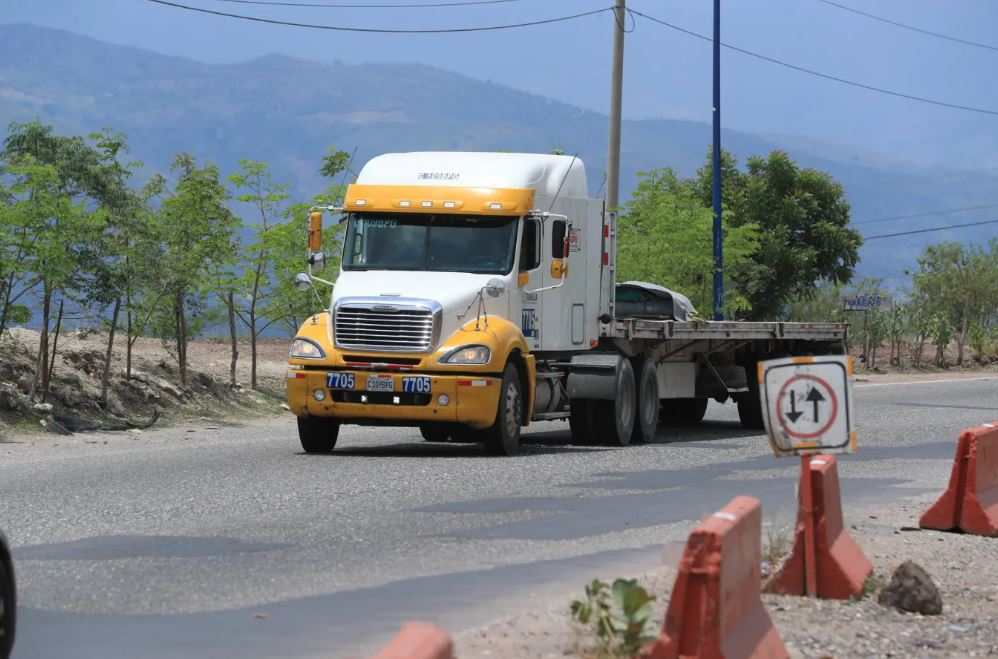
Also in an investment loan of US$100 million, with a local counterpart, which is for security at border points and foreign trade. It has to do with the security of cargo, how you can export and transport it on roads safely and how to improve foreign trade.
We are going to approve these this year at the IDB. We still have to work on the US$100 million one to see how we handle it.
The IDB Group is also willing to accompany the expansion and modernization project of Puerto Quetzal, due to its importance for the country and regional integration.
What is the IDB loan portfolio with Guatemala?
Currently, there are US$1,463 million of the IDB portfolio already approved for Guatemala by our board, in different degrees of execution. Around 80% of this portfolio is with a sovereign guarantee, through the public window with which the IDB comes to support the infrastructure sector, both in the energy and water and sanitation segments, and of course in road infrastructure, transportation, education, health, justice and rural development.
But in large numbers, adding the public and private windows, each year it is US$1 billion.
What does Guatemala have to do to attract more investment?
On the one hand, change the conditions for investing. If you put together all the laws we are talking about—investment, money laundering, the stock market, the modernization of the State with hiring policies—and reach an investment grade, you will be able to attract more investment in the country.
On the other hand, we have to work with the CEOs, with the companies, to see what they need. Sometimes they do not have long-term financing and the IDB can lend, but it can also bring in partners who lend long-term, as in the case of Canada.
The macroeconomy in Guatemala is recognized as very stable, but there are still gaps in development and infrastructure issues. How do you see it and what should Guatemala do?
It is important to recognize stability, resilience. It is a country where inflation is low, it is within the range of the Central Bank. A country that does not have a balance of payments crisis nor does it have a fiscal problem, a country that is growing above 4%.
But Guatemala has a greater mission: to grow more and grow for longer, and it wants to do it because it wants to improve the lives of Guatemalans, give them more jobs and for that it needs to invest even more, and with that we return to what we talked about before setting the conditions for the private sector to invest more.
What effect are global issues of the last 2 years having on Guatemala and countries in the region, such as tariffs or the geopolitical context with the Middle East?
I see that the region has been more stable than others. We do not depend on the supply chain that comes from the war region. The impact happens to us when the price of oil rises, which can raise the price of gasoline, which can lead to higher food prices and, therefore, higher inflation. In the case of Guatemala, inflation has been quite low; It has held up very well in the face of this impact, of all the tariffs, of the entire war. So, if we think about what needs to be done, We have to work on the development gaps and the growth of more investment.