
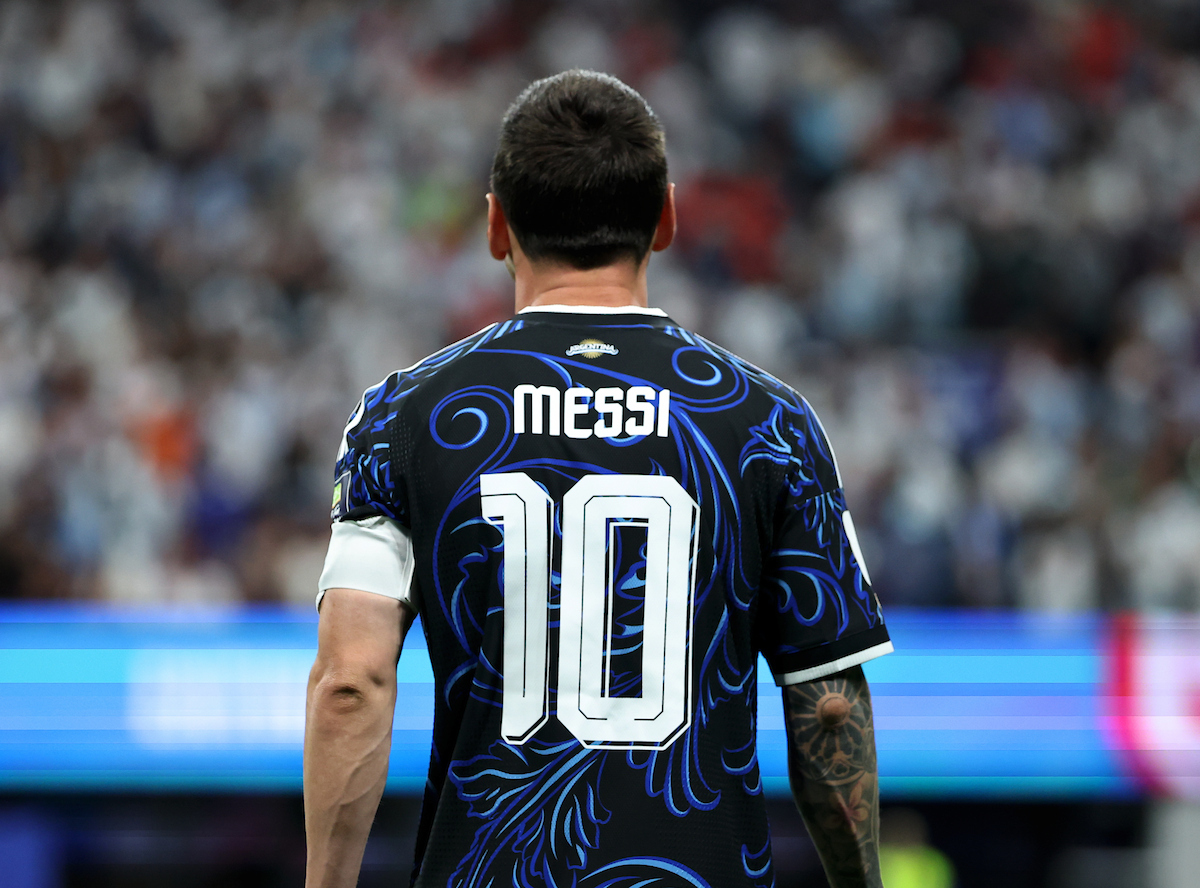
One phrase dominates the conversation after Argentina’s 2-1 victory over England: “It hurts whoever hurts and no matter what they say.”
Isolated from the rest of his statements, however, it loses some of its meaning.
Lionel Messi does not use those words to talk about his career or to respond to a particular person. He delivers them while explaining why he believes Argentina deserves recognition after reaching its second consecutive World Cup final.
Listened to from beginning to end, his interviews leave an idea that runs through all the answers: Messi talks much more about Argentina than about himself.
1. The protagonist is never Messi
Although almost all the questions revolve around his figure, Messi repeatedly diverts the focus towards the team.
It talks about “this group”, “we”, “we come” and “we get”. Even when he remembers the doubts surrounding the team before the tournament, he transfers the credit to his teammates.
“We arrived questioned, with many doubts, but I already knew that this group always competes, always gives its best and that when it is together it takes advantage of where it does not have.”
Recognition is not claimed for him. He directs it to the selection.
2. “It hurts whoever it hurts”: the defense of a process
After placing the group in the center, the phrase appears that goes viral.
“We have been the best for the last four years, no matter who it hurts and no matter what they say.”
Messi remembers that this generation is once again playing in a World Cup final and highlights the continuity of a process that, under the direction of Lionel Scaloni, keeps Argentina among the leading teams in the main tournaments.
The phrase does not appear as a personal claim, but as a defense of collective performance.
3. “I did everything to get there”: the World Cup he is preparing together with Scaloni
When asked if he imagined participating in another World Cup, Messi explains that the decision does not arise from improvisation.
“I was thinking about it, analyzing it, talking about it with Scaloni all the time. I prepared myself, I did everything to try to arrive in the best way and be able to enjoy it if I was there.”
Then he summarizes his conviction with another phrase: “I knew I was going to live up to it.”
Messi does not present his participation as a symbolic farewell. It speaks of a conscious preparation to feel useful and compete again at the highest level.
4. Tiredness is also part of the journey
The captain also does not hide the physical exhaustion that comes with playing in the tournament at 39 years old.
“I arrived tired, like all my teammates, giving my all in each game.”
He immediately includes the group again: “This group has been putting in enormous wear and tear throughout the World Cup, but there is one more step left, one more game left and we are going to keep trying.”
Fatigue does not appear as a justification, but as part of the journey that leads Argentina to the final.
5. Messi and faith: “I can’t ask for more”
A journalist reminds him of a previous statement, when he stated that God had a plan for him, and asks him if he is still waiting for something more.
Messi responds with gratitude.
“We can no longer ask for more with everything we live through. God is very great and always has something more, but I can no longer ask for more. I am grateful for everything he gave me in sports and personally. It will be what God wants.”
It does not speak of an outstanding debt or the obligation to conquer another title. He talks about what he has already received and lived.
6. Maradona appears after the victory over England
Another moment occurs when a journalist gives him a replica of the number 10 shirt that Diego Armando Maradona used in the 1986 World Cup in Mexico.
Messi displays the garment and remembers the former Argentine captain, who died in November 2020.
“Surely the Diego above is enjoying it a lot, because for him today was a very special day. Being able to give this joy to him, let him live it however he wants from up there and enjoy it, because it is a gift for him too.”
The reference arises after a semifinal against England, a rival against whom Maradona scored two of the most memorable goals in the history of the World Cup in 1986.
Messi does not turn the moment into a comparison. He presents it as a memory and a dedication.
7. The final message: enjoy
The word most repeated during interviews is not “win.” It is “enjoy”.
When asked for a message for the Argentines before the final against Spain, he responds: “Enjoy this moment as we enjoyed it. Today we are in a World final again. We once again positioned Argentina among the two best. We achieved what we all wanted: to go all the way, to play in a World final. Now it will be what God wants.”
Messi does not promise a result. Ask to value the moment.
More Argentina than Messi
For almost two decades, much of the debate about the Argentine national team revolves around Lionel Messi. After qualifying for another World Cup final, the captain proposes another reading with his own answers.
He says little about his two assists, his records or his legacy. He talks about the group, the shared effort, the wear and tear, the faith and Maradona.
The phrase “it hurts whoever hurts” focuses attention, but the complete message is broader: Messi asks for recognition for a generation that puts Argentina back in the title game.
Before facing Spain, the captain leaves a constant idea: this cycle does not belong only to Lionel Messi, but to a team that once again installs Argentina among the two best teams in the world.