
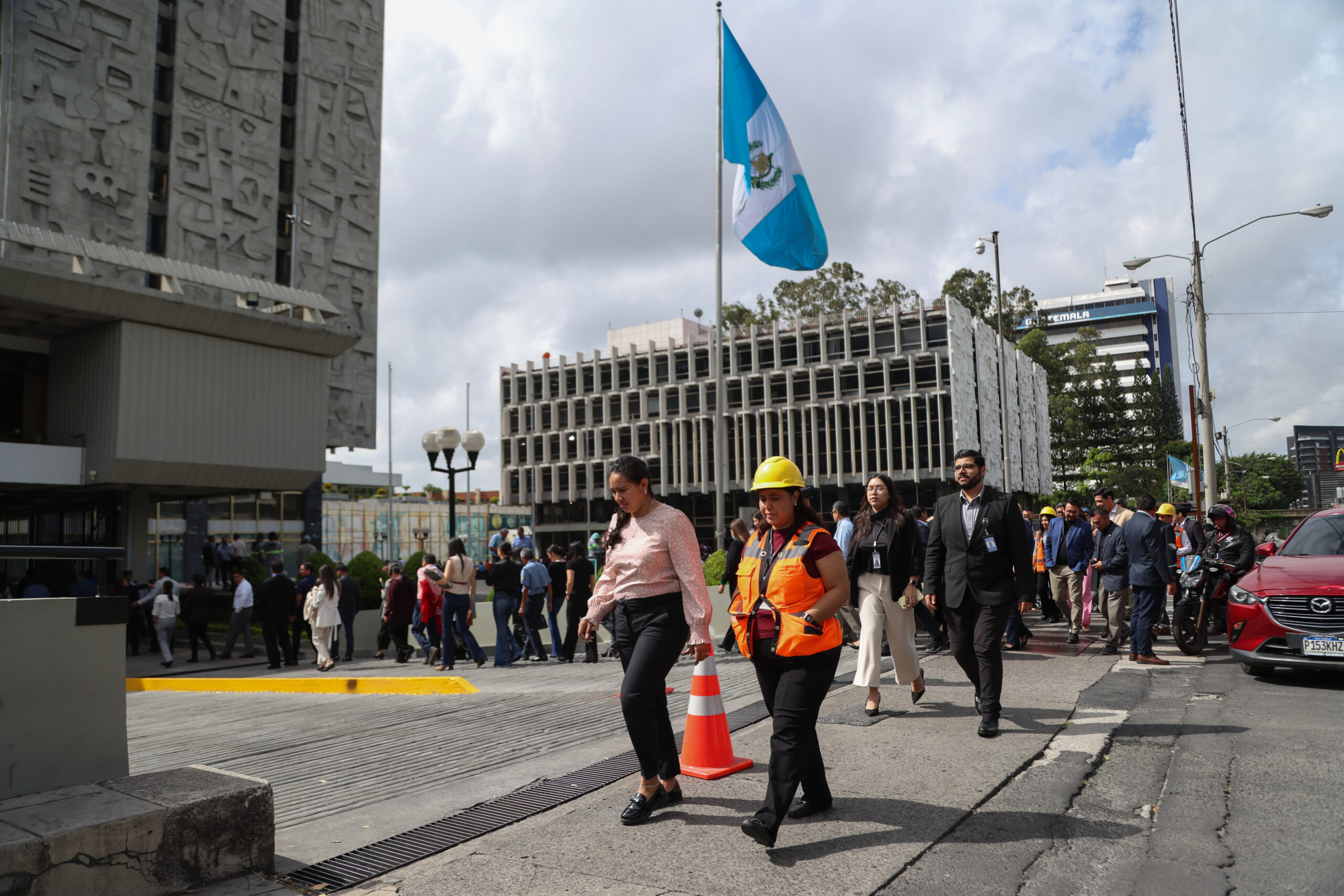
The epicentral region of the tremor recorded the morning of this July 17 It was located in the Pacific Ocean, in front of Chiapas, according to the National Institute of Seismology, Volcanology, Meteorology and Hydrology (Insivumeh). The institution reported that the earthquake was of magnitude 7.4.
According to Insivumeh, the earthquake was recorded at 8:48 a.m. and had its epicenter off the Pacific coast of Chiapas.
Helén Morán, geological engineer and analyst at the Guatemala Seismological Service (SSG), explained that the phenomenon could be a superficial interplate subduction earthquake.
According to the SSG, the focal mechanism of the earthquake corresponds to a reverse fault; Therefore, the movement can be related to a superficial interplate or interface subduction earthquake.
What is a shallow interplate subduction earthquake?
Helén Morán explained that in the morning an event was located off the coasts of Guatemala and Mexico, in the subduction zone. Due to the depth at which it occurred, it indicated that it could be an intraplate event.
These intraplate events occur primarily within the subducting plate. In the case of Guatemala, it is the Cocos plate.
Subduction is the area where there is contact between two tectonic plates. In this case, it corresponds to the boundary between the Cocos plate and the Caribbean plate.
This is a convergent limit; That is, one plate sinks beneath the other. Morán explained that, due to this movement – imperceptible to people – various internal processes occur, including the accumulation of stress, either due to the dehydration of the rocks or due to the continuous movement of the plates.
When these efforts accumulate and reach a certain level, the energy is released in the form of seismic events, the specialist explained. He added that this type of phenomenon has already been recorded previously in the country.
Explanation of the subduction zone that is related to the earthquake of this July 17, 2026. (Illustration: courtesy of the Guatemalan Seismological Service)
Could the aftershocks continue?
Due to the magnitude of the main earthquake, Morán explained that it is normal for stress accommodation to occur inside the Earth’s crust or tectonic plate.
So far, several aftershocks have already been recorded and it is very likely that they will continue, the expert indicated.
Morán highlighted that it is completely normal that, after a large main earthquake, a certain number of aftershocks occur. However, he explained that, in general, these decrease as the hours or days pass.
What would be the areas that could feel those aftershocks?
Due to the location of the epicenter, Morán considered that, if the aftershocks continue in that area, the closest departments would be the ones that could perceive them: San Marcos, Quetzaltenango, Retalhuleu, Suchitepéquez and, possibly, Totonicapán, depending on the characteristics of the events that are recorded.
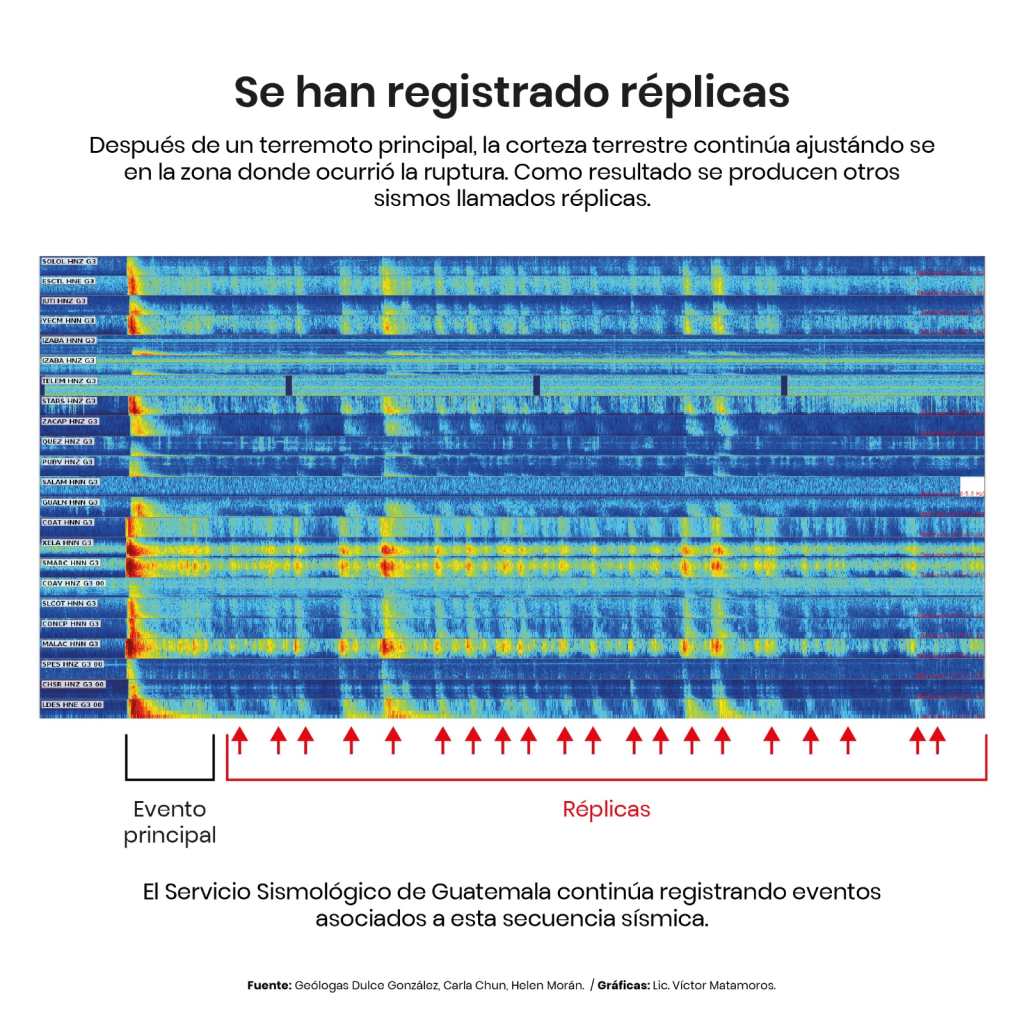
Explanation of the replicas that have been recorded this Friday, July 17, 2026. (Free Press Illustration: courtesy of SSG)