
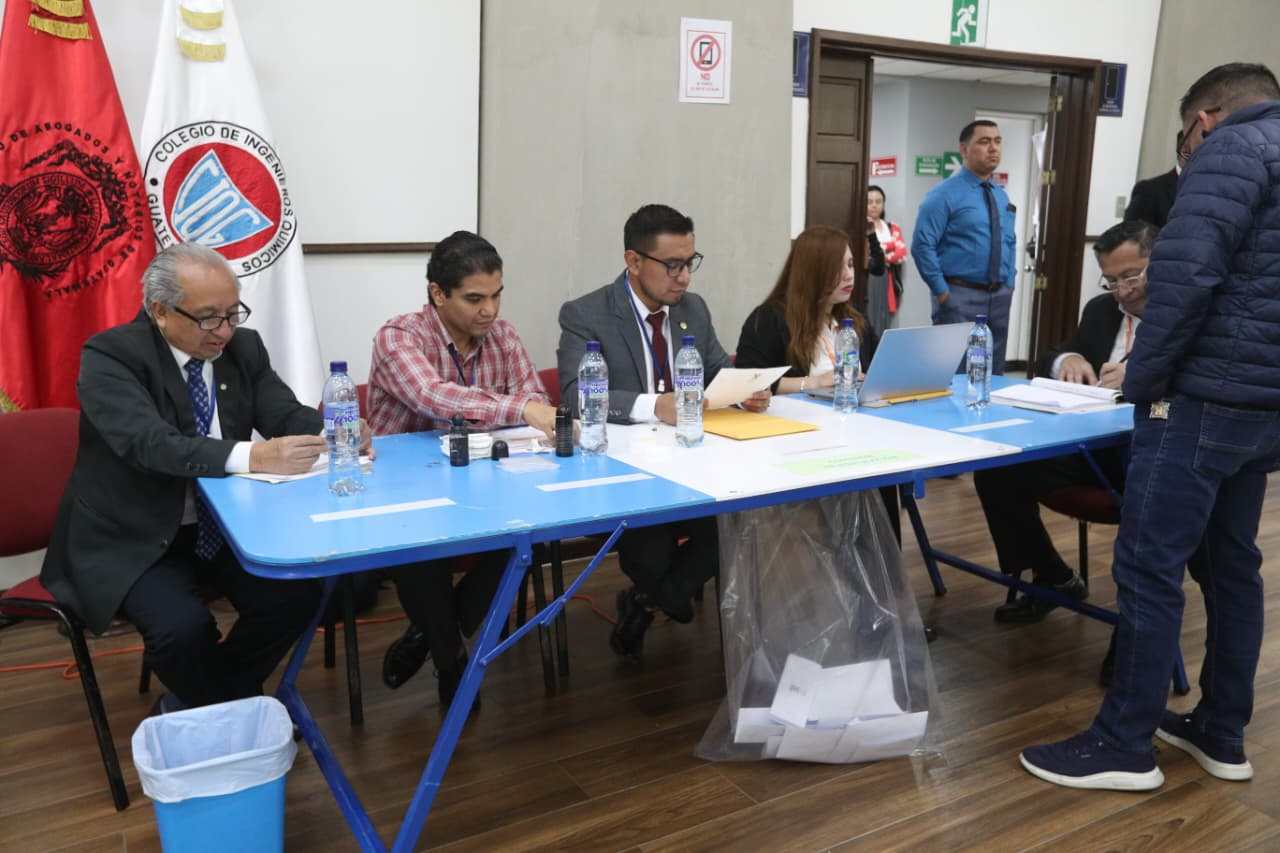
The integration of the nomination committee for Comptroller General of Accounts advanced this Friday, July 17 with the election of the two representatives of the College of Economists, Public Accountants and Auditors and Business Administrators (CCEE).
Sources assure that one of those elected could secure a vote in favor of Walter Mazariegos, rector of the Usac.
Of the five lists that participated in the CCEE election, lists 1 and 2 obtained the most votes, and with this, each one obtained a position on the nomination commission.
Form 2, Grupo Profesionales Unidos, obtained 355 votes and ensured the election of Wilberto Rojas. Form 1, Professional Growth of Auditors (CPA), reached 242 votes, with which Alexander Sac was also elected.
With the election of the CCEE, the commission has 16 of 27 commissioners called for the selection of six candidates to lead the Comptroller General of Accounts (CGC).
Miquel Cortés, rector of Universidad Rafael Landívar (URL), was elected by the Rectors Forum as president of the commission; while 13 universities maintain their respective deans of the faculties of economic sciences.
The election of another 11 commissioners, representing the College of Public Accountants and Auditors of Guatemala (CPA), is scheduled for August 6.
Form 1 and USAC
Sources close to the CGC renewal process reported that form 1 is strongly related to political actors, such as Walter Mazariegos, rector of the USAC.
The rector of the only public university in the country would be seeking to have a space to influence the election of the comptroller, according to sources in that environment. Mazariegos assumed a second term on April 8 amid questions about fraudulent actions to remain in office.
The Comptroller’s Office has not extended a severance payment to Mazariegos based on administrative findings due to the lack of renewal of positions in the Higher University Council. The CGC is in charge of delivering the temporary certificate of non-existence of claims for charges, known as settlement, an essential requirement for the registration of candidates for the 2027 general elections.
🇬🇹𝗘𝗟𝗘𝗖𝗖𝗜𝗢𝗡 𝗗𝗘 𝗖𝗢𝗡𝗧𝗥𝗔𝗟𝗢𝗥 𝟮𝟬𝟮𝟲
Results of the election of 2 CCEE representatives for the comptroller nomination committee.#EleccionComptroller2026#TheComptrollerMatters pic.twitter.com/YF1qC69kTl
— Guatemala Visible (@guatevisible) July 18, 2026
“Walter Mazariegos has been very active throughout the second-degree elections, he participated in the nomination of the Supreme Electoral Tribunal and appointed magistrates of the Constitutional Court, he knows well the role he has as USAC,” said Pablo Alejandro Solórzano, analyst for Alianza por las Reformas.
In this alliance, presumably headed by Mazariegos, there would be Nora Segura, former Comptroller General of Accounts, who would be seeking support to return to direct the CGC.
Also mentioned is the deputy of Quezaltenango, Duay Martínez, who was re-elected in Congress by the Vamos party, but who would have already distanced himself from this political party due to its apparent weakening.
Deputy Martínez responded this week that he is not part of an alliance, that he does not interfere in the process, and recalled that he, and the deputies, only intervene when it is their responsibility to elect the Comptroller in the plenary session of Congress.
But the analyst Solórzano considers it vital that there is oversight and transparency, since a commissioner linked to Mazariegos, far from strengthening the process, weakens it.
“The actions (of the rector) must be counteracted considering that he holds a position illegitimately, without having the requirements required by law, therefore, it is essential to call the other school and the deans of economic sciences, so that they understand the role they are going to have, their role is fundamental,” he indicated.
While the winner of form 2 is related to workers of the current CGC, an entity that reported Mazariegos to the Public Ministry (MP) and that maintains him without settlement.
An attempt was made to obtain communication with the two elected commissioners; CCEE authorities were consulted, who reported that at the beginning of next week they would provide communication links with the winners.
Little transparency
For its part, the organization Guatemala Visible, which accompanied the CCEE election event, said it observed little transparency on the part of the professional association.
“Unfortunately, the CCEE maintained a certain discretion and reserve in the management of information; until yesterday they never published the information on the forms or the registered candidates,” explained Mynor Lorenzo, an analyst at Guatemala Visible.
The expert indicated that just on election day the CCEE confirmed the number of forms and the identity of the candidates; along with a vote count that was not public.
But this non-transparent manner in the election seems to be echoing in the CPA, a college that in the first week of August has to elect the remaining 11 commissioners.
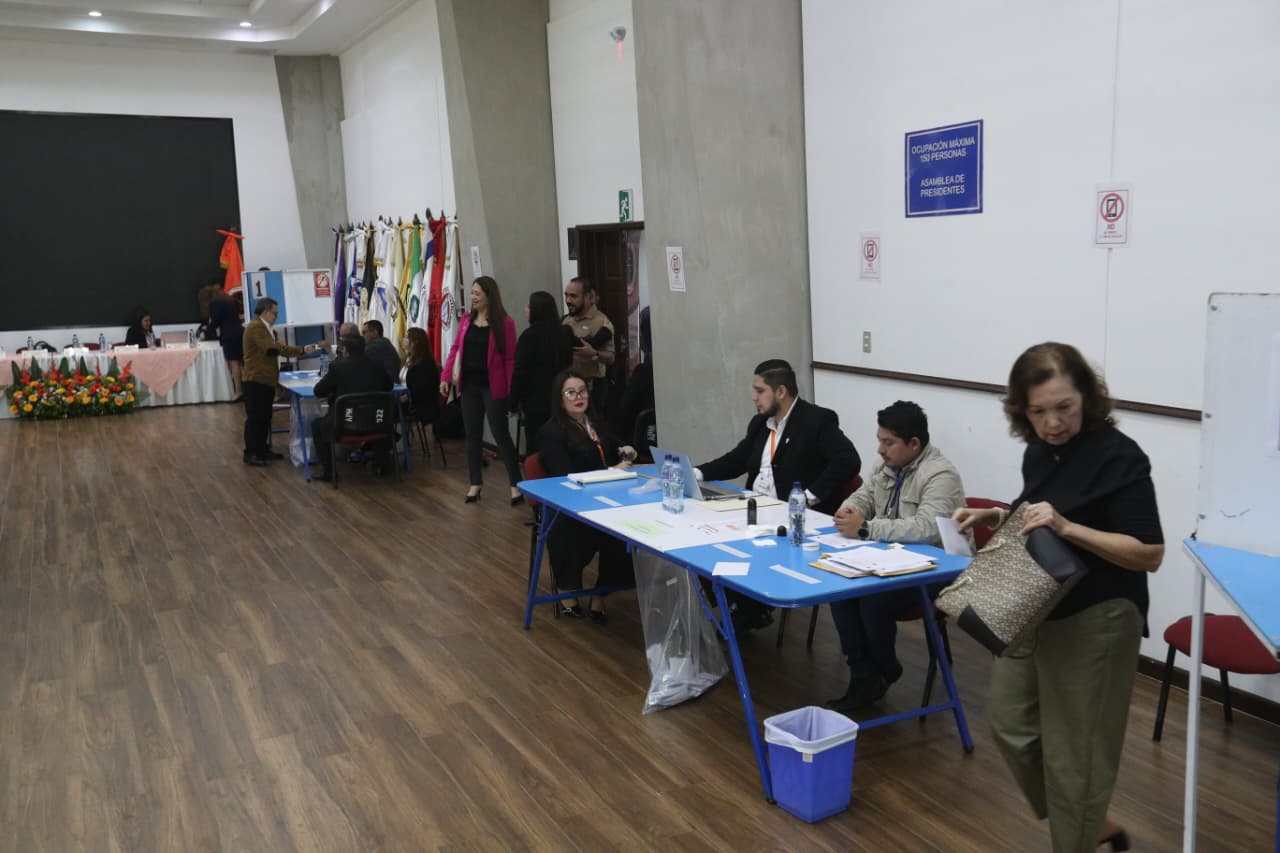
“Unfortunately, the CPA maintains similarities with the CCEE with the management of information. The payrolls were received on July 7, but as of July 18 we have not seen any information on the payrolls or the candidates,” he said.
Unofficially, some sources close to the process report that there are about 11 forms that the CPA received, but the total number of candidates and their identities are unknown.
“We as an organization have made contacts through messages, letters, and phone calls, but we have not received a response from this school, but we believe that there is still time to make a more transparent process,” Lorenzo noted.
Once all the commissioners are elected, Congress must call them to take the oath. After that, the president of the commission is free to convene, at the time he considers appropriate, the first work session for the renewal of the CGC.