
Guatemala maintains between 12 and 20 high-value targets of organized crime pending capture, according to the Minister of Defense, Henry Sáenz, who assured that the main challenge is no longer only to arrest the members of these structures, but also to dismantle their financial networks to weaken their capacity for regeneration.
In an interview with Prensa Libre Radio and Noticiero Guatevisión, Sáenz pointed out that the Army maintains coordination with the National Civil Police to locate these targets, although he warned that the fight against criminal networks faces a constant difficulty: the capacity of the organizations to quickly replace their members.
“It doesn’t mean that it’s just those. The problem in reality is that one is captured and two are born. So, we’re not going at the speed we should,” he said.
The official maintained that Guatemala is still at a first level of response against organized crime, focused mainly on interdiction operations and territorial presence. In his opinion, the next step should be to attack the command structures and, mainly, their logistical and financial networks.
“We are at level one of being able to confront all these structures. We are only in the streets, we are at the operations level intercepting all the routes, but we have to reach the structures in the middle and high levels and mainly we have to reach the logistical flow, the financial flow, which is where it hurts them the most,” he explained.
To advance this strategy, Sáenz considered greater coordination between State institutions, including the Public Ministry, security forces, the Bank of Guatemala and the Superintendency of Banks, necessary, with the aim of following the trail of money generated by illicit activities.
The minister also stated that transnational organized crime has evolved in the country. According to their analysis, Guatemala went from being mainly a territory used for drug trafficking to also registering production activities and a growth in drug dealing.
Sáenz linked this expansion to the lack of economic opportunities and the recruitment of people through the promise of easy money. He assured that part of the drugs that remain in the country fuel drug dealing and contribute to violence in the streets.
Regarding the fight against organized crime, the official divided operations into three areas: air, sea and land. In the airspace, he assured that during the last two and a half years, only the landing of an illegal aircraft has been recorded, which occurred on December 28, 2024, in the area adjacent to Belize.
In the maritime field, he noted that Guatemala has increased surveillance of its territorial waters through cooperation with the United States and other countries. In addition, he indicated that the Army expects to receive two Island-type patrol boats next year, which will allow extending the autonomy of maritime operations from between 200 and 300 nautical miles to about 1,500 miles.
However, he acknowledged that the main debt is on land routes, where, he said, drug dealing and drug trafficking have increased.
The minister also reported on the creation of the Command against Transnational Threats (SECAT), a structure that, as he explained, is already organized and operational and that seeks to coordinate the capabilities of the air, sea and land forces to respond more quickly to threats.
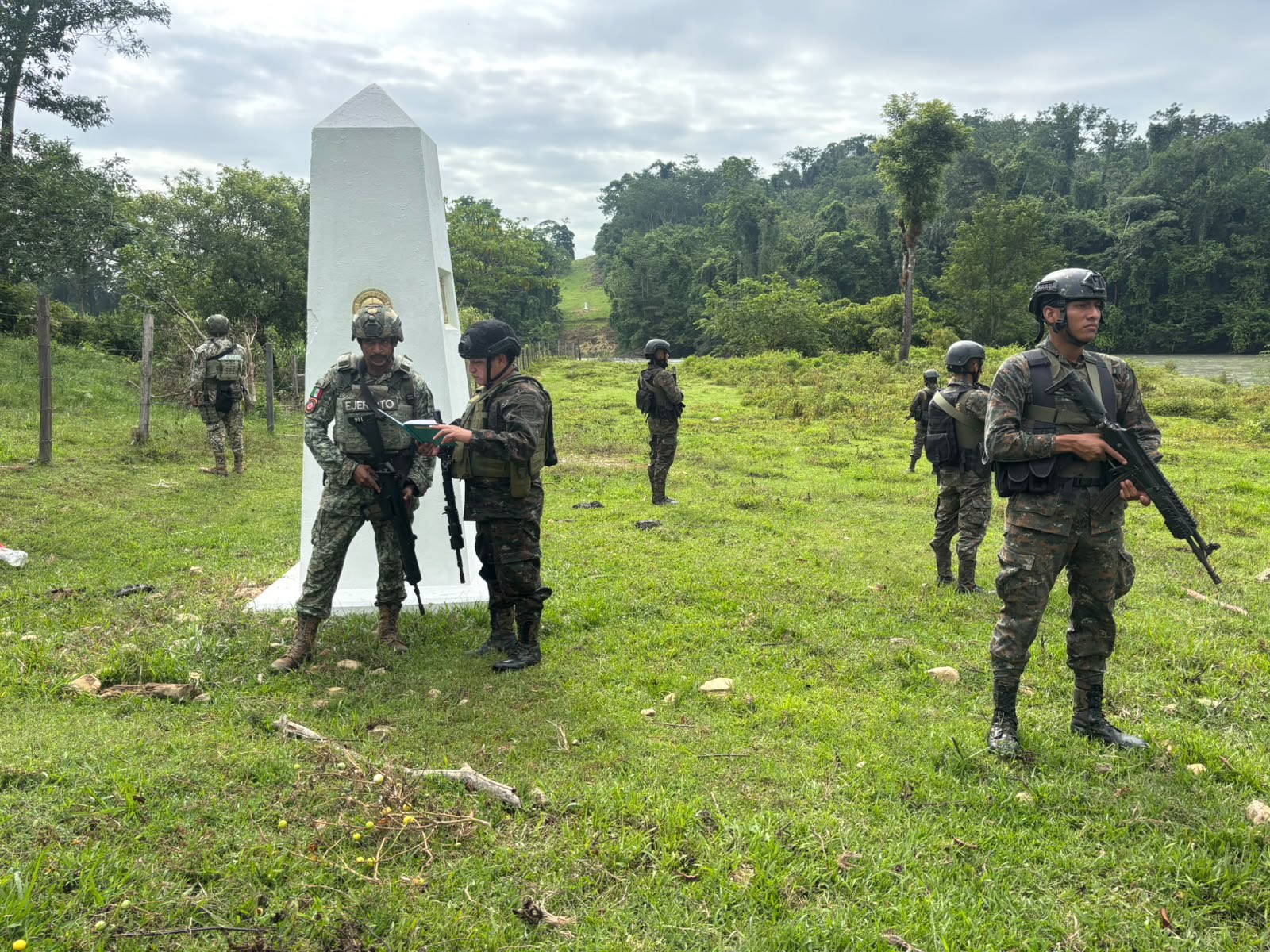
Sáenz identified the border with Mexico as the highest risk area due to the presence of transnational organized crime, especially in the areas of Huehuetenango and San Marcos. He also mentioned focuses of attention in Izabal, the south of Petén and the north of Verapaces.
Looking ahead to the next electoral process, the minister assured that the Army works together with the National Civil Police on a plan to address possible contingencies related to the activity of criminal structures. He affirmed that the institution will maintain its operations before, during and after the elections, regardless of who occupies the position of Minister of Defense.
On another topic, Sáenz referred to the infrastructure projects that are developed with support from the United States Army Corps of Engineers. He indicated that the railway project between the facilities of the Quetzal Port Company and the outskirts of Escuintla could be one of those that advances most quickly.
As he explained, it is a line of approximately 47 kilometers, and Guatemalan engineers have already received training for the installation of sleepers and rails. The objective, he added, is to acquire capabilities that will allow the Army Corps of Engineers to participate in future railway projects.
*Stay up to date with the Now newsletter. Key information at the moment it happens. Subscribe here.