
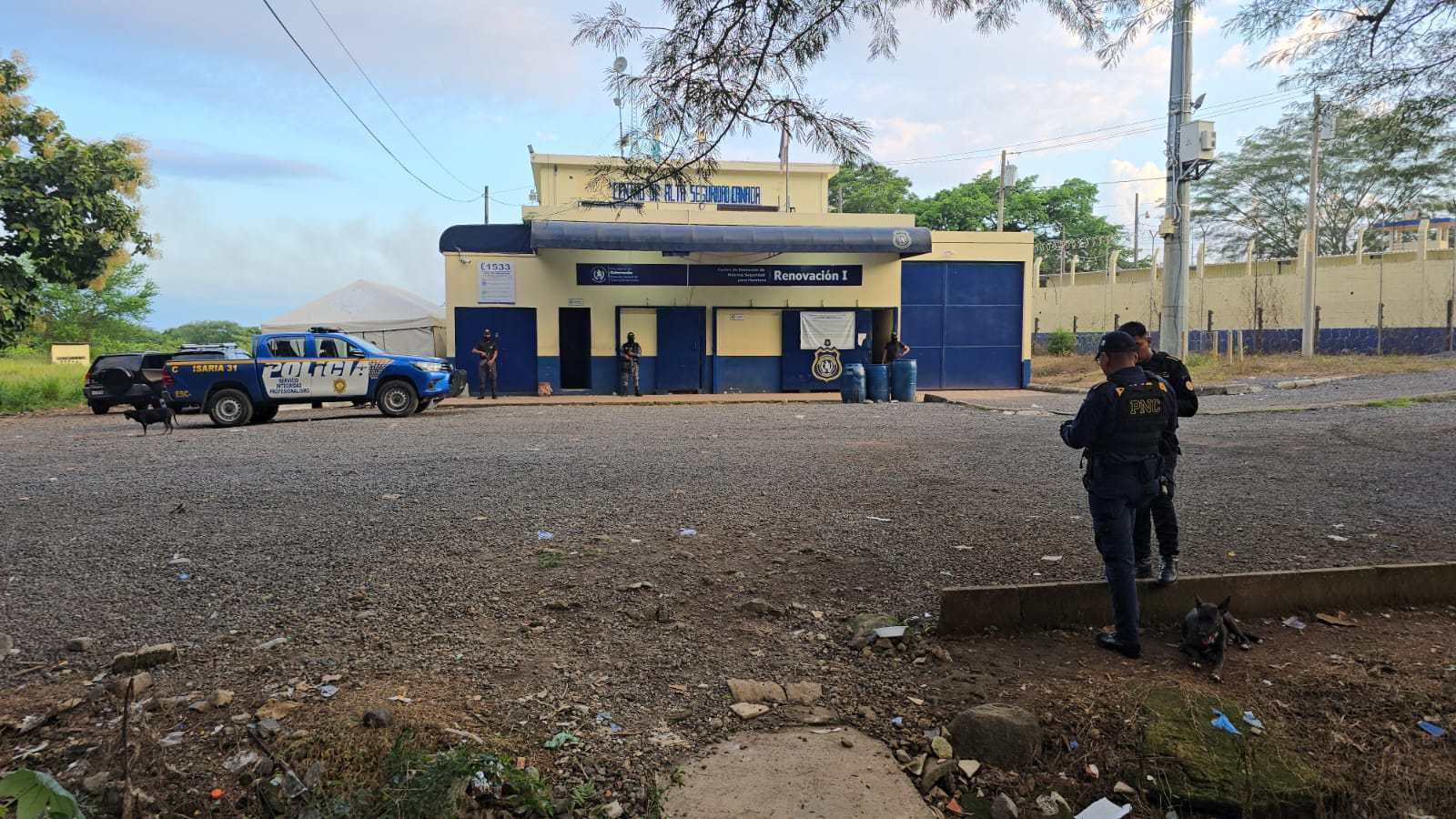
The fourth of the forums that the Foundation for the Development of Guatemala (Fundesa) develops prior to the National Meeting of Entrepreneurs (Enade) in 2026 focused on the “Challenges and opportunities of the Penitentiary System.”
During the event, held on July 22, the the crisis of the Guatemalan prison system, with axes such as personnel deficit and human resource management, internal control and security in prisons, as well as social rehabilitation as the ultimate goal of the prison system.
Kane Matheu, advisor to the Ministry of the Interior, recognizes that there is a historical debt in the penitentiary system, which translates into a serious deficit of technical personnel, as well as guards in prisons.
“A worrying figure was mentioned, yes, of one guard for every fifteen prisoners, but on a good day, it is ideal, but sometimes, considering the absences due to suspension, for health, for calls for attention, they even reach one guard for every thirty prisoners, so the magnitude increases,” he states.
Internal control and management models
Luis José Juárez, former inspector general and former director of the Penitentiary System (SP), He commented during the forum that, during his management, there was a successful experience in the Renovación 1 prison center, where for five months there was no illegal entry. According to him, the key to this achievement was the exchange of intelligence between the General Directorate of Civil Intelligence (Digici), prison intelligence and the military intelligence of the Army.
He also assured that permanent monitoring and surveillance was maintained with cameras and scanners from an external center, run by a private company and not by guards from the Penitentiary System.
“In my time as inspector general, when Renovation 1 was carried out, I was in charge of profiling all those people who were going to go to Renovation 1—inmates—along with a team that had the Ministry of the Interior, the General Directorate of Civil Intelligence and the Penitentiary System. For five months there was not a single illegal entry into that prison,” he assured.
According to Juárez, Every time a guard approached a prisoner, it was verified through security cameras. and he was questioned about the reasons why he had made the approach; In addition, he was sanctioned if there was no justification. He also assured that a new guard was sought in this prison center, without ties to other centers, which avoided bad practices.
The former official also indicated that it is of utmost importance that there be an effective prison intelligence apparatus, through which any situation that may arise within prisons can be acted upon immediately.
“Intelligence is of no use if it does not feed you with information. These preventive alerts make it easier for us to arrive at the place on time,” he commented.
Social rehabilitation and systemic challenge
Alejandro Marambio, prison advisor of the International Committee of the Red Cross (ICRC)explains that the problem is systemic and that social reintegration is the “weakest” link, precisely because all other components within the penitentiary system fail.
“The protection of society against crime does not rest only on confinement, but on working with people deprived of liberty. How it is done, through prison treatment work. Now, if all the other components are failing, it will inevitably be the last link in the chain, the issue of reintegration,” he assures.
Marambio also comments that the penitentiary institution has lost sight of that goal, since currently the purpose is to prevent escapes, confiscate cell phones and avoid corruption. Furthermore, it clarifies that social reintegration is not the exclusive responsibility of the Penitentiary System.
“The penitentiary system provides the conditions, it must provide the conditions of possibility for the rest of the State’s portfolios, for civil society, for companies to support social reintegration. It is not a penitentiary issue, because in addition there will not really be a penitentiary expert in social reintegration, because the social reintegration component begins in prison and ends in society,” he asserted.
Data presented
The event also presented data and statistics collected by the Coalition for Citizen Security, made up of Fundesa, the National Economic Research Center (Cien) and Crime Stoppers Guatemala.
The information presented reveals that, at a global level, the average rate of prisoners per 100,000 inhabitants is 145. However, Guatemala has the lowest incarceration rate in Latin America, with 123, well below the average, while El Salvador reports a rate of 1,659, the highest in the region.
The study also indicates that The prison population in the country tripled between 2008 and 2020, exceeding 25 thousand inmates. Although a decrease was recorded since the Covid-19 pandemic, the figure stagnated in 2025. The analysis also reveals that the daily cost per prisoner amounts to Q118.41, while the current budget of the Penitentiary System for this year is Q991 million, equivalent to 0.08% of the Gross Domestic Product (GDP), well below the Central American average of 0.17%.
The Penitentiary System operates with a personnel deficit, since there are approximately 4 thousand guards for every 15 inmates. The guards receive a salary of Q6,100 per month and work in shifts of eight by eight days. This is aggravated because there is no prison career or its own disciplinary regime, so personnel are governed by the Civil Service Law and remain at level 1 with no possibility of promotion.
In terms of internal control, between January and July 2026, 1,780 cell phones were seized. The lack of technology, such as scanners and signal blocking, makes it easier for illegal immigrants to enter prisons. Likewise, 178 complaints have been registered for the collection of “talacha”, with more than Q2 million paid for this crime classified in the Anti-Gang Law.
The study also indicates that The rehabilitation area receives only 0.4% of the total budget. Recidivism reaches 60% and the rehabilitation staff includes only nine doctors, one for every 2,500 inmates; 22 psychologists, one for every 1,045 inmates; 66 nurses and 13 social workers, among others.
The data also reveals that in 2019 prison occupancy reached 374% of the installed capacity, according to a study by Cien.
Another aspect that the report highlights is that In the last 15 years no new prison center has been built. In prisons, spaces increased from 6,812 in 2023 to 7,922 in 2025 and only minor expansions and the relocation of PNC facilities have been carried out.