
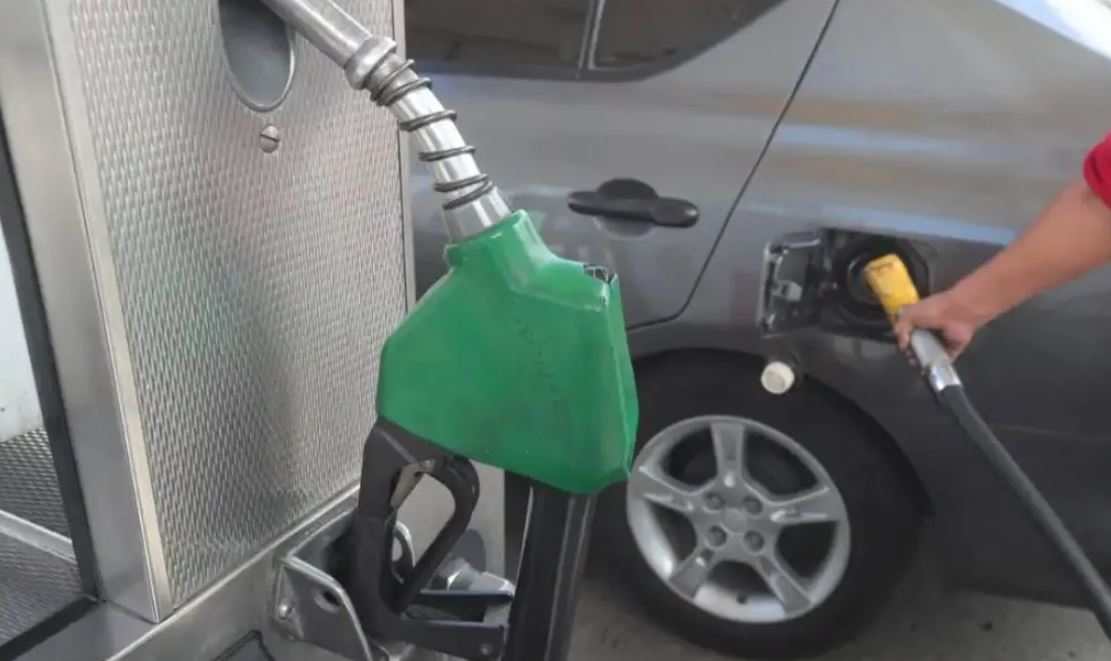
A request for a response the actions to be taken in the domestic market in the face of rising fuel prices The Finance Commission of the Congress of the Republic required the Ministry of Energy and Mines (MEM), which must inform, within a period of 72 hours, what extraordinary measures it will adopt to confront upward movements.
Meanwhile, for the second consecutive day, blockades were recorded in peripheral areas of the department of Guatemala, in Mazatenango, Suchitepéquez, and on the route that connects Totonicapán with Quiché, which were released after noon.
Since last Monday, July 20, the price of a gallon of gasoline and diesel in the metropolitan area once again registered adjustments in the local market and, on average, prices reach Q40, which causes widespread rejection and justifies protests by groups of unauthorized taxi drivers.
The reference price per gallon of higher gasoline is Q41.09; the regular one, for Q40.09, and the diesel, for Q42.29. In the full service mode, the price can increase up to Q1.10, depending on the service station in the metropolitan area.
They ask for a response due to fuel increases
Deputy Julio Héctor Estrada Domínguez, president of the Finance Commission, explained that the MEM was designing a segmented and specific program for the possible continuity of a new subsidy for gasoline and diesel, before the first temporary support program expired.
The idea, he said, was target the subsidy.
“Now we are demanding results from the program they designed, because this crisis can last a long time. It is no longer a temporary conflict, but rather a destabilization that occurred in the Persian Gulf and in the region, because now they intend to block the Red Sea, which generates uncertainty that can last a long time,” said the legislator.
The Persian Gulf and the Red Sea are sea routes used by oil tankers.
Congress demands plan for fuel increases
Although at the moment there is no proposal from the Executive, Estrada Domínguez stressed that, when any initiative is known, it will be It should focus on the transportation of passengers and on those who are registered to provide that service, as well as in the transportation of cargo. These were the aspects that were raised and the results of which are now being requested from the MEM.
“Designed and structured proposals must be known. A general or globalized subsidy, as was done a few weeks ago in an emergency, no longer applies at this time because it is not sustainable, because the crisis appears to be long-term,” he added.
The legislator criticized that the MEM authorities had at least seven weeks to structure a focused program, as well as to hold work rounds with the Agriculture and Energy commissions of Congress. However, now a strategic approach is expected and the MEM is required to present a program in the next 72 hours.
Congress outlines targeted subsidy
A possible implementation scheme is already being proposed in the Finance Commission in case a temporary targeted subsidy becomes known.
The first thing, Estrada Domínguez said, is to have a registry of beneficiaries, the possible use of coupons to exchange at stores or a specific refund, similar to the tax credit, for a segment of registered people, so that they enjoy the subsidy as carriers of the collective passenger service, cargo transportation, commercial transportation and even motorcycle taxis, if you want that micro scope.
“Designed and structured proposals must be known. A general or globalized subsidy, as was done a few weeks ago in an emergency, no longer applies at this time because it is not sustainable, because the crisis seems to be long-term”
Julio Héctor Estrada, president of the Finance Commission
He assured that, to establish a targeted subsidy, a proposal will have to be presented with the support of the Ministry of Social Development (Mides) to structure a formula, but “the initiative must be focused on those sectors.”
He recalled that, in the case of the previous subsidy, which was general or global, the payment represented around Q700 million and that, under the current conditions of the trend in the international price of crude oil and its prospects, public finances will not have that support.
“Fiscally, you cannot count on a subsidy of that magnitude, because the crisis can last a month or a year and it is impossible to assume that volume of commitment,” he stressed.
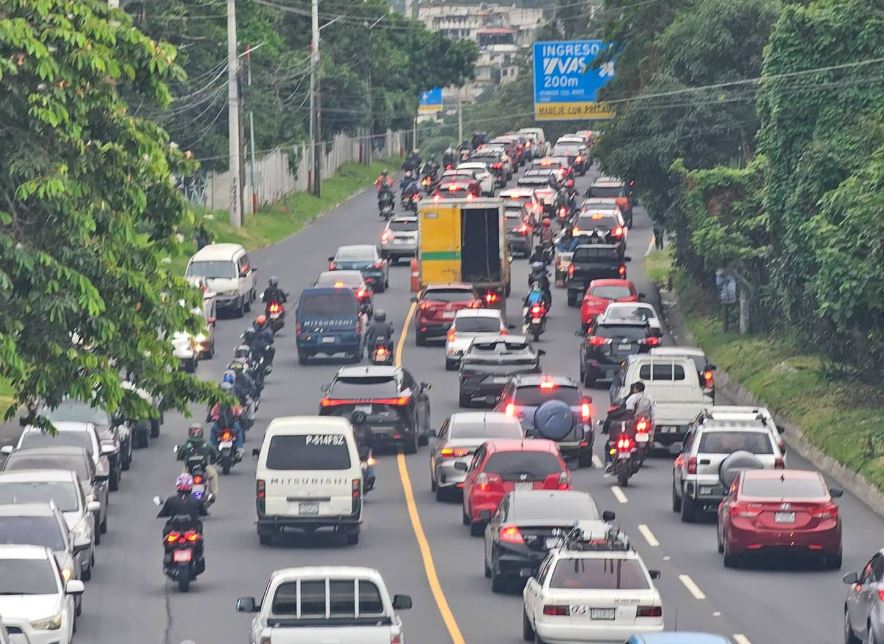
Targeted subsidy would be Q300 million
Estrada Domínguez indicated that the targeted temporary support program could be structured with a budget allocation of between Q300 million and Q400 million monthly to make it sustainable.
He exemplified that a subsidy of between Q700 million and Q800 million cannot be established, like the previous one, because public finances would not support it. Therefore, the solution is not generalized support, but rather focused support.
At the same time, he indicated that a compensation program for families for the effects on the family economy is also viable, which is already administered by Mides.
Executive analyzes new subsidy
The head of the MEM, Erwin Barrios, assured that the Executive is analyzing a new economic support program for the population in the face of the rise in fuel prices in the domestic market. He explained that there is coordination between the ministries involved, meetings are held and, if considered appropriate, the proposal would be sent to the Congress of the Republic.
The minister assured yesterday that work is being done on the proposal, although there is still no defined decision.