
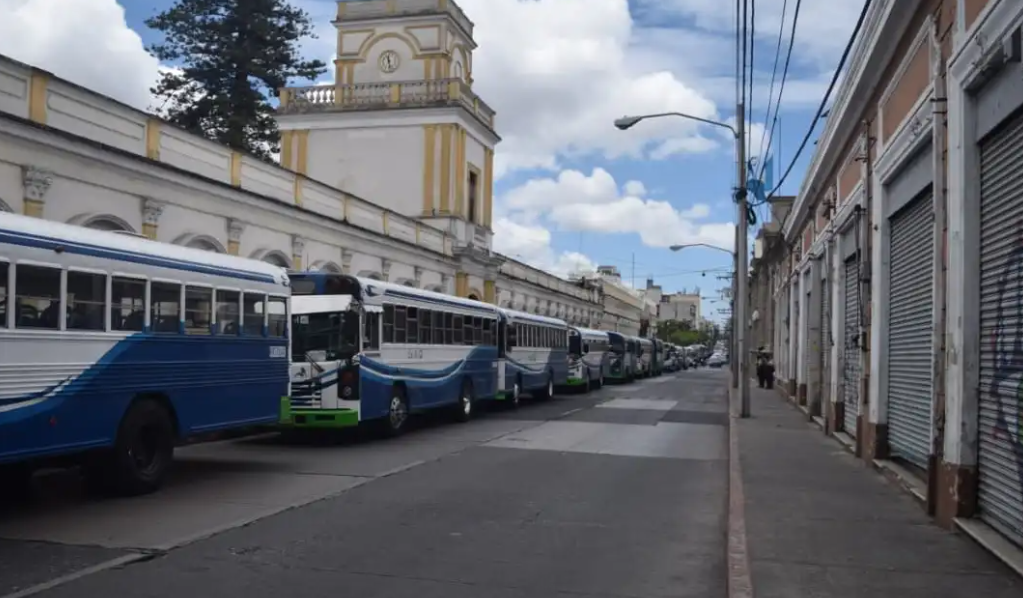
Saúl Umaña, president of the Chamber of Urban and Interurban Transporters of Guatemala (Catug), offered this Thursday, July 23, to Free press details of the demonstration they have planned in the capital in rejection of the increase in fuel prices.
In that sense, Umaña said that this Thursday they are waiting for a response from the Municipality of Guatemala to know if they will authorize a temporary rate.
He announced that, if the temporary rate is not authorized, they will carry out the peaceful demonstration because they can no longer “continue supporting” the high operating costs derived from the price of fuel. He indicated that they cover the urban routes of Guatemala City and Mixco.
He reported that they are analyzing increasing the fare if there is no response. This could be between Q6 and Q7; It is currently Q5.
He added that they are waiting for the proposal of some mechanism that is truly efficient and not like the subsidy that was used last time.
Umaña stated that they are in a permanent assembly and that the demonstration could take place this Friday, July 24 or Monday the 27th.
They plan to use about 200 buses in the “peaceful” demonstration and, according to Umaña, they will not block any point; Furthermore, he did not inform what time it would be.
He said that, according to a statement sent to the Ministry of the Interior (Mingob), the demonstration would tour the Municipality of Guatemala, the National Palace of Culture and the Congress of the Republic.
“Unfortunately we know that we do not want to hit users, but the issue has placed urban transportation in a very delicate financial situation,” he indicated regarding the cost of fuel.
“The high operating costs that we have today are really no longer bearable and Q4 of the Q5 that we receive per user are going into fuel. Twenty gallons of diesel are Q850,” he said.
In their statement to Mingob, the urban passenger transport operators of Guatemala City and the municipality of Mixco, represented by Catug and the Chamber of Strategic Transport Mobility, expressed their concern about the “critical situation facing public transport.”
They indicated that for several months the operators have absorbed economic losses “without receiving effective support that would allow the sustainability of the service to be recovered.”
In this context, they consider that a new direct fuel subsidy no longer represents a real solution for the sector or for the continuity of the operation.
“The constant increase in the price of diesel, added to the increase in the costs of spare parts, lubricants, tires, maintenance and other essential supplies to operate, has placed the urban transportation system in an extremely delicate financial situation,” they stated.
Stay up to date with the Now newsletter. Key information at the moment it happens. Subscribe here.