
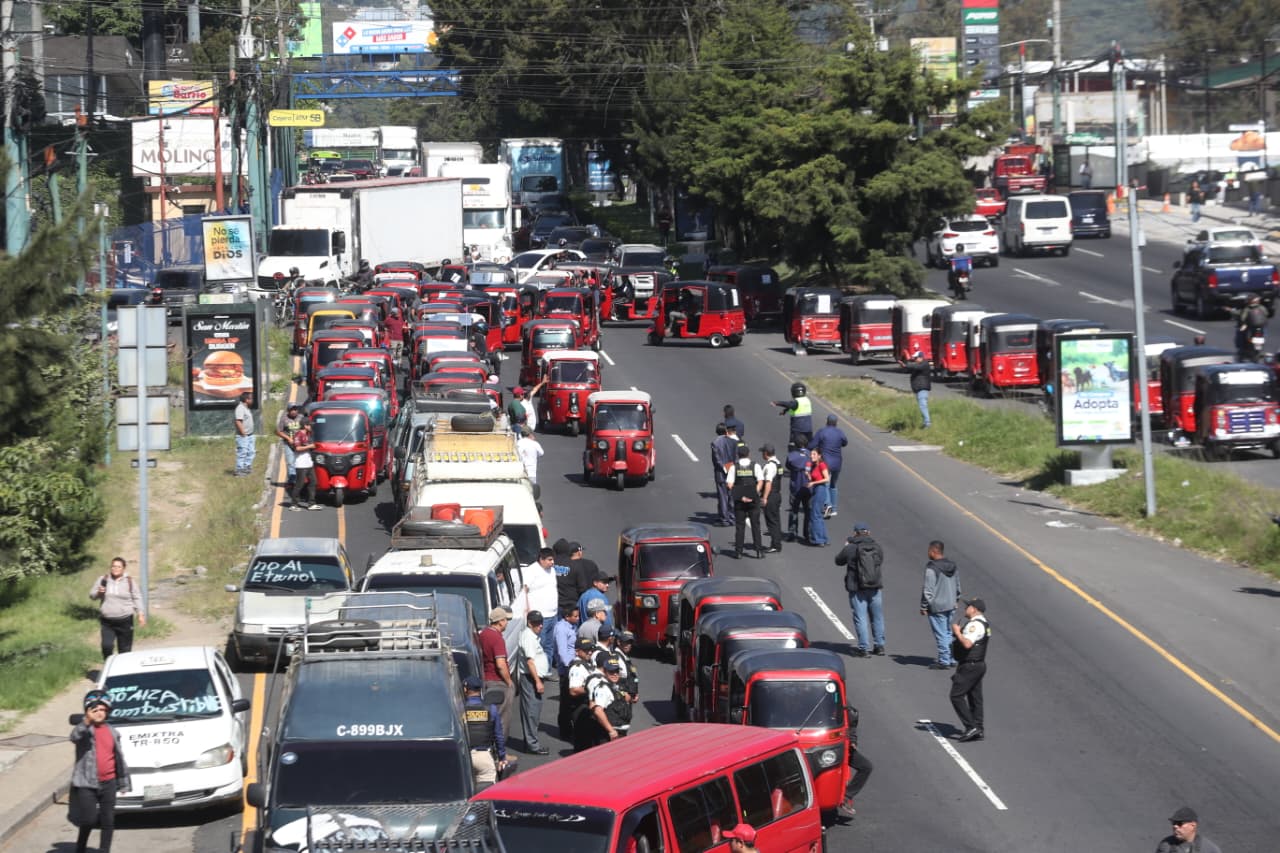
The Coordinating Committee of Agricultural, Commercial, Industrial and Financial Associations (Cacif) rejected this July 24 the blockades registered during the week, associated with the rise in fuel prices.
The organized private sector indicated that these illegal actions affect mobility, productive activity and well-being of the population.
Although it respects the right to peaceful demonstration, the Cacif indicated that This right must be exercised in harmony with the freedom of movement, access to work, education, health services, commerce and private property.
The Guatemalan private sector asked government authorities to adopt measures to preserve public order and minimize the effects on society.
The Chamber of Industry of Guatemala (CIG) stated that the Sustained increase in fuel prices is due to international factors that generate pressure on the logistics chain and industries.
He added that the behavior of fuel prices affects all sectors; However, he warned that paralyzing productivity does not reduce it; On the contrary, it increases costs.
Our resounding and repeated rejection of illegal blockades. The authorities must guarantee free movement and the full weight of the law must fall against those who commit, organize and finance these illegal actions. https://t.co/fsBEAjj1hs
— Chamber of Agriculture (@CamagroGuate) July 24, 2026
The CIG Industrial Policies Observatory estimated that A single day of blockades is equivalent to losses of around Q217.59 per Guatemalan economically active.
The industrial sector assured that the subsidy “does not represent a real answer”since it apparently benefits those who move merchandise; However, for this purpose the taxes of all Guatemalans are used or loans are resorted to that put the country in debt.
The Guatemalan Association of Exporters (Agexport) asserted that Guatemala faces challenges to compete in international markets, but that internal obstacles They deteriorate confidence, make logistics more expensive and weaken the ability to attract investment to the country.
Agexport warned that the blockades on the country’s main routes put at risk employment, production and exports.
The industrial sector calls for implementing technical and sustainable solutions to the increase in fuel costs, which protect productivity, provide certainty to the economy and avoid measures that generate higher costs or debt for Guatemalans.
Read the… pic.twitter.com/oUph1Qhbpr
— Chamber of Industry of Guatemala (@industriaguate) July 24, 2026
Therefore, he asked the Government to immediately restore free transit throughout the territory.
“Guatemala cannot normalize crashes as a pressure mechanism,” indicates Agexport in its statement.
The Chamber of Agriculture of Guatemala supported the Cacif’s position and requested that the Those responsible for the blockades face the law for committing, organizing and financing those actions.
The blockades affected the circulation on the Roosevelt road, the Raúl Aguilar Batres road, the route to Villa Canales and El Trébol. The caravans of taxi drivers, minibuses and tuc-tucs are still heading towards Congress, in zone 1.
From AGEXPORT we categorically reject road blockades that violate the constitutional right to free movement of Guatemalans.
Here our position 👇 pic.twitter.com/1zjJh8x57K
— AGEXPORT (@AGEXPORTGT) July 24, 2026
A press conference by President Bernardo Arévalo is scheduled for 3 p.m. this Friday, July 24, to address possible solutions to the rise in fuel prices, following new escalations in the conflict between Iran and the United States.