
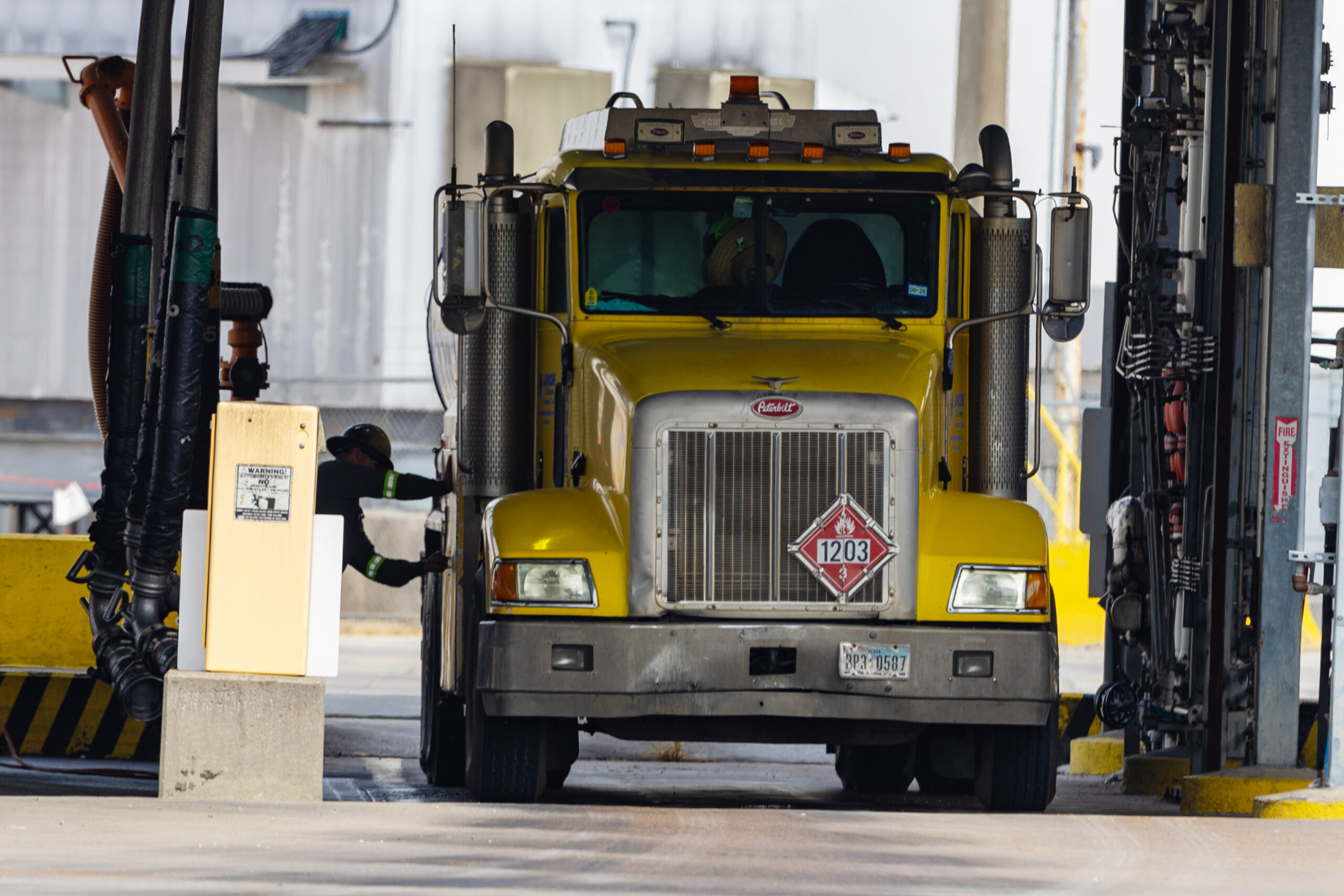
For the second time this year, The central government is forced to finance a temporary support program due to the rise in fuel prices in the local market through a state subsidy of Q12 per gallon of diesel and Q3 per gallon of regular gasoline. The measure arises in response to the protests registered this week on several roads in the country demanding solutions.
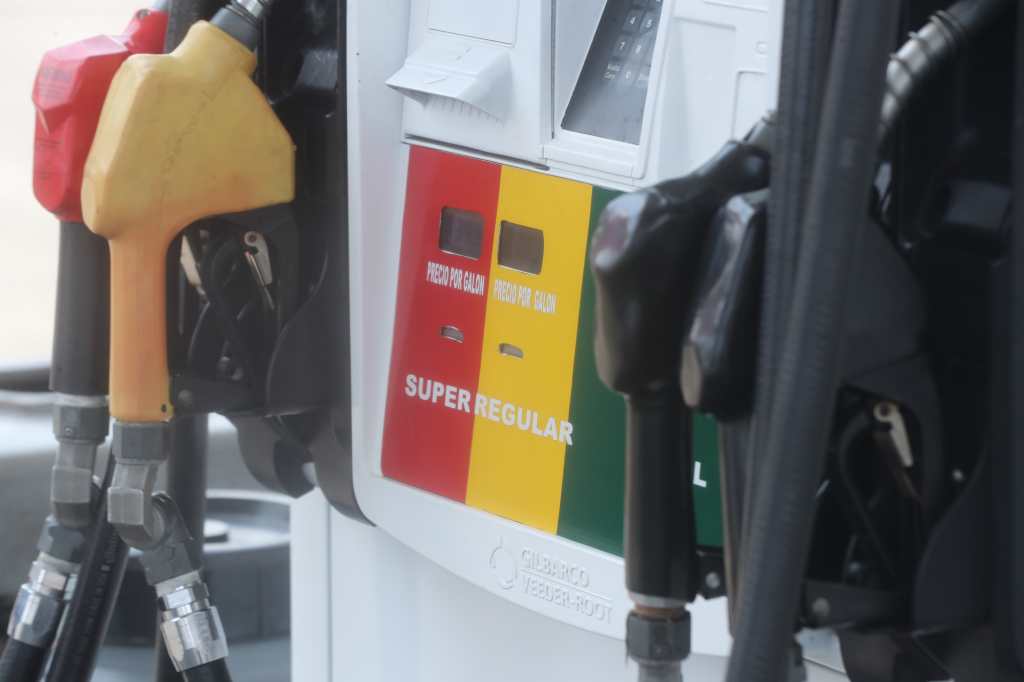
The prices of a gallon of premium and regular gasoline, as well as diesel—the most consumed fuel for transporting people and cargo—exceed, on average, Q41 and Q42 at service stations in the metropolitan area. In the interior of the country they reach between Q45 and Q46, which represents a blow to the family economy.
With the reactivation of the international geopolitical conflict and the interruption of the transit of oil tankers in the Persian Gulf, crude oil prices in the international market have registered an upward trend, which is reflected in Guatemala because the country depends one hundred percent on fuel imports and international prices.
With the first subsidy, granted at the end of April and which concluded at the beginning of July, for Q2 billion, plus the new proposal, a total of Q5,480 million would be allocated, which represents 3.2% of the current budget, of Q168,715 million. That is, about 0.6% of the gross domestic product (GDP).
That is, if Congress approves the new subsidy, it will be equivalent to almost the entire budget of the Ministry of National Defense, which amounts to Q5,602 million. In addition, it will exceed the budget of the Ministry of Social Development, of Q3,232 million, and that of the Ministry of Labor and Social Security, of Q2 billion.
Government will allocate Q3,480 million
During a press conference, President Bernardo Arévalo, in which the Minister of Energy and Mines, Erwin Barrios, and the Minister of Public Finance, Jonathan Menkos, participated, reported that the measure would be similar to the first temporary support program applied at the end of April. On that occasion, the subsidy was Q8 per gallon of diesel and Q5 per gallon of superior and regular gasoline.
CONTENT FOR SUBSCRIBERS
He explained that The measure is designed to conclude at the end of the year. If applied as of August 1, it would be valid for five months, until December, which would represent an approximate cost of Q700 million per month.
At the press conference, the president assured that the objective is to protect the family economy, since diesel is the main fuel for the transportation of people and goods, so it has a direct impact on the economy.
The ministers explained that, during the validity of the previous subsidy, the general price level was reduced and presented comparisons of fuel prices before and after the application of the measure.
Executive will readjust the budget
At the press conference, the president explained that the allocations will come from an internal readjustment of the current budget, so a budget expansion will not be requested. He also justified why It is not feasible to temporarily eliminate or suspend the oil distribution tax (IDP) nor the value added tax (VAT).
“We are working with each of the Government ministries to reorganize their plans and finances, in order to identify the funds that can be used for this project,” Arévalo highlighted.
The Technical Budget Directorate (DTP) looks for spaces within the budget that do not have committed allocations, so the payment of salaries to public sector workers, pensions, public debt service, as well as contributions to the Guatemalan Social Security Institute (IGSS) will be guaranteed, as detailed.
“Basically what we have sought are sub-executions, economies and uncommitted spaces that allow us to address this emergency. Now the process will begin to request these budgetary spaces from the entities involved,” added Minister Menkos.
He reiterated that the budgets of the ministries of Public Health and Education and Communications will not be affected.
Subsidy puts pressure on fiscal policy
The first reactions have emerged regarding the announced measures. The economic analysts consulted by Free press indicate that there will be consequences for fiscal policy, since it will be necessary to finance that state subsidy.
Ricardo Barrientos, executive director of the Central American Institute of Fiscal Studies (Icefi), and Jorge Lavarreda, of the National Economic Research Center (Cien), provided their analysis.
We are working with each of the Government ministries to reorganize their plans and finances, in order to identify the funds that can be used for this project.
Barrientos stressed that, whatever public financing mechanism is used, the rise in fuel prices responds to an external shock derived from the geopolitical conflict and that there is no state subsidy that can be sustained permanently. For this reason, he insisted that the measure must be temporary and, if possible, focused.
He exemplified that there is no guarantee that the conflict will end in the next two months, so the underlying solution is for tensions to cease.
Lavarreda considers that, from a technical point of view, budget readjustments should only be carried out if there are allocations in the budget with a lower social profitability than the proposed program to address the rise in fuel prices. The budget increase would correspond only to the amount that still needs to be covered, if items with the same or greater social profitability than the proposed measure are reached.
Executive transfers pressure to Congress
Deputy Orlando Blanco, member of the Congressional Board of Directors, criticized the Executive’s proposal and described it as “a wash of hands.” He added that, when the initiative reaches the Legislature, it will be the subject of extensive discussion.
CONTENT FOR SUBSCRIBERS
A plenary session is called for Tuesday, July 28 at 2:00 p.m. to continue with an interpellation, which can only be suspended for constitutional reasons. For this reason, it is considered difficult to modify the agenda, since a proposal for budget readjustment does not affect the functioning of the State.
In any case, the Permanent Commission of Congress should call a session, which could be held on Wednesday or Thursday of next week, to learn about the Executive’s proposal and begin the discussion, since, in its opinion, there will always be conflicting positions.
As it is a readjustment, the issue will be the subject of extensive debate, since this year around Q15 billion of the current budget would remain unexecutedhe added.
Furthermore, the discussion will depend on the content of the proposal and the decision adopted by Congress.
“The reading is political because the central government wants to get out of the problem and throw the ember at Congress, when the direct responsibility lies with them,” Blanco said.
In any case, the process will be difficult, since there was no accountability process for the Q2 billion subsidy that was approved. “We are of the idea that accountability must first be given before knowing another subsidy and defining the targeting of support,” he reiterated.
He insisted that one of the proposals is that the subsidy be applied at the delivery pump to the final consumer and not at the time of fuel import.
Subsidy reduces fiscal space
This second state support program of the year will have implications for public finances, since it will require reallocating public resources.
Jorge Lavarreda, Cien analyst, warned that The measure further reduces the fiscal space to meet other needs. As an example, he mentioned the resources that could be required to face, for the remainder of the year, the damage caused by natural disasters.
“A high opportunity cost is incurred by failing to allocate resources for other purposes. It can even represent a social loss if resources are no longer allocated to activities with greater social profitability,” he added.
The executive director of Icefi, Ricardo Barrientos, recommended that the ideal would be to use resources from the Departmental Development Councils (Codedes), which have an allocation of Q15,425 million and an execution of 16%, so 84% of those resources still remain available, which could be used to finance this temporary support.