
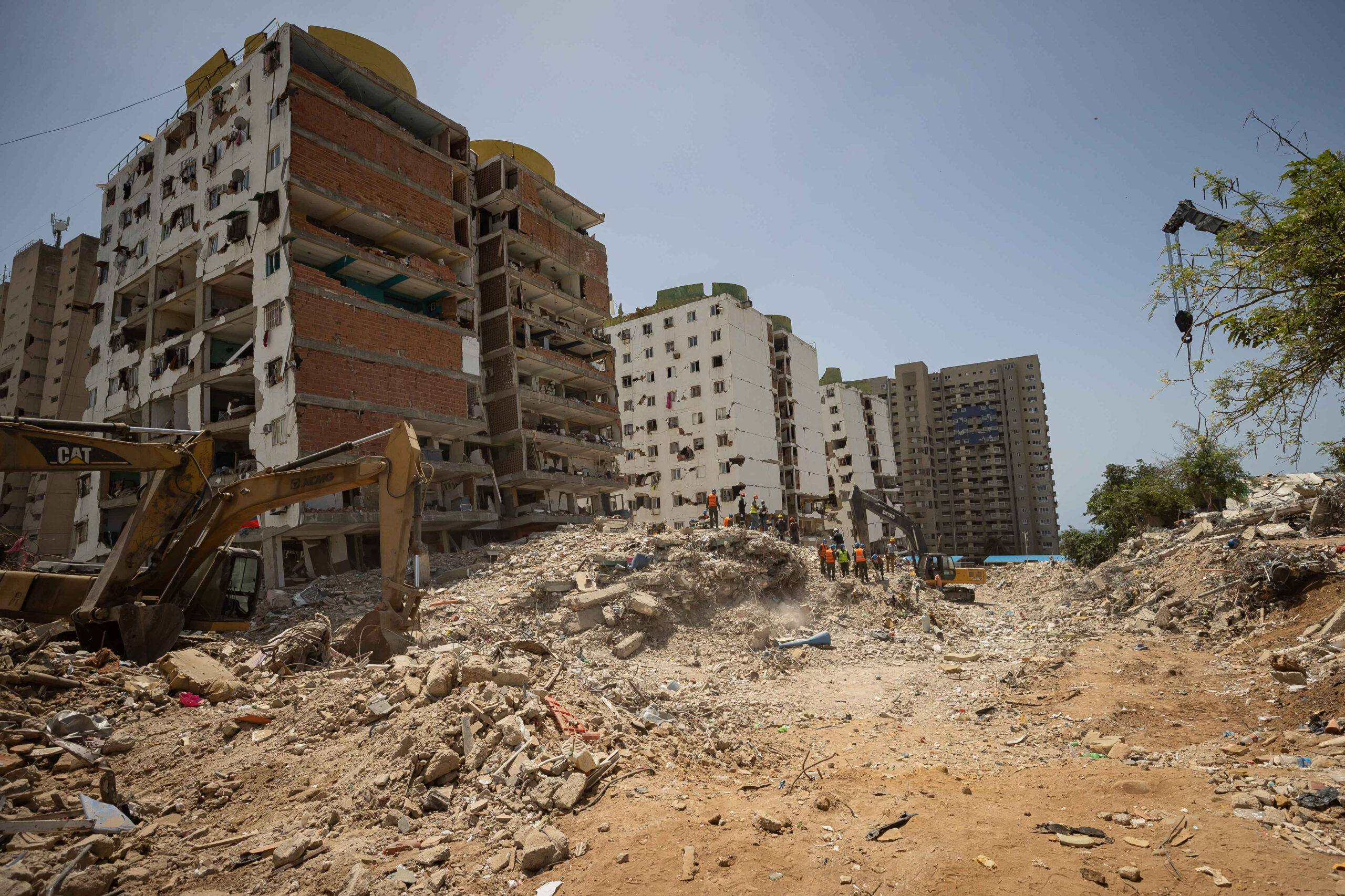
According to sources familiar with the talks, the Trump administration and Venezuelan officials are exploring ways to unlock thousands millions of dollars in frozen assets abroadwith the goal of helping the South American nation recover from the two earthquakes without placing a greater burden on American taxpayers. The plan is to help the government of interim President Delcy Rodríguez rebuild the country without Washington having to contribute much more than the $386 million it has already committed, said the people, who asked not to be identified because they were not authorized to speak publicly.
Venezuela continues to have difficulties accessing billions of dollars through the International Monetary Fund, gold deposited in the Bank of England and various accounts abroad. President Donald Trump, a long-time critic of foreign interference, wants to avoid sending substantial funds to Venezuela while seeking to establish long-term control over the country as part of his Donroe Doctrine to regain American influence in Latin America.
Washington has beenor coordinating closely with Rodríguez since he overthrew dictator Nicolás Maduro in a nighttime raid on January 3. “We will do more. Venezuelans will do more,” Secretary of State Marco Rubio told reporters on July 19. “We are trying to help them access international financing and credit for reconstruction. They are still budgeting for the total cost, which will be considerable, both for the removal of debris and the construction of new infrastructure.”
A complicating factor is that the United States wants to be cautious in monitoring how Venezuela uses its funds, given its history of corruption and waste, according to some people familiar with the matter. That is one of the reasons the distribution of funds has been slow and methodical, they added. The United States has acted with equal caution in distributing revenues from the sale of Venezuelan oil.
Venezuela’s recovery from the June disaster would help lay the foundation for economic growth, political stability, and a strong pipeline of lucrative oil and infrastructure projects for U.S. companies. However, according to the World Bank, The earthquakes caused damage worth US$19.6 billion in buildings and infrastructure, and any delay or difficulty in financing will place a greater burden on the United States, which will have to provide more aid. The natural disaster, which hit the country on June 24, has so far left almost 5,400 dead and thousands injured.
Experts say reconstruction will take years. However, the United States has a strong interest in Venezuela’s economic stability, and sees enormous potential for private companies to invest up to $100 billion over the next decade to revitalize the country’s deteriorating oil industry. Much of the US government’s aid has been funding for international groups such as Catholic Relief Services and Unicef, as well as supplies such as hygiene kits for survivors.
“For Trump, the challenge will be to present Venezuela as an easy source of income, and not as a charity case,” said Benjamin Gedan, senior researcher and director of the Latin America Program at the Stimson Center. “That will be difficult, given the devastation caused by the earthquakes, added to a long list of pre-existing challenges regarding the investment climate.” The Rodríguez government has already withdrawn US$346 million from its reserves in the IMF, thanks to the reestablishment of Venezuela’s relations with the organization, backed by the United States.
It still maintains US$4.2 billion in special drawing rights (SDR). SDRs can be exchanged with another country or group of IMF member countries for dollars or other currencies. However, the SDR holder must pay interest on the difference between their holdings and allocations, which can complicate the calculation for Venezuela. On April 14, the United States eased a seven-year sanction on Venezuela’s central bank and other state banking institutions, which should help the government regain control of some 30 tons of gold deposited in the Bank of England.
Gold is currently tied to a lawsuit related to the British government’s recognition of an opposition government following the disputed 2018 election. The Bank of England did not immediately respond to a request for comment. There are other offshore accounts in banks around the world, potentially containing hundreds of millions of dollars.
Some US officials They insist that reconstruction must reinforce, rather than replacethe general strategy of the United States in Venezuela, arguing that the earthquake has not altered the economic logic that underpins US policy. Trump has frequently claimed that increasing oil production in Venezuela will benefit both countries. Even after the earthquakes, Venezuelan officials have been pushing for deals to revive production.
The earthquakes have further reduced popular support for Rodríguez. Families affected by the disaster have blamed her and the rest of the Chavista movement that has ruled Venezuela for two decades for a slow and ineffective emergency response. His disapproval rating rose to 63.3% in June, almost five percentage points higher than in May, while almost two-thirds of respondents disapproved of the government’s handling of the earthquakes.
45.7% stated that electing a new president was a higher priority than reconstruction, compared to 32.6% who preferred reconstruction to come first. Rodríguez’s growing weakness at home could ultimately strengthen Washington’s position. “The response to the earthquake has revealed that Rodríguez and his government act as if they need and want the alliance with the United States,” said James Bosworth, founder of the political risk consultancy Hxagon. “He wants more support, aid, funding and even military cooperation from the United States.”
We are trying to help them access international financing and credit for reconstruction.
Washington has also agreed with public opinion by supporting the resumption of talks between the government and at least part of the opposition. These talks are scheduled to begin on August 1 between the National Assembly, democratically elected in 2015, and the current legislature. The goal is to establish the conditions for credible, free and fair elections, Michael Kozak, senior State Department official for Western Hemisphere affairs, told a Senate hearing.
So far, this process is leaving out theNobel Peace Prize winner, María Corina Machado, the most popular opposition leader. She has resided outside Venezuela since traveling to receive the award before Maduro’s overthrow, and her attempts to return have been thwarted by local officials collaborating with the United States. His lack of participation in the electoral debates could make it difficult for the Trump administration to convincingly demonstrate that it is guiding Venezuela back to democracy.
“The weak point of American policy is that the Delcy Rodríguez government’s poor response to the earthquakes has made people tired of the United States collaborating with them under the promise of a better future,” said David Smilde, a sociology professor and Venezuela expert at Tulane University in New Orleans. Speaking July 23 in Manila, Rubio said it would be up to Venezuelans to decide whether Machado plays a role in the country’s political transition, but added that he believed she could do so.
Rubio affirmed that any lasting reconciliation would require broad representation of Venezuelan society, and described Machado as an “important element” with a base of support. Likewise, he warned that political transitions take time, especially after so many years of Chavismo, the Venezuelan variant of socialism. If support for Rodríguez continues to weaken, or if protests over the government’s handling of the earthquakes intensify, Trump may have to decide whether his commitment to Venezuela’s future extends to its current leader.
“Trump has a history of changing his mind and minimizing losses when the situation turns against him,” Bosworth said. “If the situation turns against him, Trump could turn against Venezuela’s ruling regime tomorrow.” Trump has consistently avoided any measures that would require keeping US troops in Venezuela long-term. The initial attack to overthrow Maduro was carried out primarily by air, with military personnel quickly entering and leaving the country.
After the earthquake, the United States deployed military personnel to assist in recovery and relief efforts. Approximately 1,000 military personnel remain there. There is little interest in the kind of American financial investment that was required in the occupation of countries like Iraq and Afghanistan, where troops remained on the ground for an extended period, said Kimberly Breier, who served as assistant secretary of state for Western Hemisphere Affairs during the first Trump administration.
Trump maintains a consistent stance against long-term commitments abroad, he added. “The idea is to minimize the use of American taxpayer funds, or ensure that any expenses are reimbursed in the long term,” he said. “This does not represent a radical shift in the national reconstruction policy of the United States. But will the United States come to provide support and aid for reconstruction? Of course.”