
The Drug Enforcement Administration (DEA) warned that, after Ismael’s sentence to life imprisonment “The May” Zambada will continue actions against drug trafficking leaders, criminal organizations and government officials linked to these structures.
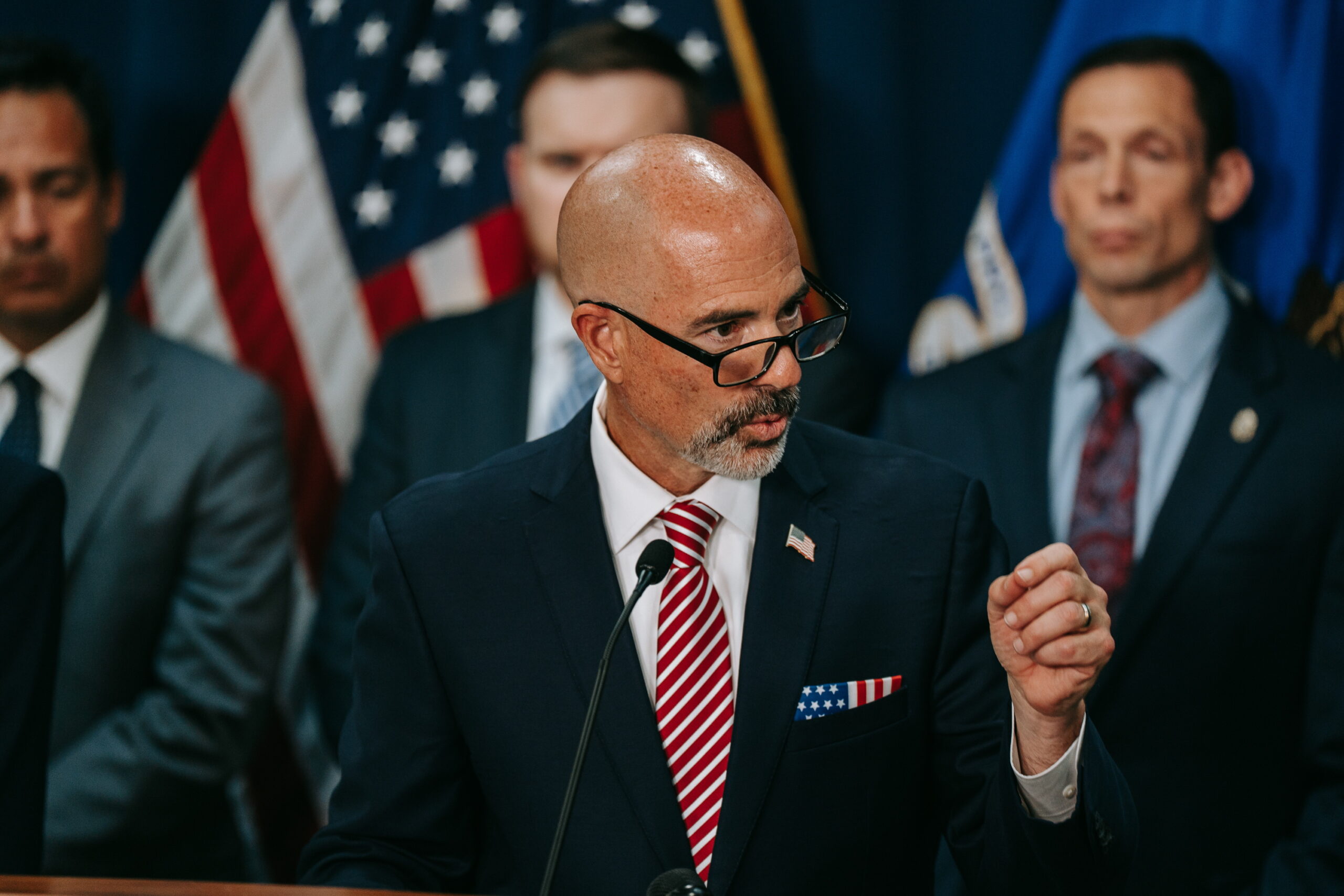
The director of the DEA, Terrance Cole, stated that the sentence against who was one of the main leaders of the Sinaloa cartel It represents an important step, but he assured that the agency’s work is far from over.
“A great day, of course, but let me be clear. This is not the end, it is just the beginning,” Cole declared as he left the Brooklyn Federal Court in New York, according to a publication in the newspaper La Vanguardia.
The official assured that the agency will continue to pursue those who participate in drug trafficking or collaborate with criminal organizations from public positions.
“It’s a warning to all leaders of cartels and global criminal enterprises: if you traffic in deadly drugs, if you profit from the livelihoods of others and threaten armies, the DEA is after you. Well, if you traffic in drugs or are corrupt government officials, the DEA is after you,” he said.
Cole added that the agency’s strategy includes dismantling the financial structures that support criminal organizations.
“Our work is far from over. We will dismantle their networks. We will cut their financial lifelines,” he said.
In a statement released by the DEA, the director maintained that the conviction against Zambada sends a message to criminal organizations that US authorities will continue their persecution no matter how much time passes.
“The sentence sends a clear message to all cartels and all foreign terrorist leaders: no matter how powerful they become or how long they evade justice, the DEA will not stop pursuing them,” he said.
Likewise, he pointed out that Ismael “El Mayo” Zambada García directed for decades an organization dedicated to drug trafficking, responsible for fueling violence, corrupting public institutions and trafficking fentanyl to the United States.
“For decades, Ismael ‘El Mayo’ Zambada García helped lead the Sinaloa cartel, fueling violence, corrupting public institutions, and trafficking fentanyl into the United States, where it has become a weapon of mass destruction that has claimed countless American lives. This outcome reflects the unwavering resolve of the DEA and our law enforcement partners, who never stopped pursuing this case. Justice has no expiration date, and neither does our resolve. We will continue. acting against the leaders of the Sinaloa cartel and against any criminal organization that threatens the American people,” he said.
More than four decades at the head of the Sinaloa cartel
Ismael “El Mayo” Zambada García, considered for decades one of the main leaders of the Sinaloa cartel, was sentenced to life imprisonment by a federal court in New York, concluding one of the most relevant judicial processes against Mexican drug trafficking.
Zambada, 76, was born in the Mexican state of Sinaloa, a region that, together with Durango and Chihuahua, makes up the so-called Golden Triangle, a mountainous area historically identified as one of the main drug production centers in Mexico.
Unlike other drug trafficking bosses, Zambada maintained a discreet profile for much of his career. He avoided public exposure and remained hidden for decades, while he was sought by authorities in Mexico and the United States.
In an interview given to the magazine Proceso in 2010, one of the few he offered publicly, he stated:
“The mountain is my home, my family, my protection, my land, the water I drink.”
According to the information available, he began working in agricultural work at a young age and later joined drug trafficking in 1969.
His rise within organized crime coincided with the disintegration of the Guadalajara cartel in the late 1980s. He later consolidated the Sinaloa cartel along with Joaquín “El Chapo” Guzmán Loera, Héctor “El Güero” Palma and other members.
While Guzmán Loera became a widely known figure, Zambada remained hidden in the mountains of northwestern Mexico.
In 2021, during a conversation with the Mexican journalist Diego Enrique Osorno, he declared:
“They said the same thing about (Pancho) Villa, that he was a terrorist… Now the United States is going to call us terrorists.”
After the capture and extradition of Joaquín “El Chapo” Guzmán between 2016 and 2017, Zambada remained the main historical figure of the Sinaloa cartel, although the organization faced multiple judicial proceedings in the United States, including that of his son Vicente Zambada Niebla, alias “El Vicentillo”, who collaborated with the US authorities.
Capture and sentence
Zambada’s capture occurred in July 2024, when he was transferred to the United States after landing in a small plane near Texas along with Joaquín Guzmán López, son of Joaquín “El Chapo” Guzmán. According to his version, he was brought to the country against his will.
He later pleaded guilty to the drug trafficking charges he faced in federal court in New York.
Judge Brian Cogan, who also presided over Guzmán Loera’s trial, imposed a life sentence on him.
Before hearing the sentence, Zambada addressed a message in which he apologized to the victims of his criminal activities, called for an end to violence in Mexico and urged young people to stay away from drug trafficking.
“No one wins in this kind of war.”
He also expressed:
“I can’t change what I did, but I can take responsibility.”
The judicial resolution did not include a financial fine, although it ordered the confiscation of US$15 billionamount requested by the Prosecutor’s Office as equivalent to the profits obtained from their illicit activities.
The defense requested that, due to his health problems, he be transferred to a prison with specialized medical care. During the hearing, Zambada entered walking with difficulty and had problems following the process despite having simultaneous translation.
In the interview given to Proceso in 2010, he had also acknowledged that he feared being imprisoned in the United States.
“If they catch me or kill me, nothing changes (…) Drug trafficking is in society, as rooted as corruption.”
*Stay up to date with the Now newsletter. Key information at the moment it happens. Subscribe here.