
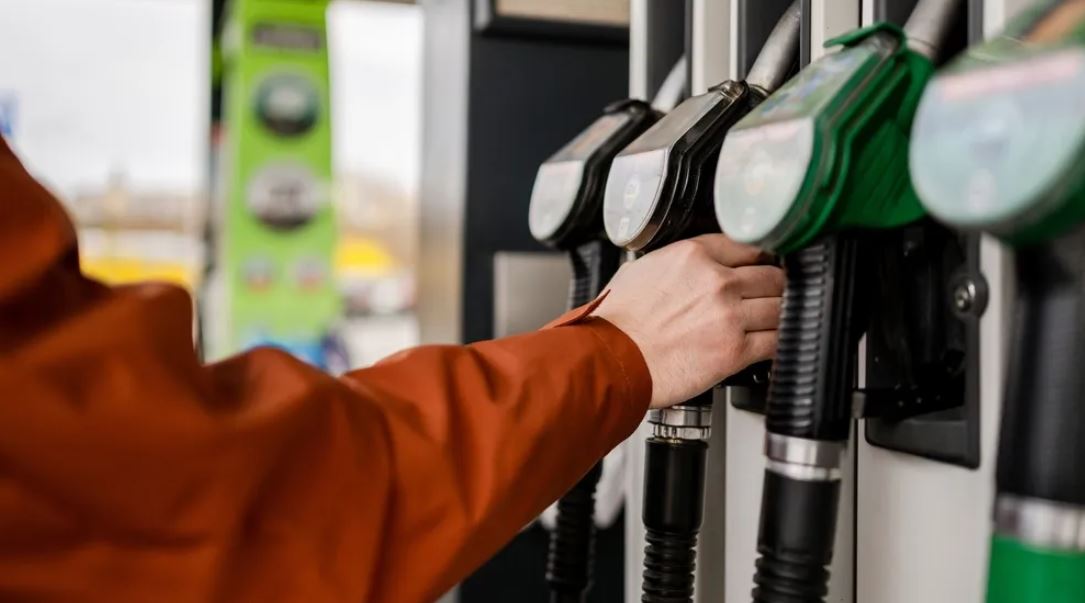
The Government planned to begin mixing 10% ethanol (E10) in premium and regular gasoline on June 30; however, later The date was postponed to August 21 and it was indicated that an operationalization phase would be entered. This Monday he reported that the mixture will begin on August 22, but only for regular gasoline.
“We are going to have one pump dispensing E-10 gasoline, the other pumps are free and people will have the opportunity to choose one or the other. We are going in phases. The implementation period has allowed us to determine the phases and when we have news or developments to expand the implementation of gasoline, we will be telling you,” said the Minister of Energy and Mines, Erwin Barrios.
The Association for the Promotion of Renewable Fuels (ACR) and the Association of Alcohol Producers of Guatemala (Apag) agreed that certainty and clarity are required in implementation. Both entities mention that the implementation of the E10 gasoline in Guatemala It is currently in its operational stage and will begin marketing on August 22.
On Monday night the Coordinating Committee of Agricultural, Commercial, Industrial and Financial Associations (Cacif) expressed concern on his social networks about the announced changes by the Government in the implementation of the E10 ethanol blending mandate, assumed by the Reciprocal Trade Agreement with the United States.
Ivanova Ancheta, executive director of Apag, expressed in announcing the institutional position of that organization that the implementation of E10 gasoline enters a decisive stage for Guatemala, in which it is essential to preserve conditions of legal certainty to promote investment, free contracting and competition for all actors in the chain.
In this context, he explained that the gradual incorporation of the mixture, starting only with regular gasoline, requires clarity about its scope, temporality and continuity to ensure mixing in all gasolines, as established by the Fuel Alcohol Law.
One of the aspects mentioned is that, throughout this process, different actors have made decisions, allocated resources and developed actions based on the regulatory framework and the conditions defined for implementation. Therefore, maintaining coherence between these rules and the decisions that are finally executed strengthens trust and provides predictability to those who produce, invest and do business in the country.
Apag also recalls that Guatemala has assumed international agreements and commitments that contemplate the implementation of the E10 mixture. He adds that honoring these commitments is essential to preserve the country’s credibility and transmit a message of stability, certainty and responsibility to the productive sectors and their trading partners.
CACIF asks the Government to comply with the trade agreement with the US on the E10 ethanol blend https://t.co/bdKJZEo4zb
— Free Press (@prensa_libre) July 28, 2026
In the Reciprocal Trade Agreement signed between both countries on January 30, 2026, in section D, “Trade considerations and opportunities”, it is established Guatemala’s commitment to implement an E10 ethanol blending mandate and that the country will “strive” to purchase at least 50 million gallons of ethanol from the United States every year, as indicated in the bilateral agreement document released on that occasion.
CONTENT FOR SUBSCRIBERS
Apag considers it important that the authorities specify the transitory nature of this first stage and complete the incorporation of the mixture in all gasolines, which, according to it, will allow progress to be made in an orderly manner, preserving legal certainty, free contracting, competition and coherence with the agreements and commitments assumed by Guatemala.
The ACR’s position coincides in several aspects with that of the producers.
The manager of the ACR, Aída Lorenzo, said that this process responds to compliance with current legislation and is the result of more than a decade of studies, technical preparation and investments made by the different actors in the chain. However, consider that “Limiting the mixture only to regular gasoline does not allow us to consider public policy fulfilled” and explained that, since 1985, Guatemalan legislation establishes the use of ethanol in all gasoline sold in the country.
As a result, the ACR stated that any phased implementation must be strictly transitory and have a defined route to also incorporate the other gasolines.
The ACR considers that gradualness can facilitate the transition, “but it should not modify the scope of the law or subject its compliance to the interests of particular groups, since this policy privileges the common good, focusing on strengthening our energy security and reducing emissions so that we can all breathe cleaner air.”
He @MEMguatemala indicated that the superior gasoline or those handled by the stores that are not regular gasoline, will continue without an E10 ethanol mixture and a schedule will be set with a new date for its incorporation. @prensa_libre pic.twitter.com/rjMOHeZKTI
— Rosa María Bolaños (@rbolanos_pl) July 27, 2026
Lorenzo explained that a partial implementation would also reduce the environmental, health and energy benefits provided by public policy, which are attributed to ethanol.
In addition, the executive added, it would generate legal uncertainty for the actors who prepared and invested under previously established rules.
Like Apag, the ACR mentions that Guatemala has also assumed international commitments, including the agreement reached with the United States. Therefore, Lorenzo pointed out that preserving coherence between national legislation, government decisions and these international commitments is essential to protect the legal, commercial and reputational credibility of the country.
For this reason, they also ask that the authorities clarify the transitory nature of this first stage and publicly define the route to complete the implementation in all gasolines. They consider that a public policy meets its objectives when it is implemented in a comprehensive manner, with clear rules and in accordance with the commitments assumed by Guatemala.
Ethanol volume required
He In mid-July, MEM established the required volume of ethanol to cover both gasolines. However, now both Regulation 257-2025 and ministerial agreements 298 and 299 of 2026, which regulate the mixture, must be reformed.
Through Ministerial Agreement 298-2026/SG, it was established that the percentage of fuel alcohol to be mixed to obtain gasoline will be 10% during the period between June 30 and December 31, 2026. In addition, it was established that distributors must contract 50% of the fuel alcohol in advance for each of the aforementioned periods.
By 2026, this is equivalent to 22 million 067 thousand gallons, which reflects that in this period it was estimated that the country would use around 44 million gallons of ethanolin the aforementioned agreement.
Ministerial Agreement 299-2026/SG establishes the same percentage for all of 2027. In this case, 50% of the volume of ethanol that distributors must contract in advance is 47 million 349 thousand 001 gallons. This represents an estimate of 94 million 698 thousand 002 gallons for that year.
According to information from the MEM, three ships with loads of ethanol have arrived in the country, for a total of 6 million 157 thousand 260 gallons. Of that volume, 3.04 million gallons correspond to the Bioethanol marketer, transported on the ship Chemstar Iris; 2.11 million gallons to Puma Energy Guatemala, on the ship Venus 9; and 1.03 million gallons to Chevron Guatemala Inc., on the ship Pretty Aki.
Five ethanol distributors (or importers) have been registered in the MEM.
In addition, three national producers have been registered, according to Apag data. These include Bioethanol, with a declared volume of 15.8 million gallons; Darsa, with 6.6 million gallons, and Mag Alcoholes, with 2.4 million gallons. Fábrica de Alcoholes and Palo Gordo appear as producers with capacity, but without declared volume at this stage, the association added.