

Cans, bottles and all types of processed food packaging have nutritional labels that present information that, according to experts, is essential to review.
“Nutritional labels are a tool that helps us know what foods contain so we can buy them in a better way and consume them appropriately, as well as make a healthier decision when purchasing these products,” explains Ana Elisa Pacheco, clinical nutritionist at Newtrition Center.
These labels are found on all packaged beverages and processed foods, such as snackscereals, cookies, yogurt, breads and frozen products.
They can be seen on the back of the package, within a box that details the serving size, the number of servings per container, the number of calories, carbohydrates, total and added sugars, proteins, total fats, healthy fats, trans fats, sodium, fiber, vitamins, minerals and the list of ingredients.
“We must always read them. It is very important to check the labels to know what we are really consuming and thus be able to prevent diseases. Sometimes we think that a product is healthy and, when we see the label, it has large amounts of sugar or a lot of sodium, which can affect our health,” warns the expert.
Where to start?
In reality, all the information included on the nutritional label is valuable; however, some data can be prioritized.
According to the Food and Drug Administration (FDA), when looking at the Nutrition Facts label you should first look at the number of servings per container and the serving size.
“Serving sizes are standardized to facilitate comparison of similar foods; they are provided in common units, such as cups or pieces, followed by the quantity in the metric system, for example, the number of grams (g),” the entity details.
In addition, it warns that the serving size reflects the amount that people usually eat or drink, but “it is not a recommendation” about how much should be consumed.
“Pay attention to the serving size, especially how many servings are in the container. For example, you may ask yourself if you are getting a half serving, one serving, or more,” she explains.
If a serving is equivalent to one cup, for example, by consuming two cups of the product you are ingesting two servings and, therefore, double the calories and nutrients indicated on the label.
In the case of a package containing four cookies, for example, one serving might represent just one cookie with 50 calories; By eating all four, you would be consuming 200 calories.
Data that should be reviewed
The nutritionist recommends reviewing the information on the nutritional label in the following order:
- Serving size
- Amount of calories
- added sugar
- Sodium
- Saturated fats
- Ingredients list
“The World Health Organization indicates that the ideal is to consume less than 5 grams of salt per day. Checking the amount of sodium contained on the label helps us a lot to not exceed that total amount. Five grams of salt per day is equivalent to 2 grams of sodium,” explains the nutritionist.
In addition, it suggests checking that products do not have excess sodium or added sugars and avoiding excess saturated fats or trans fats. Instead, he recommends choosing products that contain fiber, as “it is a prebiotic that helps the good bacteria in the intestine to feed properly.”
Typically, a nutrition label is based on a daily consumption of approximately 2,000 calories. The ideal is to consume less than 10% free sugars, less than 10% saturated fats and less than 5 grams of salt per day.
“If we have an excess of daily calories through products with excess sugars, saturated fats and sodium, we can become overweight or obese. This increases the risk of chronic non-communicable diseases, such as diabetes and hypertension,” he explains.
Are nutritional labels reliable?
Yes, they are reliable. Pacheco explains that, in Guatemala, nutritional labels are regulated by the Ministry of Public Health and Social Assistance, specifically by the Department of Food Regulation and Control.
“In Guatemala, these labels follow the Central American Technical Regulation. This gives us confidence that the labeling we see on the products is real. That is why it is important to read the labels and inform ourselves to avoid excessive consumption of foods that can harm our health,” he details.
Read also: How to learn to read nutritional food labels
Although sometimes there are ingredients whose names we do not know, the expert suggests investigating them or consulting with a health professional to avoid consuming foods that can harm the body.
However, the ideal is to reduce the consumption of processed foods and limit it to once or twice a week.
“We can consume a processed or canned product once or twice a week, as long as it does not have excess sodium, free sugars or saturated fats. But the ideal is to maintain a balanced, balanced and more natural diet, which will be better for our health,” he explains.
Balanced diet and physical activity
The daily schedule and the load of activities can lead people to consume processed products for practicality and time savings. However, the expert recommends maintaining a balanced diet and preferring natural ingredients.
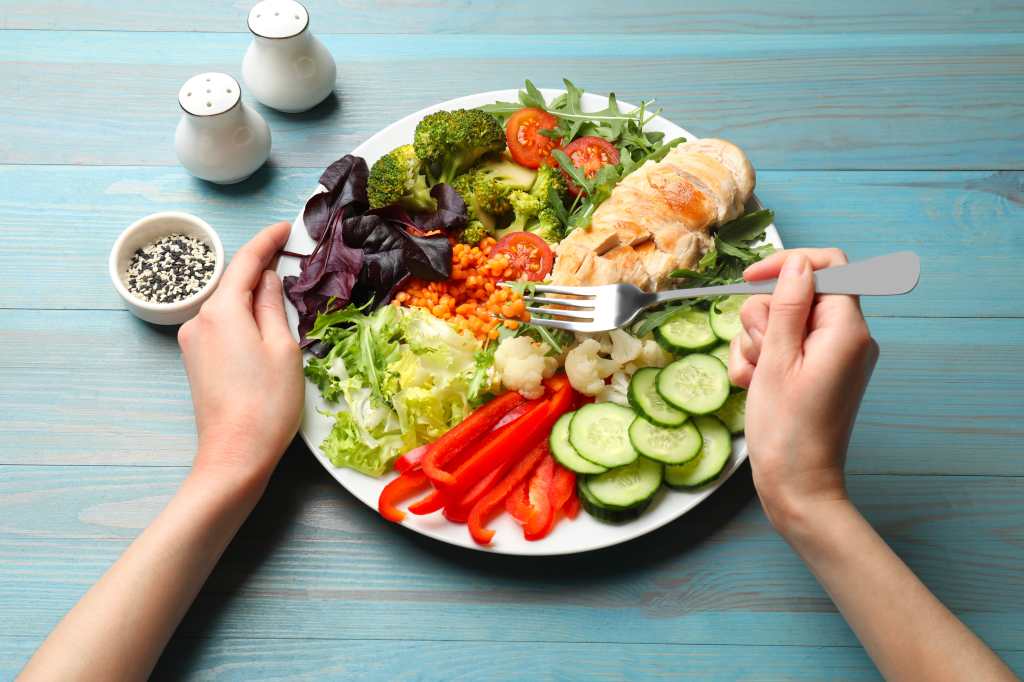
“If our diet is balanced, we include physical activity, we hydrate ourselves correctly and maintain a healthy lifestyle, occasionally consuming an ultra-processed food will not harm our body as much as if we eat it every day,” he explains.
It is recommended to maintain a balanced diet that includes fruits, vegetables and all macronutrient groups, such as carbohydrates, fats and proteins. Additionally, when consuming processed foods, you should always check the nutritional label.
“We always check the labels thinking that the ideal is to maintain a more natural diet. The more ultra-processed, processed or canned foods we consume, the greater the possibility of ingesting excessive amounts of certain nutrients,” he explains.
He adds that this could worsen if you do not maintain a healthy lifestyle, do not exercise or do not consume enough pure water, as it can harm your health and encourage the development of chronic non-communicable diseases at an early age.
“This applies to children, adults and the entire family. The ideal is to eat more naturally and put more colors on our plate to have a better diet,” he concludes.