
Across Latin America, from Guatemala City to Cartagena, the same question shapes urban growth: how can working families own land and a home as cities run out of affordable space? In Colombia, one developer has built his recent portfolio around that question. Santiago Barón Soto, a businessman with more than 25 years in real estate according to his professional profile, manages Grupo DI and is a partner and manager at Inverconstrucción and Cimento Group.
From dentistry to development
Barón Soto trained as a dentist at Universidad CES in Medellín and, according to his website, founded Odontovida, a network of dental clinics in several Colombian departments, in 2000. His site says that running health services taught him how to plan, lead large teams and deliver on promises, the experience that later carried him into construction. Since then he has taken part in projects in Medellín, Bogotá, Cartagena, Montería and Barranquilla, from social housing to offices and hotels.
Inverconstrucción, with offices in Medellín and Cartagena, reports more than 4,110 homes delivered and 284,620 square meters built.
Zambalú: land as the first step
His most recent launch is Zambalú, a Grupo DI project in Santa Rosa de Lima, in the fast-growing area north of Cartagena. As reported by the regional outlet El Bolivarense in October 2026, it includes 1,473 serviced lots across about 20 hectares in three phases, on kilometer 5 of the Paiva–Santa Rosa de Lima road.
Each lot measures 72 square meters (6 by 12 meters). Families can build a one-, two- or three-story house with up to 129.6 square meters and a shop on the ground floor, subject to local zoning rules. Prices start at 28 million Colombian pesos, with a 500,000-peso reservation and a 50% down payment that can be split into up to 30 monthly installments, according to the project.
“More than lots, we want to create a community and offer opportunities to build homes and wealth,” Barón Soto said at the launch, according to that outlet. The plan includes paved roads, water, sewage and a treatment plant, sports courts, playgrounds, an outdoor gym, a pet area, retail space and a Vallenato Museum dedicated to the music of Colombia’s Caribbean coast.
Social housing near Medellín
In Antioquia, Inverconstrucción is building Ciudadela San Miguel in Caldas, south of Medellín. It is a social-interest housing (VIS) project marketed as the town’s first residential club, with 50.5-square-meter apartments from 236 million pesos and more than 20 shared amenities, from a covered gym to a children’s water park, next to a native forest reserve.
Tourism on the Caribbean coast
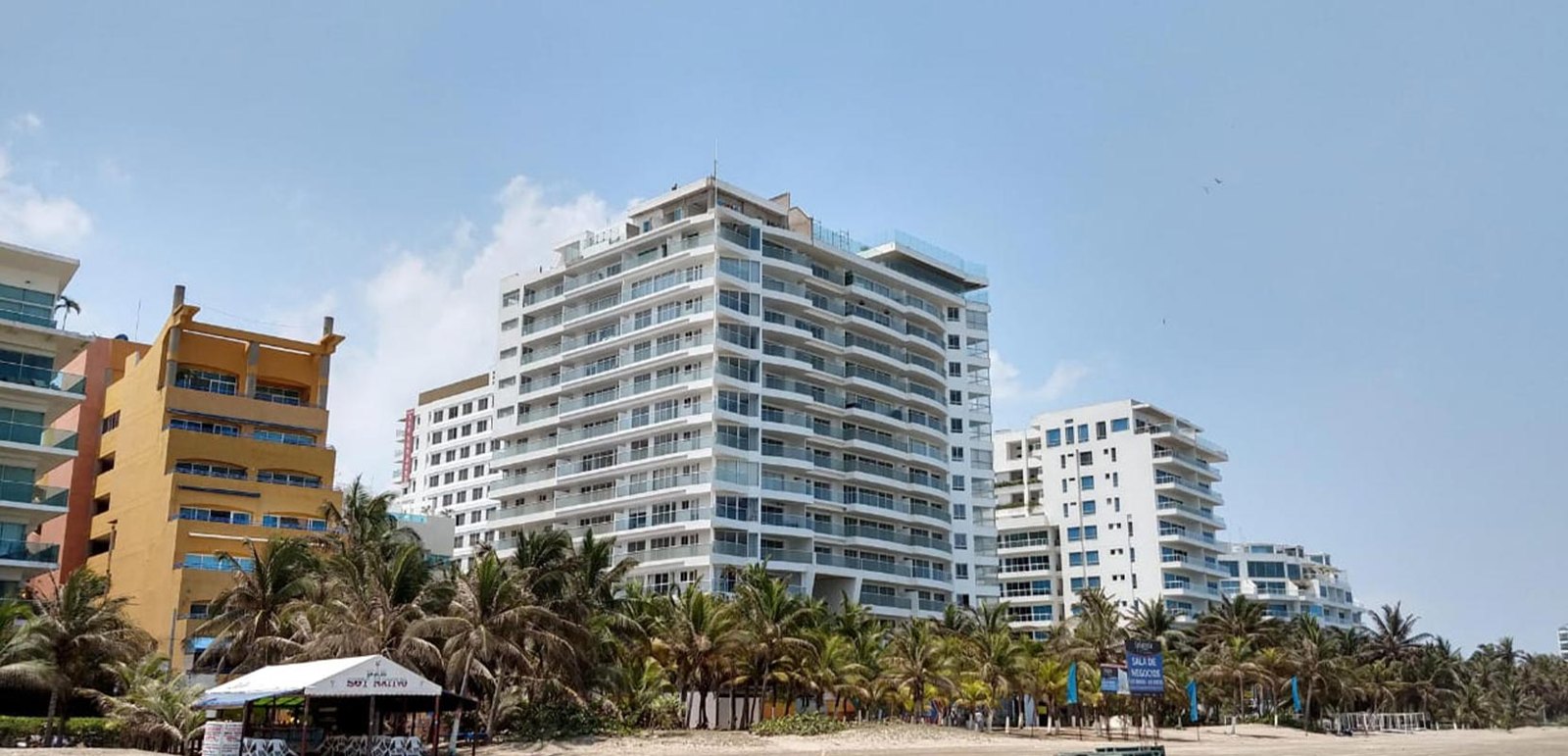
On the coast, Inverconstrucción delivered Spiaggia di Cartagena in 2021: a luxury tourist housing tower and five-star hotel with 22,700 square meters built, 200 meters from La Boquilla beach. His profile also lists Zoku Bay, described as Cartagena’s first homesharing building, and Caona Resort del Caribe, a 1,116-apartment tourist and residential development.
A pipeline beyond housing
According to his website, Barón Soto has more than 20 projects in the structuring phase. They include housing and lots in Barú, Punta Canoa and Bayunca in Bolívar and in several towns of Antioquia; industrial parks of 46 and 260 hectares in Cartagena, plus projects in Barranquilla; the Cuarta Avenida business center in Manga; a Box Park in Cartagena; a mall in Llanogrande; and a hotel in the Dominican Republic.
In the United States, he is founder and CEO of BASO USA, a Miami-based company created in 2022 that invests in lots for future single-family homes in Port Charlotte, Punta Gorda and Lehigh Acres, Florida, and in house flipping.
A model with regional lessons
For readers in Central America, where many families also build their homes in stages, the Zambalú model offers a clear idea: sell serviced land with roads, utilities and common areas from day one, and let families build as their budgets allow. In a column on Grupo DI’s website, Barón Soto argues that “when an area grows without planning, families build without roads, without services and without spaces to share,” and that serviced land is the base for growing “with order and safety.”
His company also publishes a practical checklist for buyers: review the property’s title history, confirm the seller’s right to sell, check land-use rules and permits, keep taxes current, measure the boundaries and pay only into company or trust accounts.