

The legitimacy of President Donald Trump’s tariffs is being questioned by the US courts, but the president does not show signs of renouncing his favorite tool.
On Wednesday, the tariffs that Trump imposed on steel and foreign aluminum will double to 50%, a measure that, according to the president, will better protect national metal manufacturers.
In the next few days, the US government will face the states and companies that have submitted demands for the president’s tariffs, and both parties must present more information while the judges work to make definitive decisions about the legality of the highest Trump tariffs.
Last Wednesday, the International Trade Court ruled that some of the highest tariffs that Trump had imposed were illegal, which was an important setback for the president’s political program.
Less than 24 hours later, another court temporarily suspended that decision. While the judges weigh that appeal, it is expected that the tariffs in question – which include the taxes that Trump imposed on Canada, Mexico and China for what, he said, was his role in the Fentanyl trade, as well as the global tariffs that Trump announced, and then quickly paused, in April – they continue in force at least until June 9.
On Sunday, one of Trump’s main commercial advisors insisted that the president would continue to find ways of hitting other countries with tariffs, even after the Trade Court failed against the defining element of Trump’s strategy.
“Be sure that tariffs are not going to disappear,” said Howard Lutnick, secretary of Commerce, during an appearance in Fox News Sunday. He said that the president has “so many other powers” that if the court finally fails against the White House, Trump can still “bring another or another.”
A ruling against the Government would deprive the president of the use of a legal authority that he has used to raise and lower the tariffs to whim, to first declare the fentanyl and then the US commercial deficit as an “international economic emergency.” The International Trade Court ruled that Congress had not granted the President such a broad authority.
But, as Lutnick pointed out, the president has many other ways to impose tariffs and has recently indicated that he is willing to use them. In a visit to a Pennsylvania steel on Friday, Trump said he would double the tariffs that he had imposed on foreign steel and aluminum earlier this year, with effect as of June 4.
“Our steel and aluminum industries return as never before,” the president in Truth social later wrote. “This will be another great jolt of great news for our wonderful steel and aluminum workers.”
Tariffs on steel and aluminum were imposed under a legal status related to national security, known as section 232. To impose such tariffs, the President must first initiate an investigation into whether imports from a certain article imply a threat to national security. If the investigation determines that they are a threat, the president has authority to tax those imports.
Trump has already used that authority to order the imposition of tariffs on cars and foreign automotive pieces. And his government conducts research in many other areas, such as pharmaceutical products, semiconductors, wood, copper, airplanes, trucks and critical minerals.
These investigations could be used to impose more tariffs soon, regardless of the result of judicial processes. There have been other historical investigations in which no measures were taken, but they could be taken, such as on uranium and vanadium, used in the production of steel alloys.
Brad Setser, an economist of the Foreign Relations Council, estimated that the cases of section 232 currently in force or in process could potentially cover around 40% of US trade.
The president also has the commercial case that began against China in his first term, which could be reused to quickly impose additional tariffs on Chinese products. In that case, another legal statute known as section 301 was used, which also requires investigation into whether imports harm US companies before issuing tariffs or other measures to help them. There are a handful of other laws that also give the President the authority to impose different types of tariffs.
Setser said that replicating with these other authorities the scale of the tariffs that the court could cancel would be “imminently feasible.”
“It will only take more time, much more process and will not allow the president the same ability to raise or lower tariffs during a weekend without the interest groups affected by tariff changes have the ability to comment,” he said. “In other words, the commercial war will slow down.”
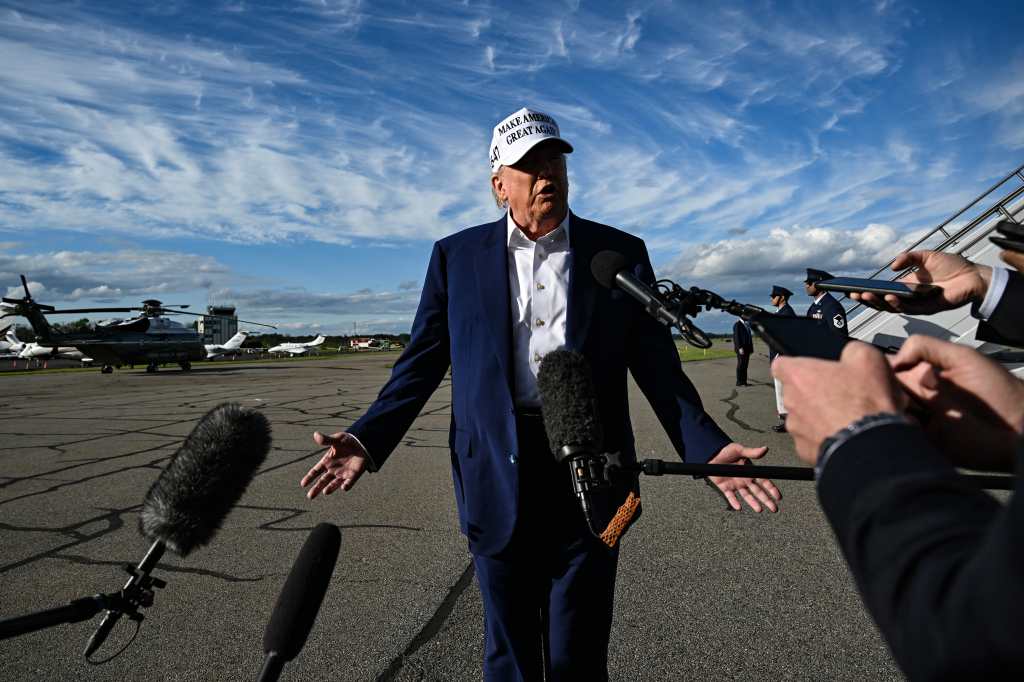
Lutnick and his counterparts in the government had initially told the court that an adverse ruling could alter negotiations with other nations and undermine the influence of the president.
On Sunday, Lutnick was more optimistic, stating that the sentence “has cost us a week, perhaps,” and insisted that “everyone returned to the table” and that the president would achieve his goal of closing many new commercial agreements with other countries.
He also said that the president is not expected to extend his original 90 -day pause for the global tariffs that he imposed when using the emergency authority that at least one court has declared illegal.
Government officials also reiterated on Sunday that China had violated the terms of the agreement that reached with the United States in Geneva in mid -May, for which both nations mutually reduced commercial barriers. Kevin Hasett, director of the National Economic Council, suggested in the ABC chain that there could be a discussion this week between Trump and Chinese President Xi Jinping, although he later said there was nothing scheduled.
Scott Besent, secretary of the Treasury, said separately in the CBS that the conversations with China had stagnated. He accused Beijing of curbing his exports of rare earth minerals, which are fundamental to the world chains of industrial supply.