
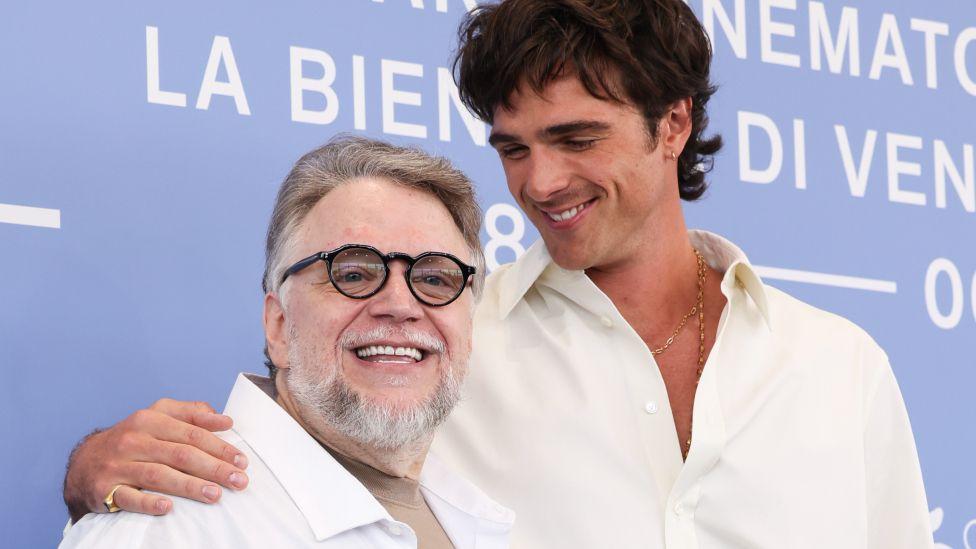
A few years ago, the director of Netflix, Ted Sarandos, met with Guillermo del Toro to ask the famous director what films he had on his desire list.
Del Toro responded with two names: “Pinocchio and Frankenstein.”
“Do it,” Sarandos replied, thus accepting both projects for the streaming giant. The first film, the acclaimed version of Dark Fantasy of Pinocchio de Del Toro, premiered in 2022.
But when starting working in “Frankenstein”, Del Toro launched a warning: “It’s great.”
I did not joke. The ambitious version of the Mexican filmmaker of the famous mad scientist and his monstrous creation is one of the central themes of the Venice Film Festival this year. It is a project in which it has been working for decades.
“It is a kind of sleep, or rather, a religion for me,” the director told reporters at the Festival.
Boris Karloff’s performance in the 1931 adaptation was particularly influential for the Toro version, which took to reach the big screen.
“I always waited for the film to be made in the right conditions, creatively, to achieve the scope it needed, to make it different, to make it on a scale that would allow the entire world to be rebuilt,” he explained.
Now that the process has come to an end and the film is about to be released, the director said, in a joke tone, that “it is in postpartum depression.”
The public who attended the first projection of the film in the 82th edition of the festival gave him a 13 -minute ovation, the AP agency said.
The banquet
Since writer Mary Shelly published her novel in 1818, hundreds of movies, television series and comics have presented some version of the famous character.
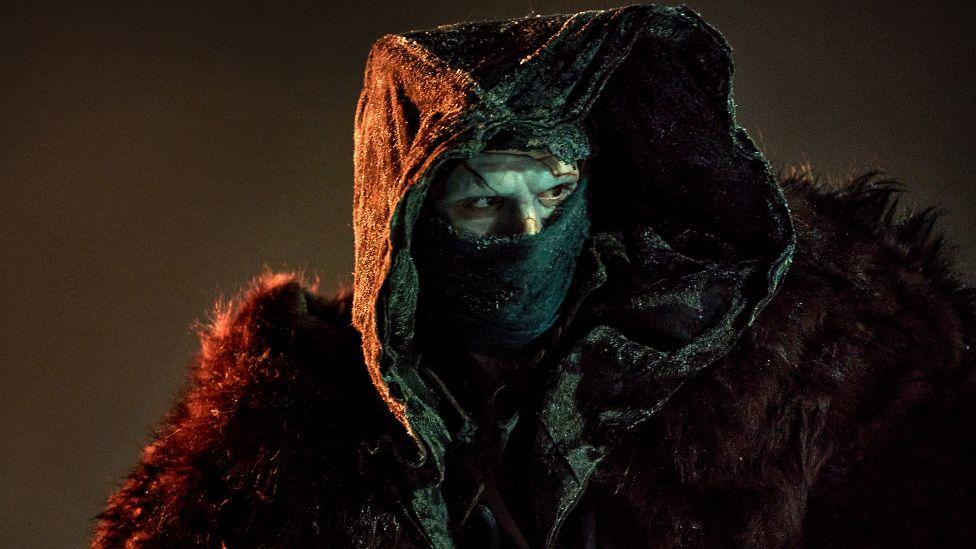
In the last adaptation, Oscar Isaac, protagonist of Inside Llewyn Davisassumes the role of Víctor Frankenstein, with the actor of Saltburn and EuphoriaJacob Elordi, unrecognizable as the monstrous creature to which he gives life.
“Guillermo told me: ‘I am creating this banquet for you, you just have to come and eat.’
“I cannot believe that it is here now that we have reached this point, which two years ago seemed the top,” he added.
Andrew Garfield had been originally chosen for the main character, but had to leave the project due to agenda conflicts derived from the Hollywood actors strike.
Elordi joined in advance.
“Guillermo contacted me quite late,” the actor recalled.
“I had about three weeks before starting to roll,” he said.
“He appeared as a monumental task, but as Oscar said, the banquet was already there and everyone was eating when I arrived, so I only had to look for a table. It was a dream come true,” added the Australian.
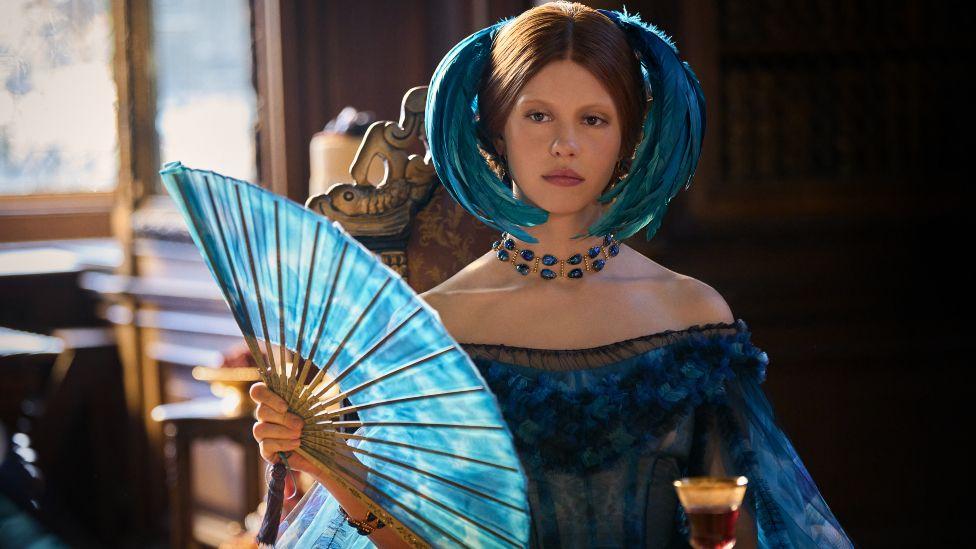
The film is also starring Cristoph Waltz and Mia Goth as Elizabeth, who marries Frankenstein, but distances himself from him by showing more goodness to the creature than him.
A necessarily long tape
The film is divided into three parts: a prelude, followed by two versions of the facts narrated from Frankenstein’s perspective and its creation.
It shows Frankenstein’s childhood and the factors that drove him to start working on the project. But it also encourages the public to see things from the perspective of the creature, shedding light on the abuse he received from his creator.
With 149 minutes, there is room for the characters and their stories to develop. In the first reviews of the film, most critics agreed that they deserve their duration.
“Perhaps it could have been shortened, but Del Toro is so irresistible, the return to Hollywood’s great cinema so pronounced, that it must be difficult to stop,” said Pete Hammond of Deadline.
“Once a filmmaker of the magnitude of Del Toro unleashes in the laboratory, why shorten it?”
But other reviews suggested that it was far from being the best in the bull. Geoffrey McNab de The Independent He said it was “pure appearance and little substance.”
“Despite all the formal mastery of Del Toro, this Frankenstein lacks the necessary tension to give life,” added the critic.
Much more enthusiasm showed David Rooney from The Hollywood Reporterwho wrote: “One of the best films in Toro, this is a large -scale narrative of exceptional beauty, feeling and art.”
In a four -star review, Jane Crowther, from Total filmHe commented: “With a masterful elaboration and a relevant theme, Frankenstein by Guillermo del Toro is an elegant adaptation, although somewhat safe, with potential for awards.”
Del Toro is one of the most beloved directors of his generation, appreciated in the industry for his love of cinema and ambition for what he can achieve.
At 60, he is also Hollywood’s favorite filmmaker for stories involving monsters or other fantastic creatures. Among his works are “the labyrinth of the faun”, Pacific Rim and “the form of water.” The latter earned him the Oscar for Best Film and Best Director in 2018.
He feels a great affection for the monsters and is known to humanize them in their films, awakening compassion in the public for characters that were previously considered villains.
In the case of Frankenstein, he said: “I wanted the creature to be a newborn. Many of the interpretations are like accident victims, and I was looking for beauty.”
Avoiding computerized effects
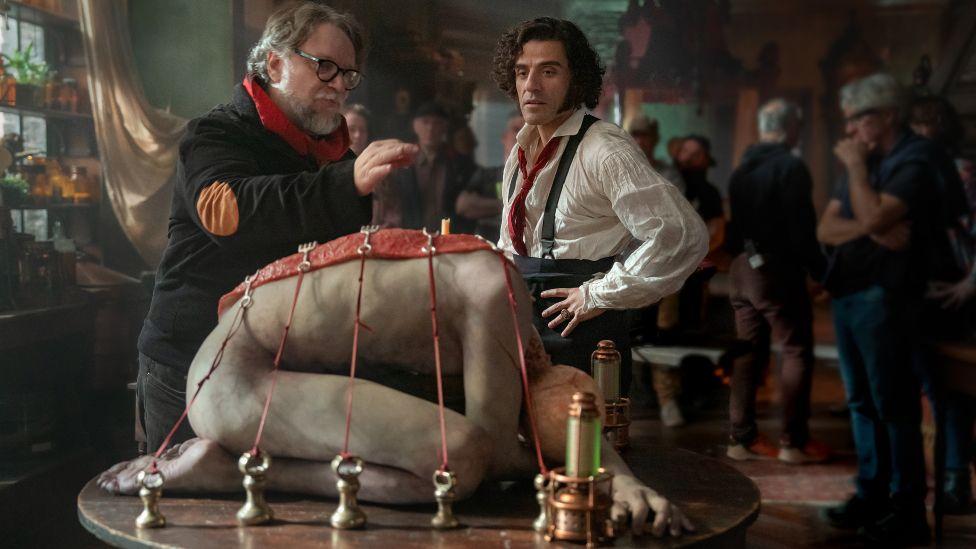
His vision and attention to detail in “Frankenstein” extended to each aspect of production, guaranteeing great care in the costumes and decorations, which are physical and overwhelmingly real scenarios, instead of computer -generated landscapes.
“The CGI (computer -generated images) is for losers,” says Waltz, with laughter.
Del Toro added that when filming with real funds, ultimately, a better interpretation of the actors is achieved than to use green screens.
The live compared the CGI and crafts, saying that they differentiated themselves as “a visual show and a visual protein,” but added that it uses digital effects when it is absolutely necessary.
The idea of creating an intelligent being that ends up operating under its own terms may sound familiar today, but from the bull said that the film “does not intend to be a metaphor” of artificial intelligence, as some critics have suggested.
“We live in a time of terror and intimidation, and the answer, of which art is part, is love. And the central question of the novel from the beginning is: What does it mean to be human?” He explained.
“And there is no more urgent task than to remain human at a time when everything tends to a bipolar understanding of our humanity. And it is not true, it is completely artificial,” he added.
And finally, he said: “The multicromatic characteristic of the human being is to be able to be black, white, gray and all intermediate nuances. The film tries to show imperfect characters and the right we have to remain imperfect.”

Click here To read more BBC News World Stories.
Subscribe here To our new newsletter to receive every Friday a selection of our best content of the week.
You can also follow us in YouTube, Instagram, Tiktok, X, Facebook and in our WhatsApp channel.
And remember that you can receive notifications in our app. Download the latest version and act.