

In one of the first novels extensively read about time trips, published in 1889, Mark Twain wrote about a man whose life was saved by an eclipse.
In the book of Twain “A Yankee in the court of King Arturo”, the protagonist Hank Morgan is unconscious and wakes up in England of the seventh century.
Hank is soon in trouble and is condemned to die burned in the bonfire.
For his fortune, his execution is scheduled for the same day of an eclipse.
Knowing that the day approaches, Morgan deceives the king and his people making them believe that he controls the sun and the moon.
His anticipated knowledge acquits him of penalty.
It is a fictitious story, but it could have been inspired by real world events.
Historical influence
Christopher Columbus once did something similar and that could have saved his life.
In fact, throughout history, Several eclipses have occurred at crucial momentsinfluencing people’s decisions, changing the result of battles and even transforming what we once believed about the nature of the universe.
Eclipses have influenced humanity in many ways, becoming part of innumerable cultures, belief systems and mythologies.
Over the centuries, people have associated these cosmic events with gods, transcendental forces, demons and a surprising variety of animals.
In Western Asia, for example, it looked like a dragon devouring the sun; In Peru, like a puma. Some American natives talked about a hungry bear and the Vikings saw a couple of heavenly wolves.
But, sometimes, an eclipse can really change the course of historical events.
Herodoto’s stories
One of the oldest known examples of an eclipse that caused a change happened during a battle for more than 2,000 years, according to writer Mark Littmann, from the University of Tennessee, who co -written the book “Totality.”
In a letter of the year 430 BC, the Greek historian Herodoto reported a war between the fights, who occupied regions of the current Türkiye, and the Medes, an ancient Iranian town.
After six years of struggle, with draws, victories and defeats on both sides, the opponents met again.
However, this time, “The day suddenly became night”Herodoto wrote.
“The Medes and Lidios, when they observed the change, stopped fighting and were eager to reach a peace agreement.”
In the nineteenth century, astronomers determined that Herodoto must be describing the solar eclipse of May 28, 585 AC, according to Littman.
Serge consultations
Another story of Herodoto describes how Jerges, leader of the Persian army, witnessed an eclipse before invading Greece.
It is not clear what eclipse could have seen that year, according to Littmann, but if Herodotus’s story is reliable, Jerjes had to have been alarmed enough to consult his Zoroastrian priests.
Supposedly, they told him that God was warning the Greeks about the imminent destruction of their cities.
“‘The sun forecasts them and the moon to us,” these priests would have suggested.
“Jerjes, instructed in this way, continued on his way with great joy in the heart,” Herodoto wrote.
But it turned out to be a terrible advice. Serges successfully attacked Athens, but after his Navy was destroyed, he had no other remedy to retire.
Upon his return, his armies were defeated. Then, in the 465 AC, he was killed.
However, this would not be the last time an eclipse would be crucial.
Columbus lyes in Jamaica
Let’s advance more than 1,000 years, and we find Christopher Columbus on his last trip.
In 1503, he ran his ships -which sank in Jamaica with his desperate crews -having lost most of his anchors and with the ships eaten away enough to be “full of holes like a honeycomb,” according to a biographer.
Fearing both the starvation and the conflict, Columbus prohibited its crew from abandoning its base and tentatively exchanged Spanish food and water jewels with the locals.
The danger was always present: one of his groups of explorers was reduced and captured by hostile locals when he was exploring the most east point of Jamaica.
To make things worse, in January 1504, some crew members were mutinied and fled to the island.
They abused and made fun of the inhabitants of the island, stole provisions and “committed all kinds of excesses,” wrote the Biography of Columbus.
After weeks with this situation, the local inhabitants lost their patience. Tolerance gave way to contempt and hate, and food trade stopped.
Columbus and the remaining crew faced the imminent starvation.
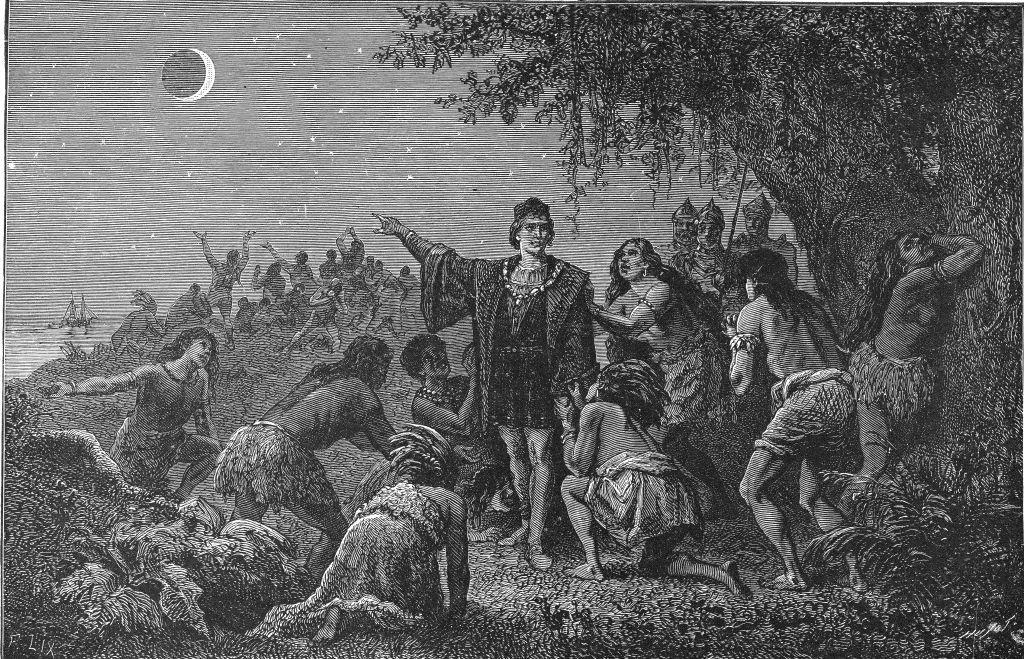
But while the end approached, Columbus recalled that an astronomical event approached: a lunar eclipse.
On March 1, he brought together leaders from the local communities, reproached them for having retired the provisions and warned them: “The God who protects me will punish them … This same night the moon will change color and lose its light, in testimony of the evils that will be sent from the heavens.”
And it worked. The fearful local gave and provided food again. Columbus promised to make a rite that would “forgive them.”
From the modern perspective, it is a disturbing story.
It is likely that indigenous peoples had all the right to avoid looting Europeans, and it was certainly not ethical diplomacy to use scientific knowledge and false threats to get out of their own.
However, he raises the question of what would have happened with Columbus if the lunar eclipse would not have occurred that March, since the rescue would not arrive until June.
Maybe it would have been better for his reputation if he had died in Jamaica.
The rest of his life was not exactly glorious: he returned to Spain with a deteriorated physical and mental health, struggling to obtain official recognition and money.
His sponsors doubted their mental state and ignored their requests.
Christopher Columbus lived unhappy until his death in 1506.
In intriguing, lunar eclipses such as Columbus seem to influence more crucial moments than solar eclipses, according to Littmann.
Because?
This is due to the number of people who can see them. Although there are more solar eclipses, lunar eclipses last longer and are visible for more than half of the earth.
“It’s easier for them to influence history,” he explains.
The Tecumseh eclipse
However, a solar eclipse did play an important role in the history of the United States.
In the nineteenth century, the American native leader Shawnee Tecumseh and his brother, a self -proclaimed prophet, sought to unite their people and preserve their ancestral traditions.
The designated governor of the territory, William Henry Harrison, who would later become president of the United States, had other ideas and began to persuade indigenous leaders to deliver their land.
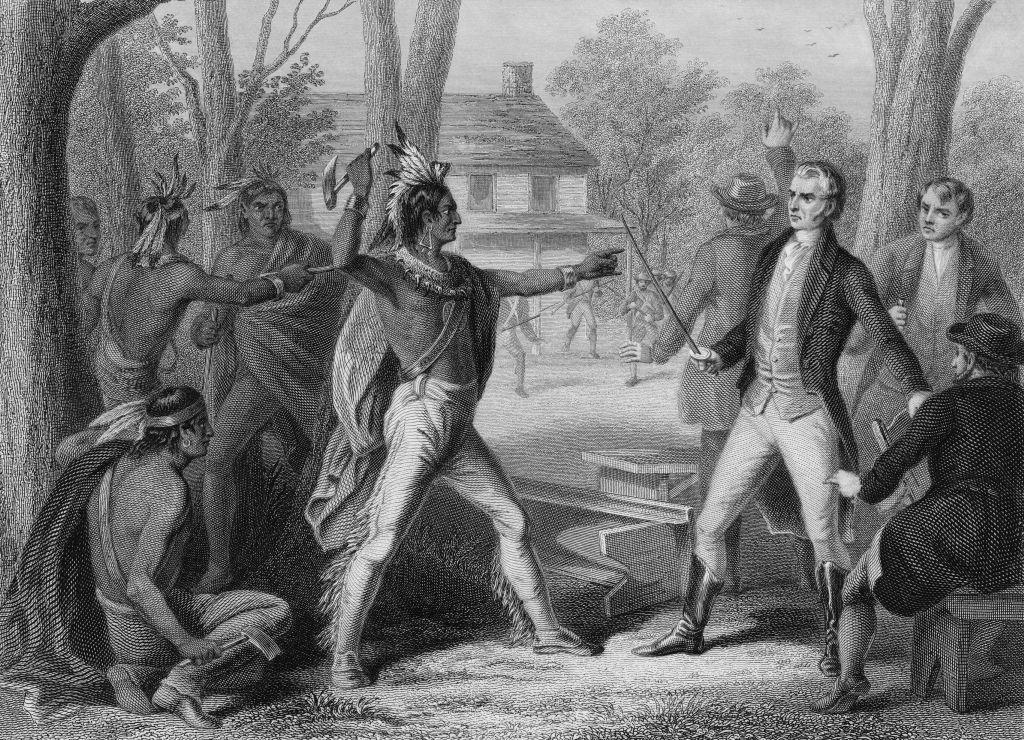
He knew that Tecumseh and his brother got in his way, so, hoping to discredit them, he asked them for a sign: if the prophet was so powerful, why don’t the sun stop in heaven?
But the strategy went wrong to Harrison.
Tecumseh’s brother announced that the sun would stop on April 16, 1806.
“At the right time, he went out with his complete clothing, he said to the sun and said: ‘Dark it,” says Littmann.
It is not clear how Tecumseh and his brother knew there would be an eclipse that day.
However, it was effective and strengthened the influence and reputation of the brothers among their people.
Unfortunately, history books tell that the long -term consequence was a return to war.
Relative benefits
However, for Littmann, the most important eclipse in history occurred at the beginning of the 20th century: that of 1919, which confirmed that Albert Einstein was right in his theory of general relativity and made him one of the most famous scientists in the world.
“In my opinion, this eclipse was decisive in the history of the world. That was a turning point, in terms of science, in terms of our understanding of the universe and the attitudes of people, ”says Littmann.
“The universe is much more difficult to understand what we were in the time of Newtonian physics.”
In a nutshell, the solar eclipse of 1919 allowed scientists to observe that the gravitational field of the sun diverts the light of the stars, a key prediction of Einstein’s theory.

Cosmic coincidences
We accept the total eclipses of Sun as part of life on this planet, but if the solar system had been formed differently, they would not occur.
The sun has a diameter 400 times greater than that of the moon and, at the same time, is located at a distance 400 times greater than the earth, which makes both seem the same size in the sky. It is really a remarkable coincidence.
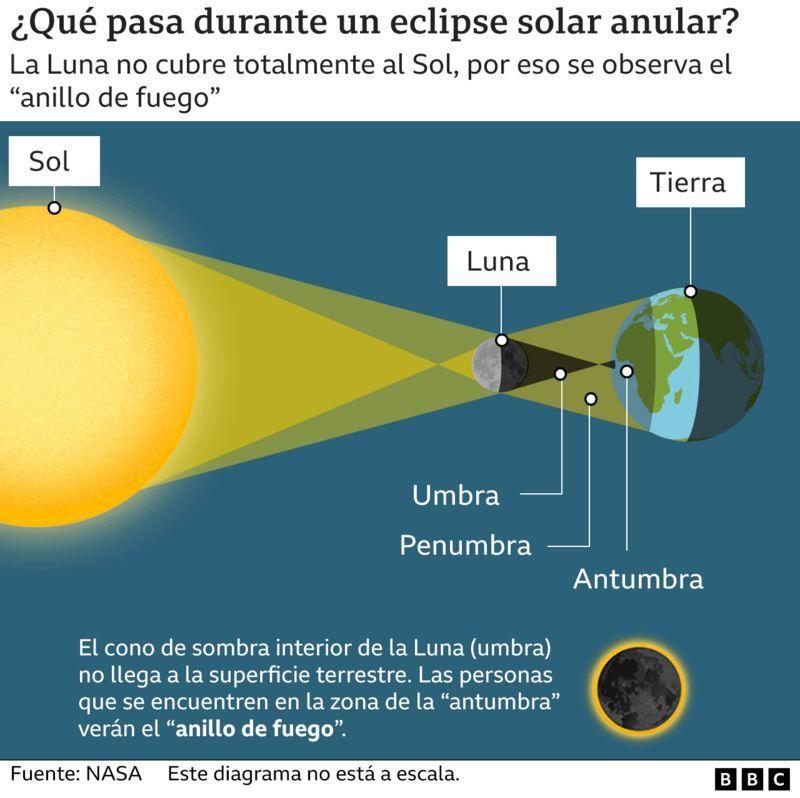
In his book “Totality”, Mark Littmann points out that if the moon had a diameter just 273 km (169 miles) smaller or were further, people would never see a total solar eclipse like the one seen for the last time on April 8, 2024.
Where and when will they be the next eclipses?
The total lunar eclipse that took place this morning on Friday, March 14 was seen on North America and much of South America.
It was also characterized by being a “blood moon”, called by the reddish color that the satellite adopted due to the phenomenon of filtration of sunlight through the atmosphere.
As for a total solar eclipse, the next major event that can be seen from the American continent will occur in 2033, but it will only be visible from Alaska.
However, in the intermediate years, you can see a series of partial and annular solar eclipses from the region. Spain will have a total one in 2027.
And Australia will run with the greatest luck, since he will enjoy four eclipses between 2028 and 2038.
This note was originally posted in BBC Future and BBC Mundo in October 2023. You can see the original English note by clicking here.

Remember that you can receive notifications from BBC News Mundo. Download the latest version of our app and act.