

According to the Norwegian Nobel Committee, Machado was honored with the award “for her tireless work in promoting the democratic rights of the people of Venezuela and for her fight to achieve a just and peaceful transition from dictatorship to democracy.”
Over the years, Machado (57) became the main voice of resistance of the Chavista regime led by Nicolás Maduro that has governed Venezuela for decades.
In the last months of 2024, there was an arrest warrant against her and, for years, she was seen as the “black beast” of the ruling party, as the opponent who, even in the moments of greatest strength of Chavismo, was unwavering in her questioning of it. Hugo Chavez and its system of government.
In response, the authorities applied increasing restrictions to her: they prohibited her from leaving the country, stripped her of her position as a representative in the National Assembly and disqualified her from holding public office, measures that were justified by her alleged links to American “imperialism.”
Despite these measures, Machado continued to engage in politics until she ended up consolidating herself as the undisputed leader of the Venezuelan opposition.
And he did it by hand.
Between 2023 and 2024, he traveled from end to end of Venezuela twice despite having roads closed, flights canceled and animal blood poured into his car.
As she walked through crowded streets, dozens of people gave her rosaries that she keeps, with name, place and date, and hangs around her neck. In the largest rallies you can see up to ten rosaries on his chest.
“With each one I can remember why I do what I do and how many prayers encourage us to continue fighting,” said the opposition leader, after the July 28, 2024 elections, in which Nicolas Maduro He was declared the winner, despite the opposition’s complaints of fraud since the National Electoral Council never showed the detailed electoral results that a large part of the international community requested to legitimize his supposed victory.
Machado, 57, managed to revive the buried hope of millions who want a change of government. He did it before the elections, despite the skepticism of many on the electoral route, and he did it after the National Electoral Council (CNE) proved suspicions that Maduro would be declared the winner.
Less than an hour after that report from the CNE, the electoral body related to the government, Machado came out to renew spirits with the announcement that his candidate, Edmundo González Urrutiahad won the elections. And he had the evidence to prove it.
Machado, who began his political career in electoral observation organizations, this time joined an old opposition structure that has sophisticated knowledge of the automated voting system, which allowed them to count the votes parallel to that of the CNE with the official records kept by their witnesses.
With this, the opposition exposed the so-called “Maduro fraud” and got countries like the United States to declare González the winner given the “overwhelming evidence” presented.
“Winning took a long time and getting paid can also take time,” Machado repeated in heartfelt voice messages to his militants. “So we have to resist,” he tells them, “and we have to stay close to the people and tell them that we are not going to abandon them, because we are going to the end.”
“Until the end” was her motto, which turned Machado, appealing to her role as mother and grandmother, into a kind of savior of the townand in the leader of an opposition coalition who for years saw her as a “thorn in the side” for her positions against dialogue and voting and in favor of international military intervention.
But Machado, as he told me in an interview in November 2023, changed, just as millions of Venezuelans have: “We have made many mistakes, and when the mistakes are made based on what you believe is right or because you do not have all the information or because you have underestimated what you face, you have to learn from them.”
“We have been discovering ourselves. We have realized that: ‘Hey, I am capable of doing this.'”
Rebel for Chavismo and for the opposition
María Corina Machado Parisca has three children and is the eldest of four sisters in a family headed by a prestigious businessman in the metallurgical sector whose companies were nationalized by Hugo Chávez, Maduro’s predecessor. His mother is a renowned psychologist and tennis player.
Industrial engineer with a specialization in finance, María Corina worked in several industrial companies until she joined organizations of fight against poverty and electoral oversight.
From there he approached the Republican Party in the United States, a country where he lived and with which he has ties and political connections. Chavismo always saw her as a collaborator of the “imperialist coup.”
The first accusation against him was for illegally receiving money from American foundations, a charge that earned him a ban on leaving the country for three years.
In 2010 she came to the National Assembly as an independent deputy with an anti-communist speech and in 2012 she lost the opposition presidential primaries to Henrique Capriles.
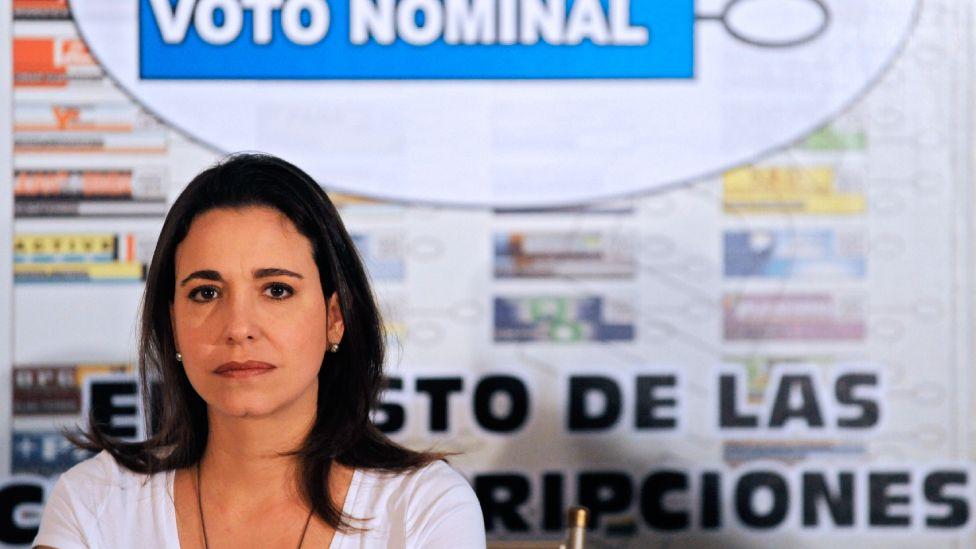
Due to the disqualifications, during the last ten years Machado has engaged in politics outside the system, promoting “Maduro’s departure” in 2014 together with Leopoldo López and promoting protests in 2017 and 2019.
She was the first to describe the government as a “dictatorship”, rejected all attempts at negotiation with Chavismo, defended the use of force to remove Maduro and opposed the main opposition parties, which she accused of being “collaborators”.
That, added to her insistence on staying in the country despite threats of arrest and probably appealing to her family’s metallurgical tradition, earned her the nickname “the iron lady.”
As the leadership of Capriles, López and Juan Guaidó eroded, she appeared as the clearest card —the last of a generation— to confront Maduro.
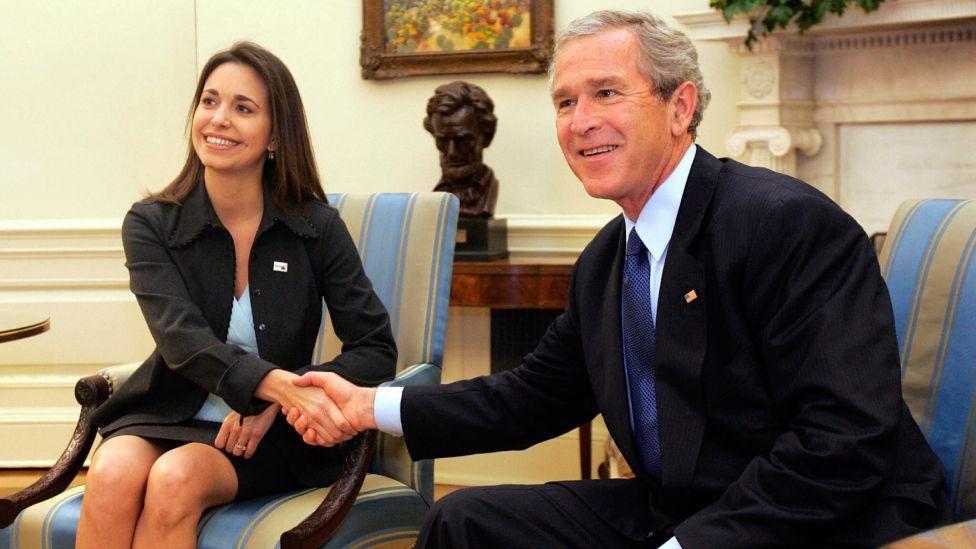
A new connection with the town
In academia it is often said that the Venezuelan people have a caudillo vocation. Starting with Simón Bolívar, in the 19th and 20th centuries there were many leaders with a personalistic and paternalistic style.
Although it comes from before, many find the main cause of this political culture in the discovery and then the nationalization of oil, a resource that created the idea of a “magic state” who watched over every Venezuelan.
Hugo Chávez, in his own way and for his specific reasons, was the last exponent of this.
Machado, from an ideologically opposite place and being a woman, proposed a new way to connect with the people through that same political culture.
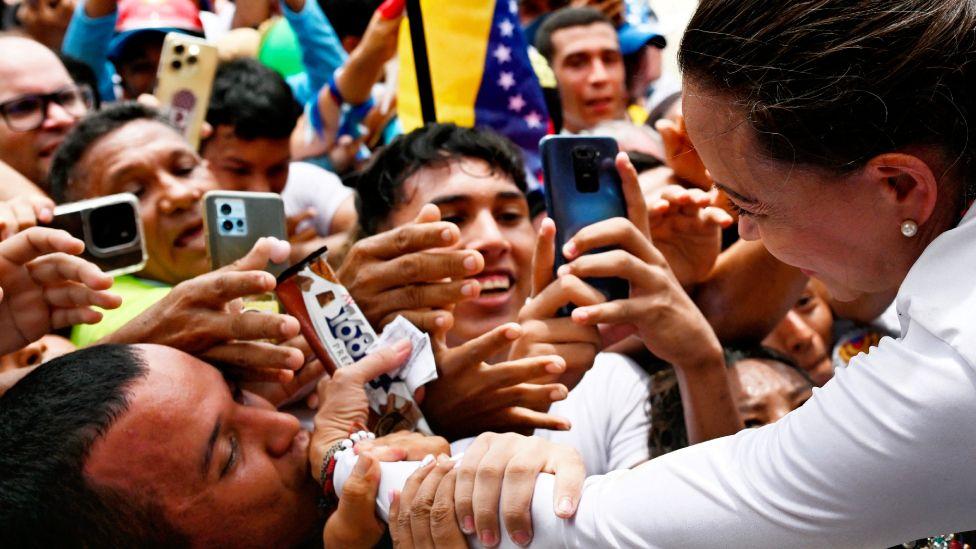
This was visible in the massive demonstrations that she called during the 2024 electoral process: people, men and women and children of all classes, shout at her, hug her, kiss her on the face and on the hand.
They called her “my love,” “my queen,” “take care, my girl.” They saw her as a daughter and as a mother and as a grandmother. They asked God for her.
They have affection and respect for him because he is “arrecha”, because he is “brave and consistent”.
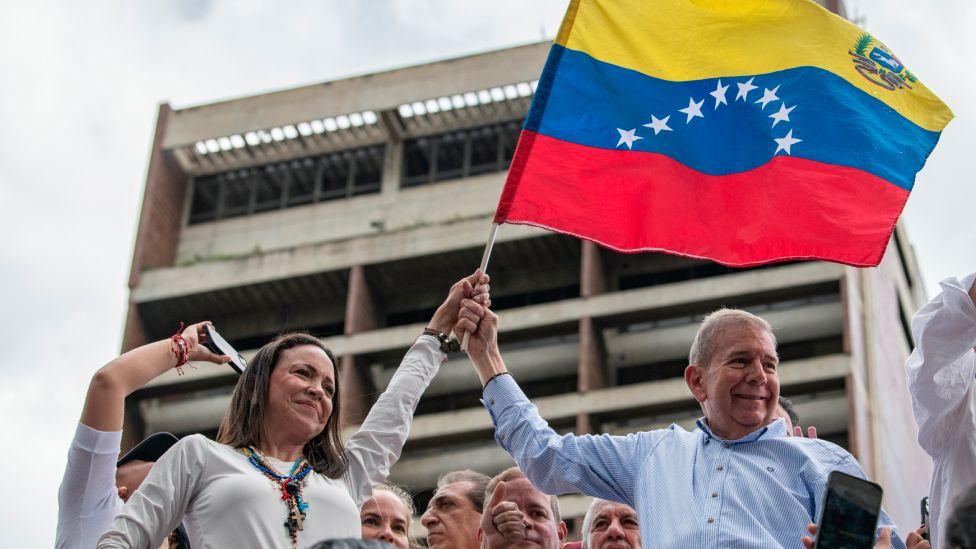
On January 13, 2012, President Hugo Chávez gave his annual Memory and Account speech before the National Assembly. In the series of interpellations, the emboldened voice of a 44-year-old opposition deputy rang out.
“How can you say that you respect the private sector when you have dedicated yourself to expropriating, which is stealing?” María Corina Machado asked him.
And Chávez answered her, after a long silence and before the shout of the ruling party: “I suggest that you win the primaries, representative, because you are out of the ranking to argue with me.”
After another silence, he finished: “Eagles do not hunt flies, deputy“.
Twelve years later, Machado won the primaries with 95% of the votes and the presidential one, in a formula with González Urrutia, with 70% of the votes, according to the official records that he showed to the world at that time.
And she was awarded for, according to the Norwegian Committee, “devoting years to working for the freedom of the Venezuelan people.”
The fly, then, became an eagle: it is she, now, who is in the hearts of the majority of Venezuelans.
*This story was originally published on August 3, 2024 and was updated after he was awarded the Nobel Peace Prize on October 10, 2025.

click here to read more stories from BBC News Mundo.
You can also follow us on YouTube, instagram, TikTok, x, Facebook and in our new whatsapp channelwhere you will find breaking news and our best content.
And remember that you can receive notifications in our app. Download the latest version and activate them.