
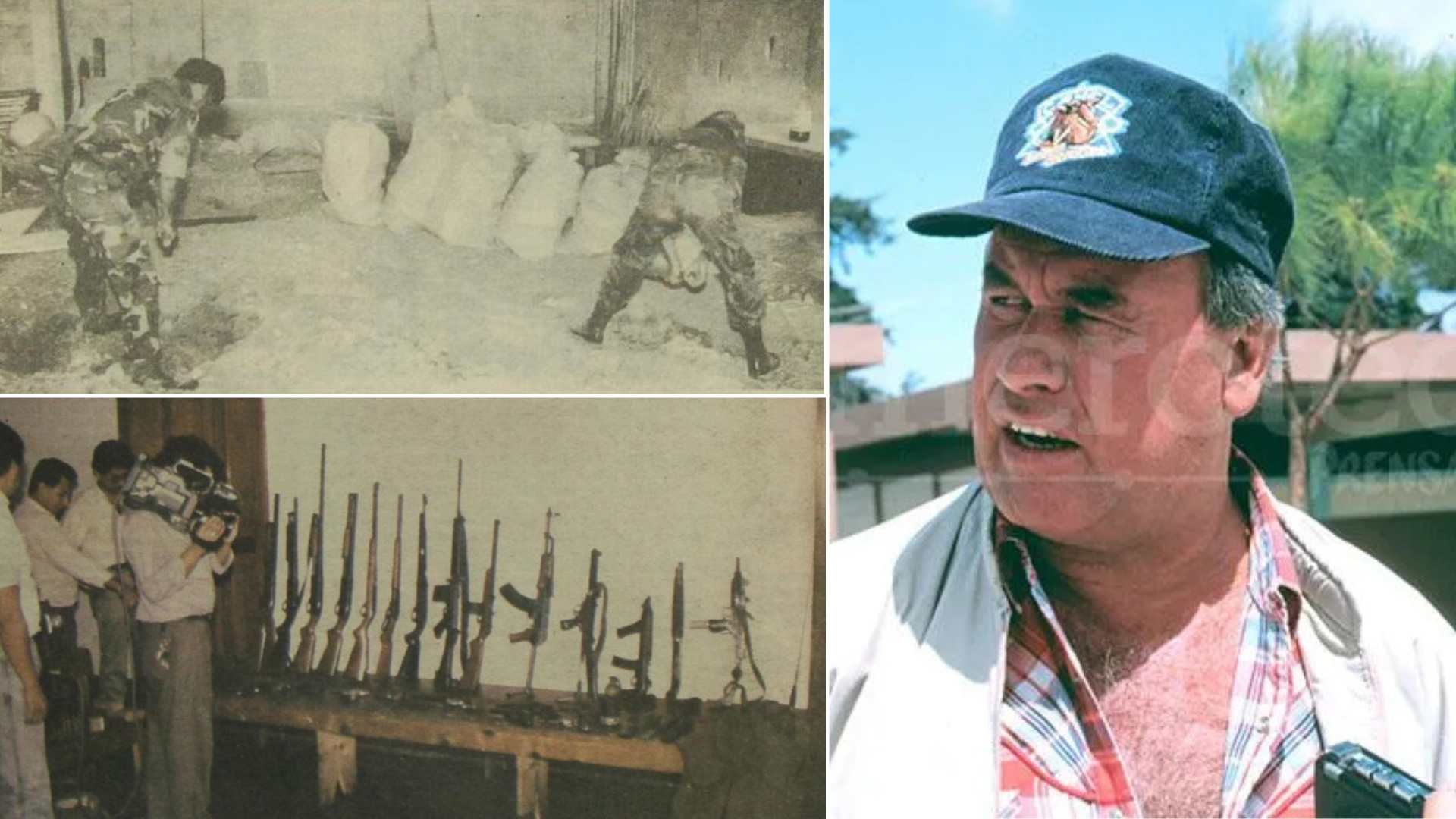
On the morning of December 27, 1990, a police operation broke into the home of the then mayor of Zacapa, Arnoldo Vargasparty leader Union of the National Center (UCN). What the agents found was a war arsenal inside your houselinked to his drug trafficking activities.
Among the 26 weapons seized was one mini Uzi, two rifles, five shotguns, three rifles, a carbine, seven pistols, five revolvers, two fragmentation grenades and an armored vest, plus thousands of ammunition.
The weapons were consigned to the courts and transferred to the Army, as they were weapons for exclusive military use, according to what was published Free press three days later.
But the weapons were only part of the discovery.
Authorities also discovered more than 1,700 kilos of cocainethen valued at Q19 thousand 417 milliona sum sufficient—according to the calculations of the time—to pay the country’s external debt.
In addition, five other men were captured when they were traveling along Petapa Avenue, zone 12, in a van that was transporting 622 kilos of the cargo. The rest of the cache was located in warehouses in Boca del Monte.
The authorities confirmed that they were part of the group led by the then mayor of Zacapaneco.

The operation that took him to the United States
After months of judicial proceedings and a frustrated escape attempt, on May 19, 1992, Vargas was handed over to the DEA and extradited to the United States.
Three months earlier, on February 16, an evasion plan had been revealed when his brother Orlando Vargas arrived at the Pavón Penal Farm with two false freedom orders, a set of duplicate plates and an arsenal.
The maneuver was discovered by prison guards and police, who thwarted the escape.
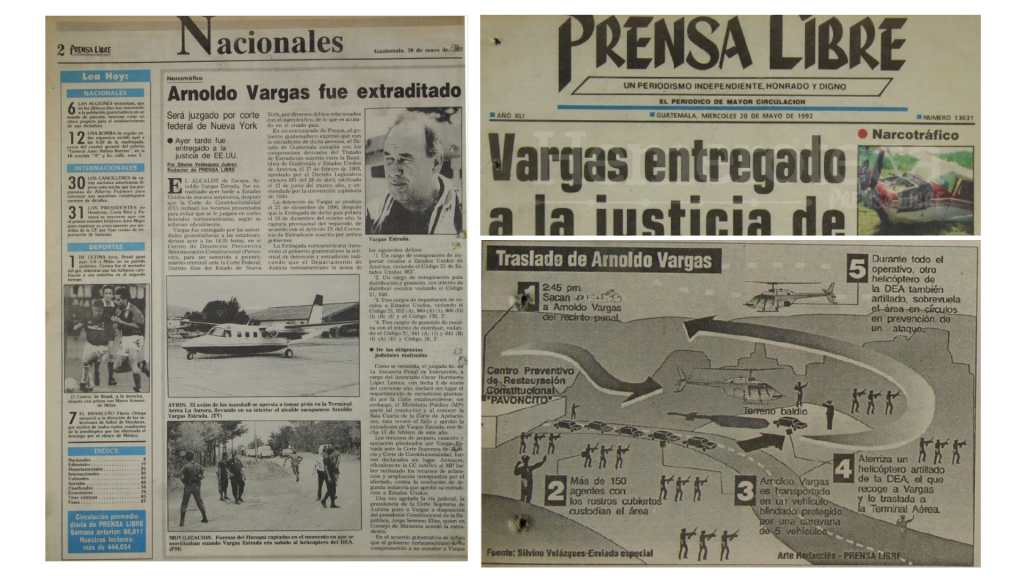
On the day of the extradition, the security device was cinematic.
At 2:45 p.m., Vargas left the walls of Pavoncito in an armored vehicle escorted by a caravan of five cars.
More than 150 agents with their faces covered guarded the perimeter, while a gunship helicopter from the Drug Enforcement Administration (DEA) flew over the area.
From there, another helicopter took him to La Aurora airport, where he was handed over to US agents.
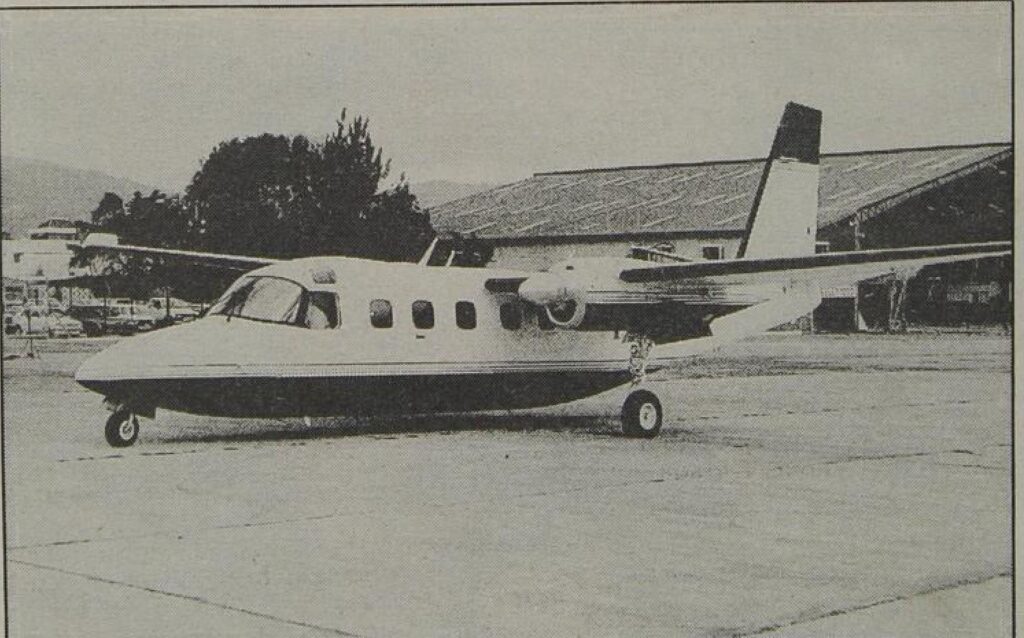
He was the first high-profile Guatemalan kingpin to be extradited for drug trafficking, marking the beginning of a long list of sending powerful crime bosses north.
What the background reveals
Vargas had come to local power in 1985, when he won the municipal elections in Zacapa for the UCN, a party later accused of ties to drug trafficking.
But his influence had been forged long before.
According to research by sociologist Matilde González Izás, the former mayor was part of the counterinsurgency structure organized by the State in the seventies to confront the guerrillas in the east of the country.
For his role as “military commissioner,” then-president Carlos Arana Osorio granted him control over customs and privileges on the border with Honduras.
Declassified documents from the United States indicate that, from these positions, Vargas established links with the Medellín cartel, led by Pablo Escobar, with whom he negotiated cocaine shipments in the 1980s.
His political rise formalized that power. He won the elections again in November 1990, but did not manage to assume his second term when he was captured a month later, after being betrayed to the DEA by a Colombian informant.
The cheered return
After 25 years in prisons in New York and Kentucky, Vargas He returned to Guatemala in July 201771 years old.
His return was received as a celebration in Zacapa, with marimba music and in a caravan of motorcycles and dozens of vehicles that traveled the streets to his village, Manzanotes, his place of origin.
“There were 9,638 days in prison,” he said in his speech, before about 400 people. “By God it’s a lie”he said about his 1990 arrest.
On stage, he smiled in a black cap embroidered with golden laurels and the legend United States.
The bridge that connects the municipality still bears his name.
The footprint that was left
The power of the Vargas family did not disappear.
your brother Elder Vargas Estrada He was a deputy and mayor between 2004 and 2008, while other close friends held positions on the municipal council.
The criminal legacy also spread to a new generation: his son, Arnoldo Oswaldo Vargas Samayoawas extradited and convicted in the United States for trafficking cocaine and laundering money.
According to the Department of Justice, he led an international network that moved drugs from Guatemala to Texas and California, with profits of one thousand dollars per kilo.
His father, the renowned former mayor of Zacapa, died on October 8, 2025. He was 79 years old.