

The measures, which will enter into force between this and next week, include a minimum 10 % tax to all products that enter the United States and higher rates to the main economies of the world and several emerging.
The announcement of the US president means, according to several analysts, the greatest breakdown of the international commercial order since World War II.
Trump argues that it is a “reciprocal” action after decades of abuse by allies and competitors whose protectionist measures, alleges, are damaging US exports.
International economists and leaders warn that the consequences could be serious, from inflation to the fall of trade and a global recession.
We give you 4 keys to understand Trump’s announcement, its reach and its possible consequences.
1. What tariffs Trump announced and why
In his speech pronounced from the Rosaleda de la Casa Blanca during what he baptized as the “Day of Liberation”, the US President presented his most ambitious tariff plan to date.
Trump exhibited a poster with two columns: one with the tariffs and barriers that supposedly the countries impose on American products – including indirect measures such as the manipulation of currencies or sanitary regulations – and another with the new rates that the United States will apply in response to those nations.
The plan includes a 10 % base tariff for all imported products, without exception by sector or category, which will come into force this Friday, April 5.
From day 9, higher taxes will be applied to imports from more than 60 countries that the White House considers the main responsible for what Trump defined as “decades of commercial abuse.”
Among them are China (34 %), those of the European Union (20 %), Japan (24 %), South Korea (25 %) and India (26 %).
Among the countries that will receive even higher levies stand out Vietnam (46 %) and Cambodia (49 %), two economies with a thriving manufacturing sector that in recent years have absorbed investments and production displaced from China.
President Trump justified his decision by stating that for more than five decades, the United States was “looted” and “plundered” by countries around the world, both allies and rivals.
“Today we support the US worker and finally put the United States first,” he said, after stating that, in many cases, “the friend is worse than the enemy” in trade.
Trump also announced that since May tax free treatment will be eliminated for small packages from China, which will affect electronic commerce platforms such as Shein and Temu.
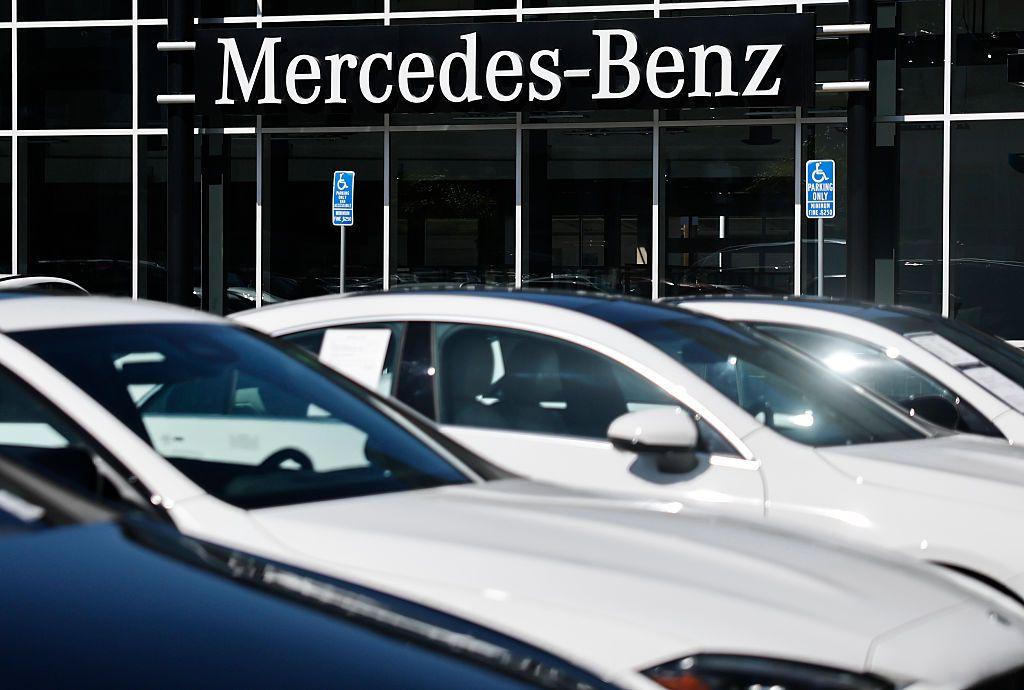
And confirmed the immediate entry of a 25 % tariff to all cars manufactured outside the United States, a measure that had already anticipated last week.
The president’s central argument is that these rates are necessary to correct what he considers a structural imbalance.
In 2024, the US registered a commercial deficit of US $ 918 billion, 17 % more than in 2023, which Trump described as “a national emergency that threatens our security and our way of life.”
According to calculations from the White House commercial advisor, Peter Navarro, the measures could generate annual income of up to US $ 600 billion, in addition to stimulating the national industry and recovering jobs from the manufacturing sector.
2. How they affect Latin America
Donald Trump’s new commercial offensive will have a direct impact on almost all Latin American countries.
According to the list released by the White House, most of them will be subject to a 10 % tariff in their exports to the United States, in line with the minimum rate established by Washington.
Among the affected countries are Argentina, Bolivia, Brazil, Chile, Colombia, Costa Rica, Ecuador, El Salvador, Guatemala, Haiti, Honduras, Panama, Paraguay, Peru, Dominican Republic and Uruguay.
Only two Latin American countries appear with tariffs higher to minimum: Nicaragua, with 18 %, and Venezuela, with 15 %. The US government did not specify in detail the reasons, which experts attribute to the tense political relations of Washington with both nations.

Mexico, meanwhile, was out of this new round of tariffs, as did Canada. Both countries are covered by the treaty between Mexico, the United States and Canada (T-MEC), which establishes preferential trade conditions.
The White House said that the products that meet the requirements of the treaty will remain exempt from tariffs, while those who do not continue to continue to the rates already in force: 25 % for goods not included in the agreement and 10 % for specific products such as energy and potassa.
In addition, 25 % surcharge on cars will be applied.
The decision not to impose new tariffs on Mexico was interpreted by some analysts as a strategic gesture.
“He caught his attention and it was good news that did not mention Mexico or Canada,” Gabriela Siller, director of Economic Analysis at Grupo Financiero Based.
The economist considers that this situation represents an “opportunity” for Mexico compared to other economies that will face higher costs to access the US market.
In addition, according to Siller, Mexico’s exclusion could enhance the Nearshoring phenomenon, that is, the relocation of production processes closer to the consumer country.
3. How affected countries have reacted
Governments, political leaders and business organizations expressed concern about the possible impact of new tariffs on global trade and bilateral relations with the United States.
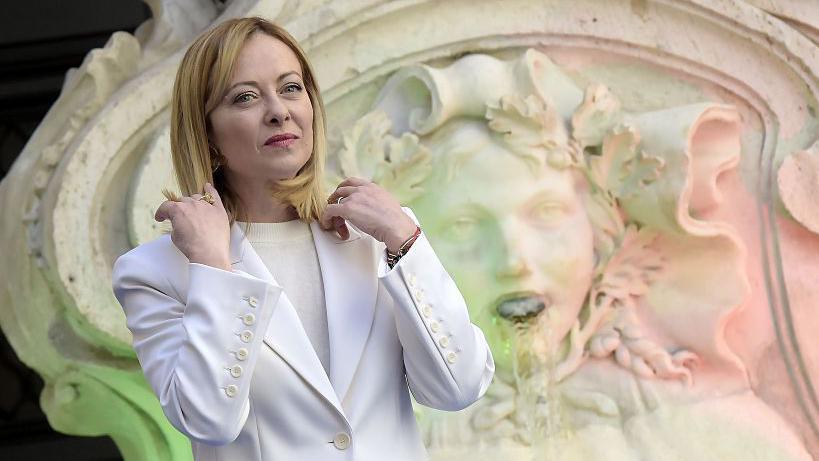
The Italian Prime Minister, Giorgia Meloni, described the measures as “erroneous” and warned that they could lead to a commercial war that “inevitably weaken the West in favor of other global actors.”
The Prime Minister of Sweden, Ulf Kristerson, advocated “recovering the path of commerce and cooperation with the US so that the people of our countries can enjoy a better life.”
Karin Keller-Sutter, president of Switzerland, a country to which a 31 %tariff will be imposed, said his government “will quickly determine” response measures.
In South America, the Brazilian government stated that “it is evaluating all possible actions to guarantee reciprocity in bilateral trade, including resorting to the World Trade Organization (WTO), in defense of the legitimate national interests.”
From Colombia, Chancellor Laura Sarabia indicated that the measures “in order to protect the national industry and our exporters are being studied.”
In South Korea (country to which Trump has imposed a 25 %tariff) the interim president Han Duck-Soo acknowledged that “the global commercial war is already a reality” and its government “must use all its capabilities” to overcome it.
For his part, Canadian Prime Minister Mark Carney, although his country was exempt from the new tariffs, adopted a firm tone and promised countermeasures.
“It is essential to act with determination and forcefulness, and that is what we will do,” he said.
In the United Kingdom, the Confederation of the British industry described the announcement as “deeply worrying for companies”, and British cameras warned about possible falls in demand and price increases.
4. What are the consequences for world trade
The new Trump tariffs suppose, according to experts, a radical turn in the United States commercial policy and a hard blow to the multilateral trade system that Washington contributed to building after World War II.
The decision to apply a 10 % base tariff to all imports, along with much higher rates for dozens of countries considered “worst offenders”, threatens to unleash economic consequences on a global scale.
The first of the planned effects is a general increase in prices for American consumers in items such as vehicles, clothing, appliances, bicycles and wines and liquors.
“The increase in prices is likely to materialize very quickly,” Gustavo Flores-Macías, a professor of public policies at Cornell University BBC.
The academic also questioned that Trump’s promise to generate manufacturing jobs in the United States has immediate results and predicted that “if it materializes, it will be long term.”
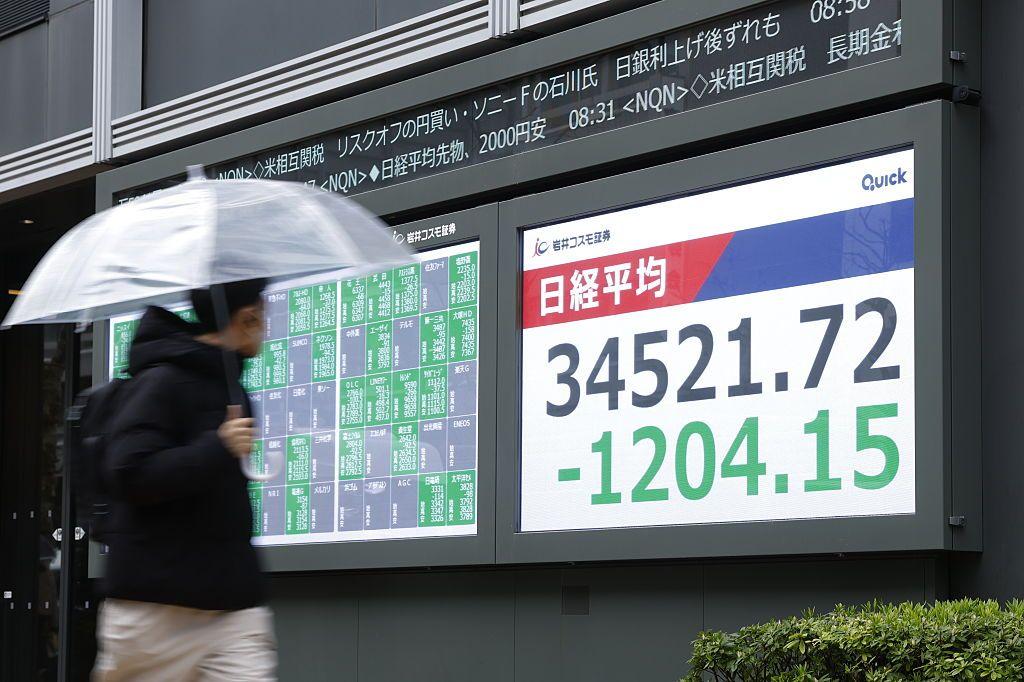
The reaction in the bags was negative: companies strongly exposed to international trade, such as Apple, Amazon or Nike, registered significant falls in the negotiations after the closing of the day on Wall Street.
Ken Rogoff, former chief economist of the International Monetary Fund, spoke of “a nuclear bomb about the global commercial system” in statements to the BBC and said that, after this protectionist turn, the possibility that the United States enters recession is 50%.
Olu Sonola, head of economic research at the Fitch Ratings agency, considered that “it is a change of play, not only for the US economy, but for the global economy.”
He affirmed that, with these measures, the effective rate of tariffs in the United States would return to levels not seen since 1910 and “many countries will probably end in recession.”
Another collateral effect is the possible erosion of commercial treaties in force for decades: the unilateral imposition of tariffs and the threat of a commercial war could, according to analysts, weaken historical alliances and promote an environment of uncertainty in the markets.
“The international trade system is falling apart,” summarized Professor Flores-Macías.