
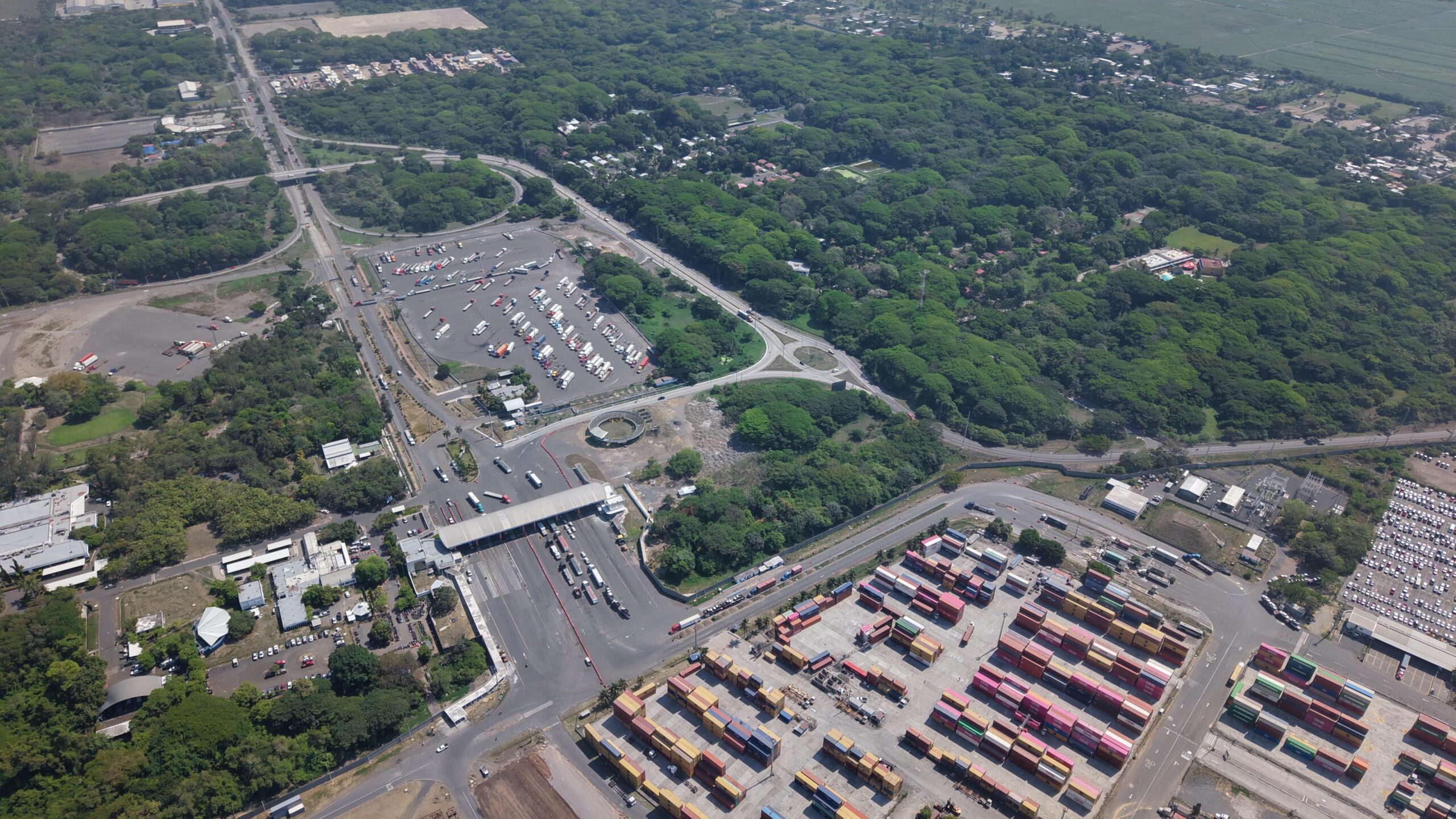
The State of Guatemala made a second disbursement of US$10 million (approximately Q76 million) to the United States Army Corps of Engineers (Usace), within the framework of bilateral cooperation for the development of strategic infrastructure.
The transfer was made on March 30 and is intended for the project called “Multimodal Logistics Station and Railway Connection between Puerto Quetzal and Escuintla”, which contemplates the rehabilitation of a freight train, as well as improvements in rural roads.
This project is part of a new agreement signed on January 16 of this year, through which Usace provides support in the rehabilitation, design, construction and maintenance of critical infrastructure in the country.
With this second payment, the total amount transferred to the US Army Corps of Engineers amounts to US$73.7 million.
Previously, on July 30, 2025, the Quetzal Port Company (EPQ), through the Ministry of Defense (Mindef), had carried out a first disbursement of US$63.7 million (about Q490 million), corresponding to the pre-feasibility and design phase of the expansion project, according to the initial agreement signed in May of that same year.
Railway project to Escuintla enters technical phase
The Minister of Defense, Henry Sáenz Ramos, reported that the railway project between Puerto Quetzal and Escuintla is currently in the study and technical structuring phase, with the aim of determining its comprehensive viability.
As he explained, at this stage aspects such as the logistical demand, terrain conditions, right of way, environmental impact and integration of the project within a modern transportation system.
The official confirmed that an approximate investment of US$10 million has been planned to develop specialized preliminary studies. These include the analysis, design and planning of the railway infrastructure, as well as its articulation with a multimodal logistics platform that allows optimizing cargo transportation between the port and the interior of the country.
Sáenz highlighted that this effort is being developed in parallel with the process of modernization and expansion of the docks of the Empresa Portuaria Quetzal (EPQ), with the support of Usace.
“The aim is for the railway infrastructure to respond efficiently to the future operational capacities of the port,” he stated.
In addition, he indicated that in a complementary manner the improvement of strategic road corridors is promoted, in order to strengthen connectivityreduce transfer times and reduce logistics costs in the area of influence of Puerto Quetzal.
“The project advances in a technical, progressive and coordinated manner, aimed at consolidating a more efficient, competitive and sustainable logistics system for the country,” the minister said.
Areas to be worked on include:
- Feasibility studies
- engineering studies
- Design of the Multimodal Logistics Station
- Design of the first section of the railway line (70 kilometers)
- Preparation of general plans of the project
Expansion of docks in EPQ advances in the design phase
Mindef also provided an update on the program being carried out for the expansion of commercial docks in EPQ and since This Monday, April 13 to 17, a visit from Usace is planned.
“The modernization and expansion program of the Quetzal Port is progressing positively and according to plan, currently being in an initial design phase that has already made it possible to define the main technical requirements, prepare preliminary schemes and establish cost estimates. This progress reflects solid and well-structured technical work,” stressed Sáenz Ramos.
“The railway project between Puerto Quetzal and Escuintla is currently in the study and technical structuring phase, with the objective of determining its comprehensive viability.
In addition, he explained that the joint coordination between the EPQ and the United States Army Corps of Engineers remains active and fluid, with an exchange of information, development of specialized workshops and permanent technical support.
“It is important to highlight that the approach is not limited only to infrastructure, but also incorporates operational and management improvements, which strengthens the efficiency and competitiveness of the port in the medium and long term,” he noted.
He added that the Puerto Quetzal modernization program is advancing in the preparation of feasibility studies and engineering studies, which are 35% complete.
EPQ plans to advance to 65% in the second semester
Mindef also detailed the stages planned for the second semester in the EPQ expansion and modernization program, in which a progress of 65% is expected to be achieved, in accordance with the planning and definition of the required investment amount.
Minister Sáenz explained that during this period the project will enter a phase of technical consolidation and preparation for its execution.
“For the second half of the year, the project plans to advance towards a technical consolidation stage. This includes the integration of results from the intensive design workshop, the incorporation of technical observations and a more precise definition of port development alternatives,” he indicated.
He added that it is also planned to finalize the cost estimate, which will allow investment decisions to be better guided.
As scheduled, the studies should advance from 35% to 65% during the second semester, with the development of various technical activities in two main components:
Feasibility studies
- Study Scope Work Plan (March 28, 2026)
- Intensive design workshop (charrette), from May 14 to 20, 2026
- Project report (June 4, 2026)
- Economic analysis, from June 5 to August 3, 2026
- FWOP economic analysis, from August 4, 2026 to January 27, 2027
- Environmental and social analysis, from June 5 to August 3, 2026
- Technical analysis (5% design-cost), from June 5, 2026 to February 25, 2027
- Technical analysis (10% design-cost), scheduled for September 30, 2027
engineering studies
- Design, bidding and construction program for docks 5 and 8, from November 20, 2025 to May 27, 2027
- 5% of the design package (May 6, 2026)
- 35% design review, May 7 to June 4, 2026
- Coastal hydrodynamic modeling, from January 13 to December 28, 2026
- Geotechnical investigation, from March 12 to August 31, 2026
- 65% of the design package, from June 12 to November 4, 2026
- 65% design review, from November 5 to December 4, 2026
- 95% of the design package, from December 29, 2026 to March 25, 2027
- 95% design review, March 26 to April 22, 2027
- Final integration of the design package, from April 30 to May 27, 2027