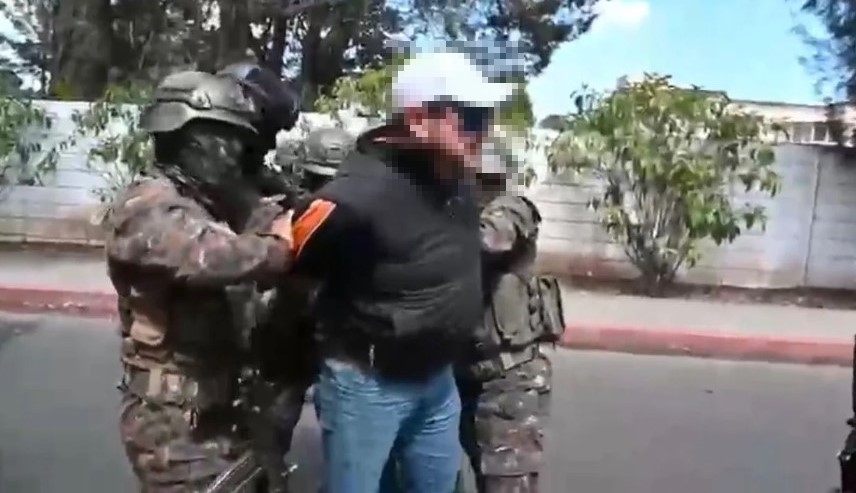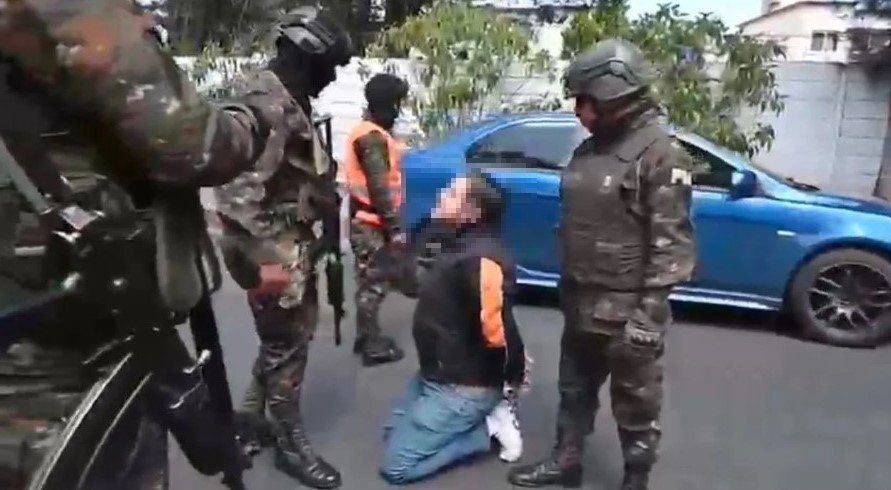
A video circulates on social networks in which a group of soldiers can be seen detaining a citizen. The man tells the soldiers that he will make a call and contact General Soto.
The subject resists arrest, and members of the Army throw him to the ground and place handcuffs on him.
Given this situation, the Ministry of Defense indicated that the incident stems from a traffic accident that occurred in the vicinity of the Honor Guard.
“Guatemalan Army personnel provided immediate assistance to an elderly person who was injured as a result of the road accident,” the institution said.
He added that, during the emergency response, a man showed up and left his truck-type vehicle, obstructing free movement and traffic in the area.
“The aforementioned citizen engaged in verbal and physical aggression towards military personnel. On repeated occasions, he was verbally instructed to stop his attitude, moderate his behavior and remove the vehicle to restore circulation; however, he ignored these instructions,” the Army explained.
He indicated that the subject continued with these behaviors and that, to preserve the safety and physical integrity of citizens and military personnel, they detained him.
“The military personnel adopted measures that responded to the need to control the situation, guarantee free movement and avoid greater risks for the population, in strict respect of the principles of legality, necessity and proportionality in the use of force, to prevent the situation from escalating, making the people involved available to the corresponding authorities,” he detailed.
The Army can arrest in flagrante delicto, but experts warn of limits to its actions
This fact raised questions about whether the Army has the power to capture civilians and under what conditions it can do so.
According to security analysts, military intervention in public security tasks is legal, but it is limited and must be complementary to the work of the National Civil Police (PNC).
Francisco Quezada, security analyst at the National Economic Research Center (Cien), explained that the law does allow the Army to act in specific situations, especially when it comes to flagrancy.
“The Army can intervene. In this case, when it is seen that they arrest a person, the Army can arrest people. The Army can arrest, but an arrest warrant can only be issued by intelligence through the Police,” he stated.
He added that the military can request documents from citizens, carry out searches and capture them in flagrante delicto, but they have to make them available to the PNC or a judge after the operation.
Former Minister of the Interior David Napoleón Barrientos indicated that the detention is legal and highlighted that, due to the state of Prevention, the participation of the Army in internal security is expanded.
“The Guatemalan Army, especially when there is a state of emergency, has the power to intervene in public security,” he indicated.
Detention questions
Security analyst Federico Reyes questioned the way in which the arrest observed in the video was carried out and pointed out possible irregularities.
“Yes, it really is a bit of use of force, a bit improper,” he said.
Reyes also emphasized that the Army is not designed to assume citizen security functions directly.
“The military forces are not equipped to provide citizen security, although they do support the security and order forces, in this case that would be the National Civil Police,” he stated.
The analyst also considered that this type of operation should have a police presence.
The PNC was consulted about the capture of the subject during the operation, but did not respond to the questions.