
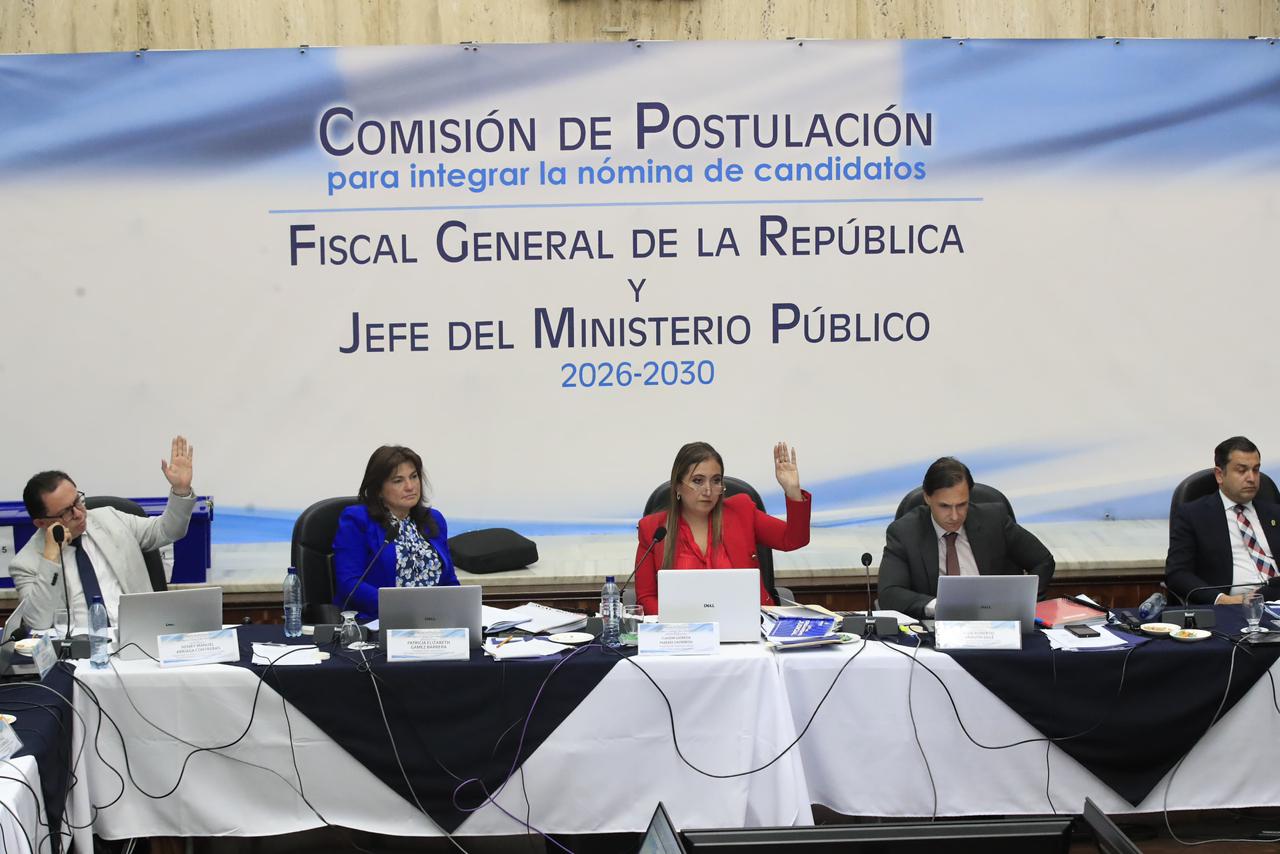
The lack of agreements in the candidate for the election of attorney general and head of the Public Ministry (MP) once again stopped one of its last sessions, generating new legal actions for apparent errors in the commission.
Amparos and complaints were presented this Friday, April 17, a date that was initially scheduled for the preparation of the list of six candidates for attorney general.
But some commissioners have warned, off microphones, of the possibility of changing the final vote to this Saturday the 18th or extending it to Monday, April 20, which was originally set in their schedule.
Currently, the nomination committee is grading the applicants according to the grading table. Tool that measures the academic, professional and ethical aspects of those who aspire to lead the MP.
Apparent errors in the qualification motivated an unclear number of memorials and protections, which seek to repeat the evaluation due to the commissioners’ apparent omission of some documents.
But now the discussion escalated with the presentation of complaints, and more protections, after the qualification of Marco Antonio Villeda, Minister of the Interior and career judge.
The lawyer has stood out to public opinion for his career in the Judicial Branch (OJ), including ownership of the Asset Forfeiture Court. Judiciary from where he took property and large sums of money from politicians and businessmen accused of corruption.
But all those years of professional practice were not taken into account in the qualification of his file, because Villeda registered before the Supreme Court of Justice (CSJ) as a lawyer until last February. The lack of a document that accredited his professional merits punished Villeda in his grade, which was 41.86 points; consideration that was not approved by the majority of commissioners, which opened a discussion that took the meeting until late into the night.
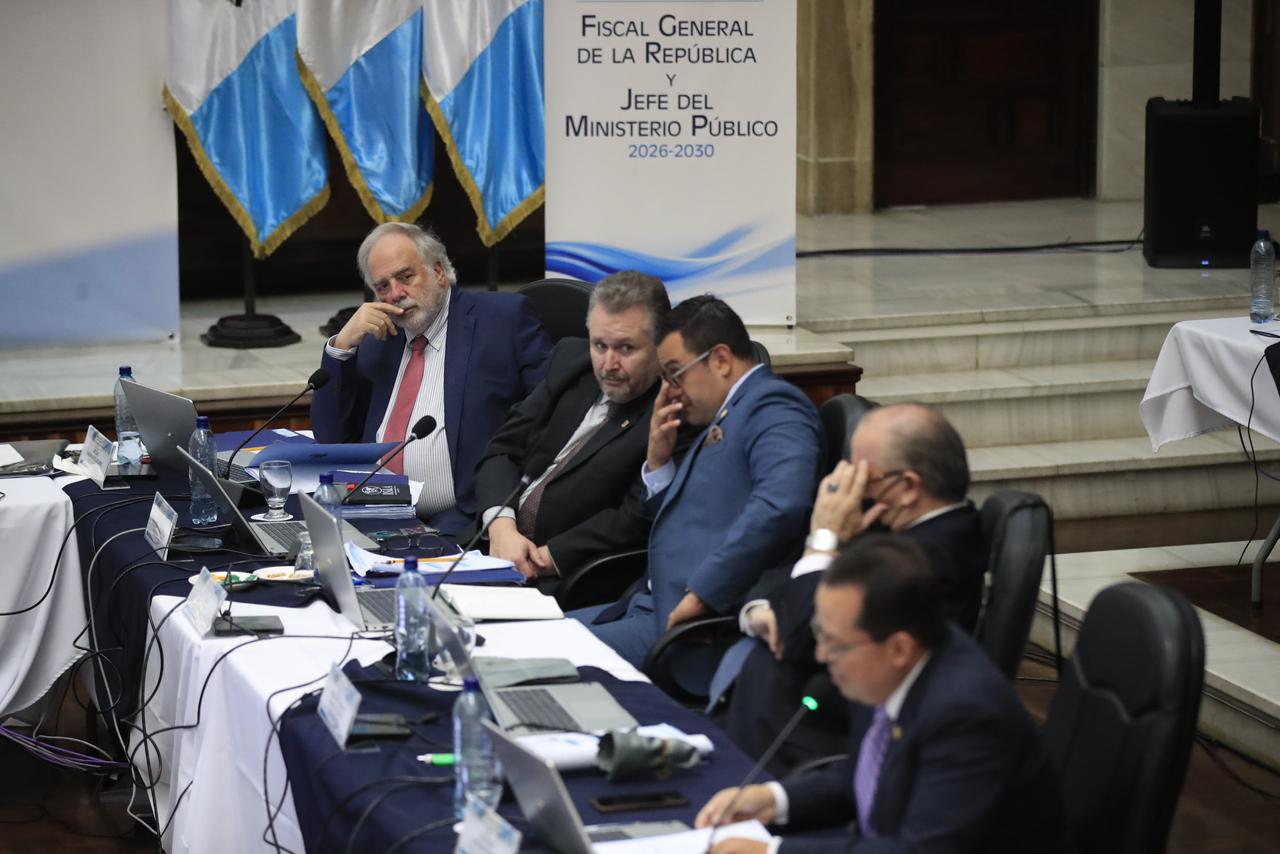
But being left out of the candidate selection process for attorney general seems to be just one of the problems now facing the Minister of the Interior, who is already facing legal action for having forgotten that record before the Judiciary.
Postulator of @MPguatemala She is detained while Marco Antonio Villeda’s qualification is defined.
Patricia Gámez del Cang seeks to take into account all of Villeda’s experience.
Claudia Paredes of CSJ opposes alleged preferential treatment
📷 Javier González. pic.twitter.com/K2UKDVAHqt—Douglas Cuevas (@dcuevas_pl) April 17, 2026
The complaint
The complaint was presented by Ricardo Méndez Ruiz, president of the Foundation Against Terrorism, who reported a wide range of crimes for which he took action against Villeda.
According to Méndez Ruiz, if Villeda never registered as a lawyer before the CSJ, he does not have the necessary qualities and qualifications to hold the position of judge, for which he would have occupied a judicial position for which he was not duly supported.
“He is responsible for the commission of the crimes of material falsehood, ideological falsehood, usurpation of functions, usurpation of quality, abuse of authority, breach of duties, resolutions that violate the Constitution, violation of the Constitution and embezzlement,” says Mendez Ruiz.
#URGENT
The FCT filed a complaint against citizen Marco Antonio Villeda, current Minister of the Interior, who enjoys the right of pre-trial.
The accused is responsible for the commission of the crimes of material falsehood, ideological falsehood, usurpation of functions,… pic.twitter.com/1Wp1kWCqXZ— Ricardo Mendez Ruiz (@RMendezRuiz) April 17, 2026
But in addition to the complaint, Méndez Ruiz also questions whether everything done by Villeda has value, and suggests that all the rulings he issued during his time as judge against people accused of corruption could be annulled.
“The resolutions issued by Villeda lack legality, and he is responsible for these events. As a result, he violated the administration of justice by issuing sentences that even led to the extinction of assets,” he concluded.
Villeda responds
The Minister of the Interior, Marco Antonio Villeda, justified not having been registered in the Registry of Lawyers and Notaries and stated that, if he is left out of the attorney general election process due to lack of qualification, he will analyze legal actions.
During an interview on the program Central Table of Prensa Libre Radio, explained that in previous processes he participated as an applicant and even joined the list of six candidates without that requirement being required.
According to him, registration in the Registry of Lawyers and Notaries is mandatory for those who litigate or practice notary law, but not for judges, a role he has held throughout his career.
“What happens is that there is a misreading behind all this,” he said. He added that the nomination commission’s questioning is based on the fact that he was registered as a lawyer until February 2026, which, he said, responds to the fact that he has never practiced litigation or notary practice.
Villeda assured that his career has been exclusively in the judiciary, so he did not need to meet that requirement. He recalled that in 2010 he participated in the process for attorney general, he was included in the list of six eligible and was not requested to register.
Repeat rating
After doubts about the validation of Villeda’s professional experience, lawyer Diego Sagastume Vidaurre presented an amparo action, which according to him has already been processed, where he seeks to suspend the qualification of the candidates for attorney general.
Sagastume Vidaurre states that some applicants do not meet all the requirements of the law, considering that the years of practice as a judge are not comparable to years of practice as a lawyer.
MP postulator generates new protection. Diego Sagastume Vidaurre seeks to stop the qualification and reverse the process to annul the grade awarded to the years of service as a judge. The lawyer informs that the action has been processed and that there is 48 hours to submit a report. pic.twitter.com/X1QDWOiT8k
—Douglas Cuevas (@dcuevas_pl) April 17, 2026
This protection seeks to order the commission to stop the grading and return all the work to reconsider the grades, in order to remove from the applicants the points awarded for years of experience as a judge.
Against the CC
The legal actions are not only summarized against the nomination commission and the candidate Marco Antonio Villeda, current Minister of the Interior of President Bernardo Arévalo.
A complaint was also filed against Anabella Morfín, the first president of the new Constitutional Court (CC), a body that was installed on April 14.
This complaint arises from Morfín’s apparent refusal to call a plenary session and discuss an amparo, which has not been resolved by the CC for more than a month.
This legal action was presented by lawyer Raúl Falla, also from the Foundation Against Terrorism, who seeks through a constitutional order to exclude applicants who do not meet the requirements of the law, particularly career judges, according to Falla’s analysis.
But the last CC, which was chaired by former judge Leyla Lemus, did not resolve this protection, passing this responsibility to the new Court, particularly to the new president who has now been denounced.
The complaint is not only for the president, it was also taken against CC IT staff, who apparently had not yet given access and controls to Morfín to begin scheduling pending cases.
Separately, lawyer Falla sent a memorial to the CC requesting that the amparo be known by the constitutional plenary session, considering that it is necessary to clarify the procedure.
While the MP postulator analyzes the case of Marco Antonio Villeda, in the @CC_Guatemala A memorial was submitted asking to schedule the protection that could exclude the judges from the MP renewal process. The document states that the protection has not been scheduled for more than a month. pic.twitter.com/IfA5a4s7JC
—Douglas Cuevas (@dcuevas_pl) April 17, 2026