
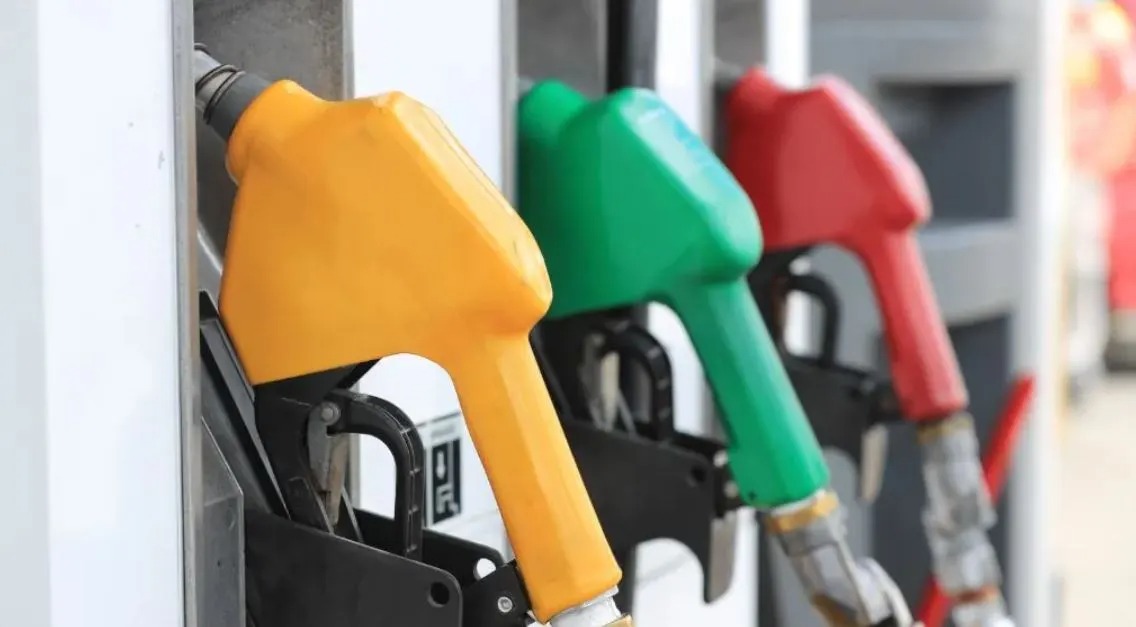
The subsidy measure which will reduce the price of gasoline and diesel In Guatemala the next May 1 and from that date it will be applied for a three month periodafter completing an inter-institutional process to make the budget adjustments that will finance the support.
He Ministry of Public Finance (Minfin) reported this Monday, April 20, at a press conference, the details for its implementation and the origin of the funds.
The benefit will be direct for the final consumer, with a reduction in Q8 per gallon of diesel and Q5 per gallon of regular and higher gasoline, with a total allocated amount of Q2 billion. The authorities recommended requesting an invoice and verifying that the discount is applied correctly.
The subsidy will be in effect during the quarter or until the allocated resources are exhausted, confirmed the head of the portfolio Jonathan Menkos at a press conference.
“We want to reiterate that these funds do not imply more debt or the creation of new taxes. As you know, initially our intention was to propose a budget expansion; however, Congress agreed to only carry out a reordering of the current budget,” said the head of the Ministry of Finance, Jonathan Menkos.
“Our objective is to expand coverage and improve the quality of public services…” he added.
The official explained that the readjustment is equivalent to approximately 1.25% of the total budget allocations.
How will the subsidy be applied?
The subsidy will be reflected as a direct discount on the final price paid by the consumer.
Temporary social support will be Q8 per gallon of diesel and Q5 per gallon of premium and regular gasoline, amounts that must be subtracted at service stations.
A subsidy is financial support from the State to reduce the price paid by the consumer. In this case, it does not involve giving money directly to people, but rather apply an immediate discount on the price of fuel.
The mechanism works in that the service stations reduce the price to the consumer and then the State compensates them for that amount. In this way, the user pays less when purchasing.
To guarantee compliance, the process will be supervised by the Ministry of Energy and Mines (MEM)the Superintendence of Tax Administration (SAT) and the Directorate of Consumer Care and Assistance (Diaco).
According to the last monitoring weekly as of April 16:
- Higher gasoline: Q40.28
- Regular gasoline: Q39.28
- Diesel: Q43.05
Example of how the subsidy would apply:
- Higher gasoline: from Q40.28 it would be reduced to Q35.28 (with a Q5 subsidy)
- Regular gasoline: from Q39.28 it would go to Q34.28 (with a Q5 subsidy)
- Diesel: it would go from Q43.05 to Q35.05 (with Q8 subsidy)
These values are referential, since the price may vary depending on the market. However, the subsidy will always be applied as a direct reduction on the price in effect at the time of purchase.
Gas price increases
As the implementation of the fuel subsidy progresses, the impact of international prices is also reflected in propane gas, which recorded increases between Q12 and Q48this April 20 according to market monitoring.
In a price comparison, it was observed that the 25 pound cylinder went from Q98 to Q110; the one of 35 poundsof Q137 to Q154; and that of 100 poundsof Q392 to Q440evidencing increases in different presentations.
Until recent days, there were differences between distributors – with prices that fluctuated depending on the company; However, it is expected that in the next few hours or days the main distributors in the country will tend to unify rates, as has happened on previous occasions.