
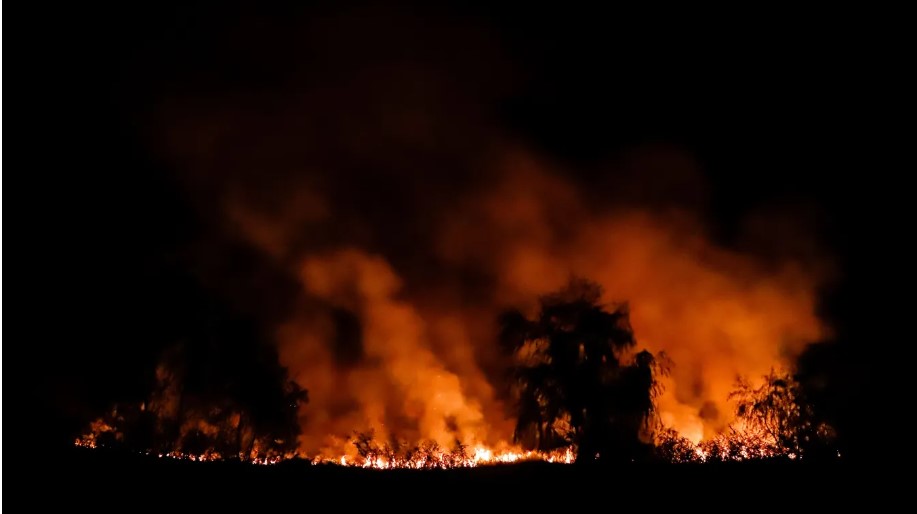
Prolonged exposure to wildfire smoke may increase the risk of several types of cancer, according to a study presented Tuesday at a meeting of the American Association for Cancer Research.
The research, still pending peer review, revealed that people exposed to high levels of wildfire smoke over the previous three years had an increased risk of lung, colorectal, breast, bladder and blood cancers. The study was based on a long-term database that followed more than 91 thousand people.
As wildfires worsen and increase in frequency due to climate change, the lead author of the research suggests that smoke could become a key factor in the development of cancers.
This work adds to growing evidence of the harms associated with wildfires, ranging from increased risk of acute health problems such as asthma, to cardiovascular risks such as heart disease or stroke.
A study published in The Lancet Planetary Health found that prolonged exposure to wildfires may be linked to an increased risk of brain and lung tumors.
The latest study suggests that at current levels of smoke exposure, 19 cases of lung cancer per 100,000 people per year could be attributed to wildfires, said Shuguang Leng, a cancer molecular epidemiologist at the University of New Mexico Comprehensive Cancer Center and lead author of the study.
Since cigarette smoking has decreased but wildfire activity is expected to increase, this could mean that “wildfire smoke becomes an increasingly important factor in cancer incidence in the United States,” Leng said. And this could also change the types of lung cancer that the population suffers from. Some lung cancers, he explained, are more likely to be related to smoking, while others are often caused by air pollution.
“That will affect screening. That will affect treatment,” Leng said.
The study could not prove that wildfires caused the increased cancer risk. However, exposure to carcinogens in wildfire smoke could contribute to the development of new cancers or cause inflammation, which could promote the growth of tumors.
Leng and his colleagues calculated that for every increase in exposure to wildfire smoke, the risk of several types of cancer increased. A key measure of wildfire smoke exposure is the concentration of ultrafine suspended particles, with a diameter less than 2.5 micrometers, about one-thirtieth the diameter of a human hair.
When exposure to these tiny particles increases by 1 microgram per liter over a three-year period, the risk of cancer increases markedly. Leng compared this increased exposure to exposure to one week of wildfire smoke per month over a three-year period. This level of exposure was associated with a doubled risk of lung cancer, colorectal cancer, and breast cancer, as well as a 249% increased risk of bladder cancer and a 63% increased risk of blood cancers.
Leng said this increased risk of lung cancer was roughly similar to the increased risk associated with light or moderate smoking.
CONTENT FOR SUBSCRIBERS
With nearly 78 percent of the United States affected by abnormally dry or drought conditions, concerns are growing that the upcoming wildfire season could be particularly severe.
The formation of El Niño and very warm sea temperatures in the North Pacific could contribute to more thunderstorms this year, which are accompanied by lightning that can start fires.