
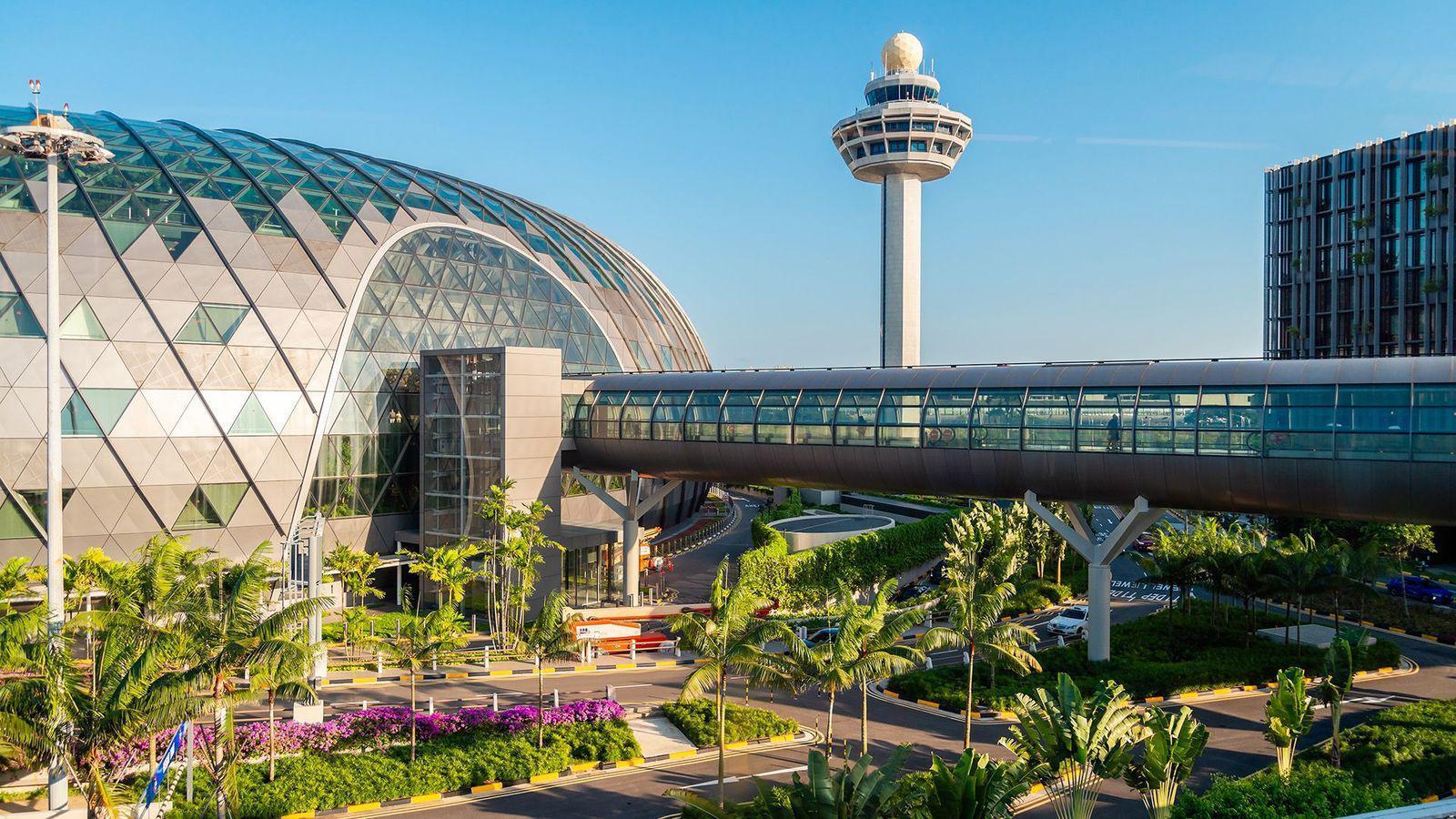
You have just landed after an 18-hour flight, red-eyed and yawning, and you are preparing for the tedious moment of transiting through the airport: the long walk to immigration, the endless lines and the agonizing wait for your luggage.
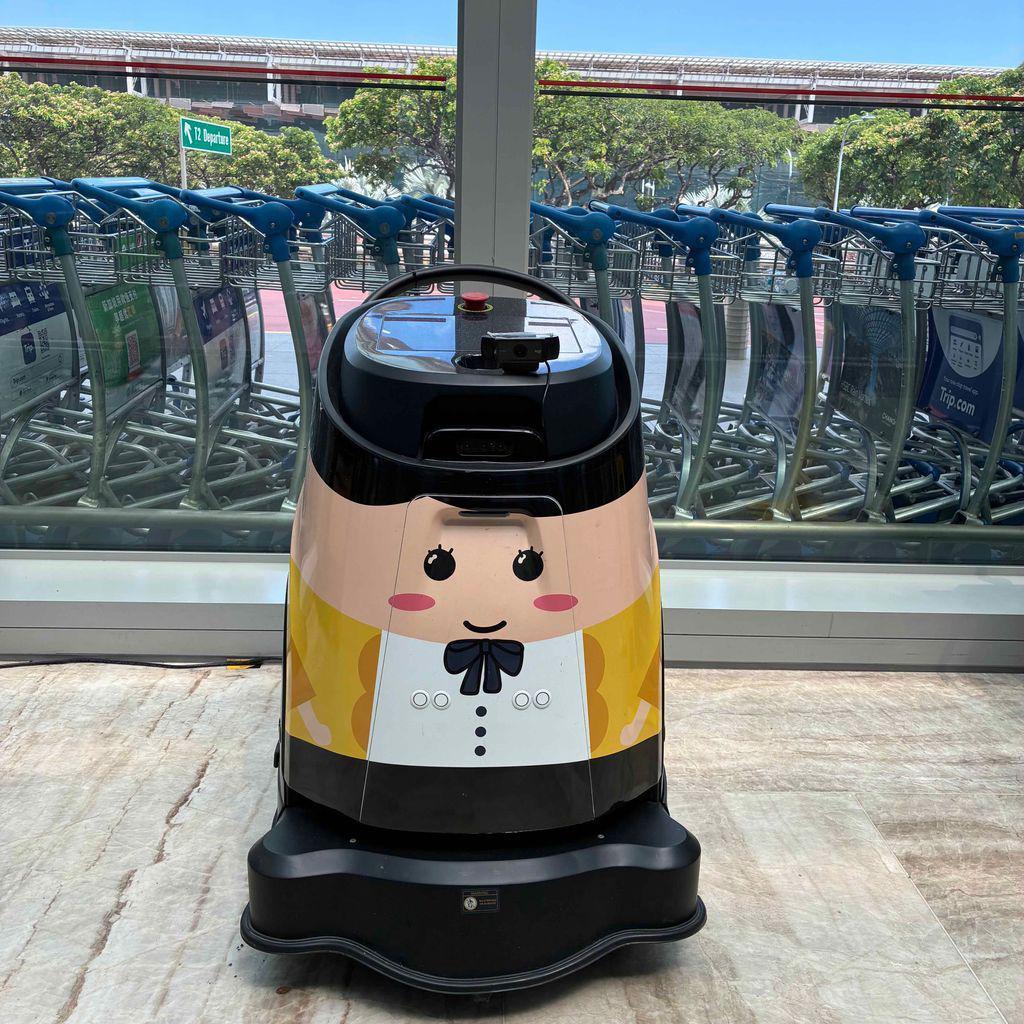
On the other hand, when you arrive, you see autonomous cleaners with artificial intelligence always smiling that leave the floors spotless and immigration control moves with a speed that generates a certain amount of distrust. In less than 15 minutes, you’re outside in the tropical heat, wondering why the rest of the world keeps making things so complicated.
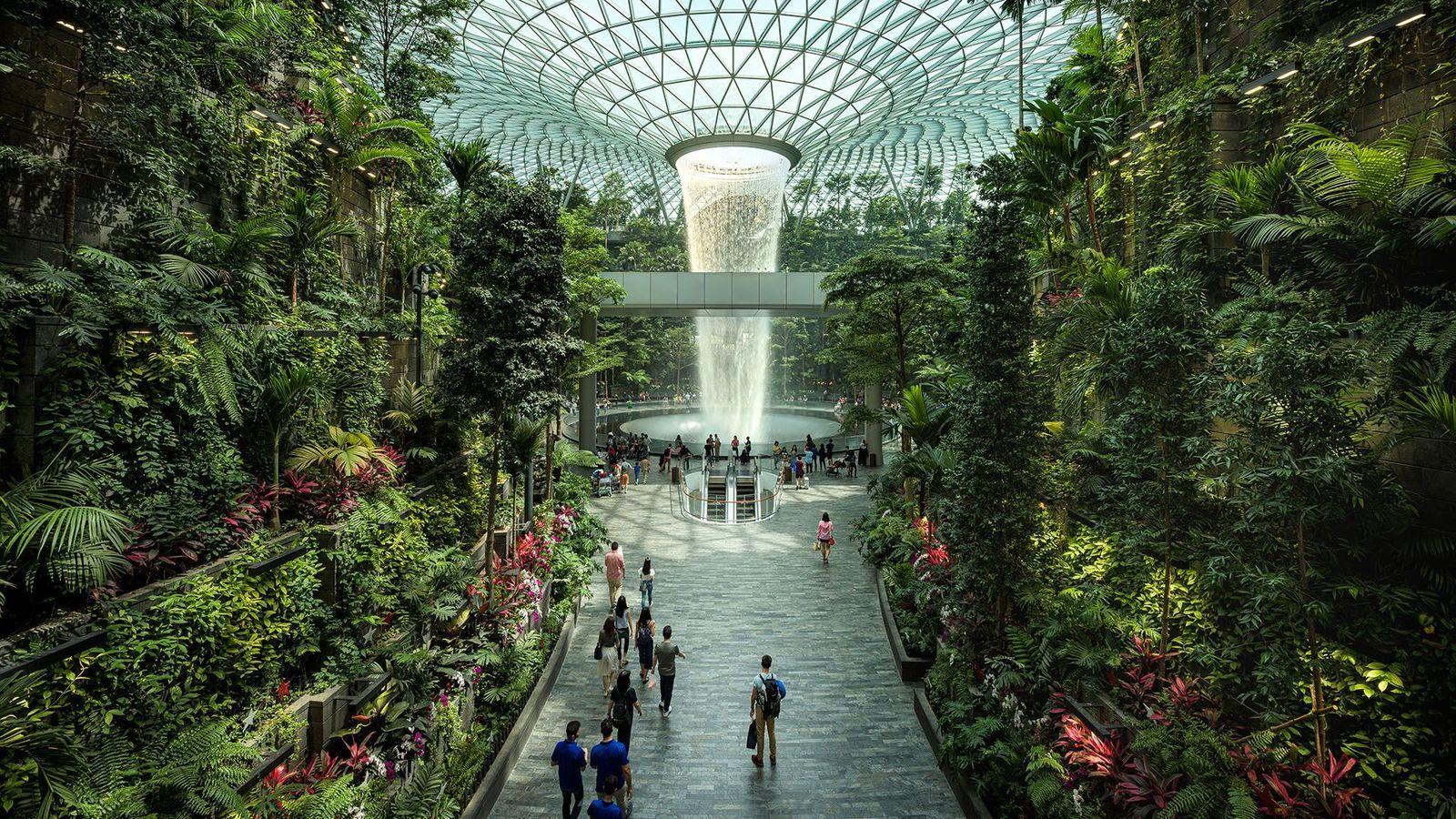
Days later, after a seamless check-in process for your trip home, you wait for your flight in the airport transit lounges, where there’s a free 24-hour movie theater, a butterfly garden, and the world’s tallest indoor waterfall. There’s even an indoor glass pond you can walk through, with a digital display on the roof that reflects the weather outside.
Sometimes you forget that you are in an airport and not in a small, perfectly organized futuristic city.
This may sound like a frequent traveler’s fever dream. In fact, it’s Singapore Changi Airport, which just won the Skytrax Award for Best Airport in the World for the second year in a row, and 14 times in total.
While other major airport terminals deal with rodent infestations, staff strikes and collapsing roofs, Changi’s futuristic tranquility seems a world apart.
The gap between an average airport and a world-class one has never felt bigger.
So what does it take to make modern air travel run so smoothly? And how does Singapore manage to remain successful while its rivals face difficulties?
Efficiency comes first
For Max Hirsh, CEO of Airport City Academy, a research center specializing in airport planning and development, Changi’s success is not based solely on quality, but on mastering the fundamentals of day-to-day operations, from speed and safety to connectivity.
It’s also about having the flexibility to adapt when things don’t go as planned.
“In the aviation world, that happens a lot,” Hirsh says. “The challenge is not to achieve that balance once, but to maintain it over decades in the face of changing demands, technologies and disruptions. Changi succeeds because it considers that balance an ongoing project, not a one-time design feat.”
If you’ve ever passed through Singapore, you’ve probably noticed the sense of calm that permeates the airport. But what you probably haven’t realized is the effort that has gone into building that peace of mind.
Behind the scenes, a massive, meticulously coordinated operation unfolds, using automation, biometrics and predictive analytics to eliminate bottlenecks before they become apparent, while 60,000 employees keep baggage management, cleaning, energy consumption and passenger flow in perfect synchronization.
As Hirsh says, Changi often feels like he’s always one step ahead.
The same logic applies to less conspicuous details.
Infrastructure, such as intuitive wayfinding, clear signage and crowd management, prevents passengers with jet lag They become mentally exhausted trying to get to their boarding gate.
The five hundred bathrooms distributed throughout the terminals are also a great advantage. Each one has a digital touch screen so passengers can rate their experience; If the ratings go down, a cleaning team arrives immediately.
“The hierarchy is simple,” says Hirsh. “First the efficiency, second the atmosphere, third the spectacle.”
Multiple attractions
Changi offers so many options that it takes several visits to appreciate its breadth. The best-known example is the Jewel Rain Vortex, the indoor waterfall in the shopping complex adjacent to Changi, which has become one of Singapore’s most recognizable tourist images.
Elsewhere, travelers can watch Toni, Changi Airport’s robot bartender, prepare a variety of cocktails in Terminals 2 and 3.
The butterfly farm imports chrysalises every two to three weeks, so there is always a wide variety of butterflies. If flying insects aren’t your thing, there’s also a cactus garden and sunflower garden on the rooftop.
The new exercise and fun area, opening in early 2025, offers activities for everyone, from punching bags to mini-trampolines.
And for those who have a long enough layover (and don’t need a visa), the airport even offers free guided tours of the city.
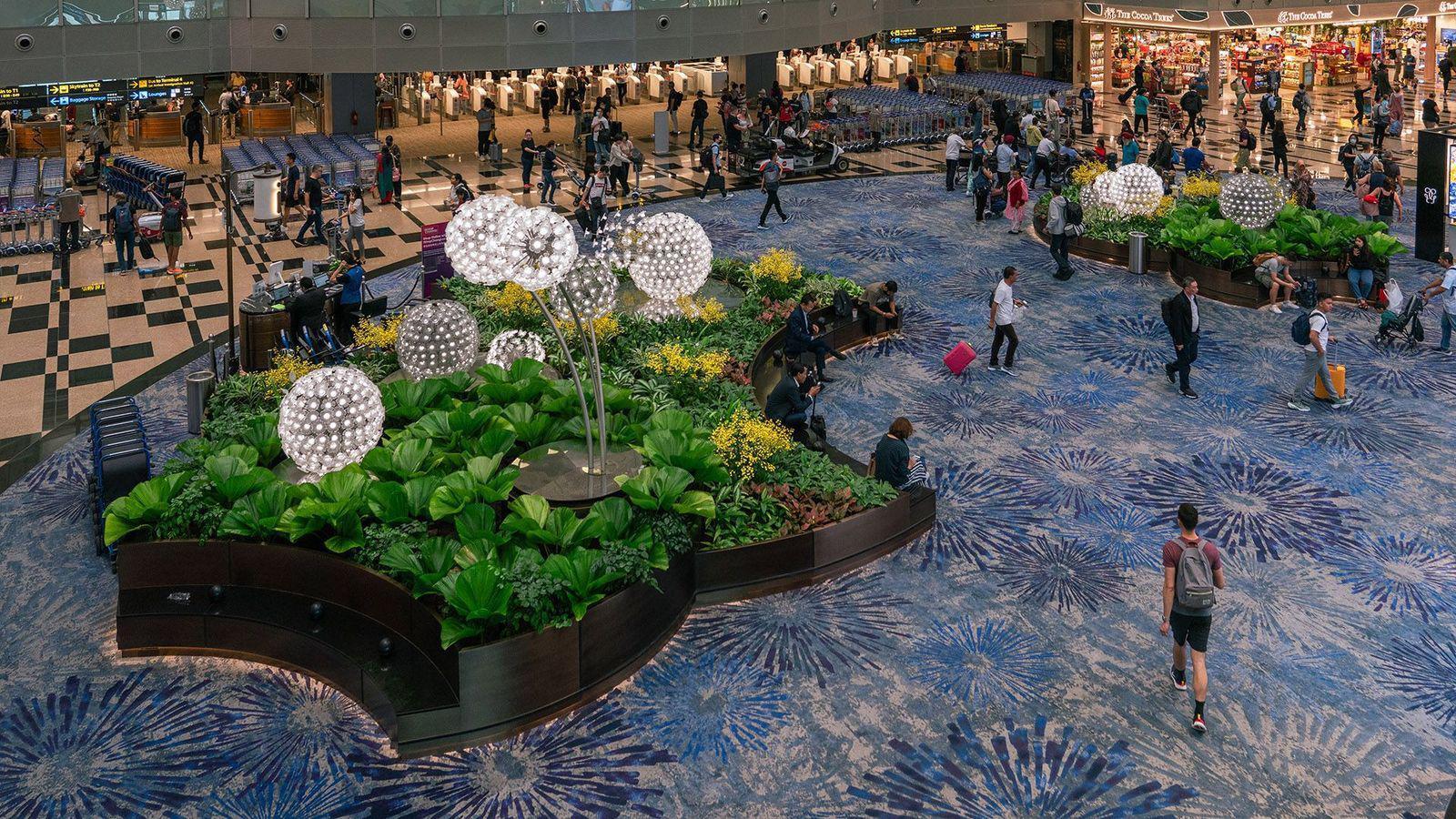
But these constantly updated attractions do much more than brighten up a long trip. They also serve a practical function: by encouraging people to explore, they draw visitors to different corners of the terminal and help avoid the feeling of crowding that plagues other airports.
Innovation
Part of this efficiency comes from both pragmatism and ambition. It is Singapore’s labor constraints that have pushed the airport towards automation, from immigration control to cleaning and other passenger services.
“Immigration services are labor-intensive, and not all Singaporeans are willing to do that work,” explained Ivan Tan, senior vice-president of corporate communications and marketing at Changi Airport Group. “So, in part, we are driven by necessity.”
In 2024, Changi became the first airport to fully implement passport-free immigration control, using biometric facial and iris recognition to cut time from one of the most frustrating aspects of any international travel.
Singapore residents can use it on arrival and departure, while foreign travelers can use passport-free screening when leaving Singapore.
That practical mindset also helps explain why Changi has never been stagnant.
Airports are miniature cities governed by tight schedules and complex logistics, and are highly vulnerable to volatility. This is one of the reasons why Changi recently created Terminal
“For us, the innovation center is essential,” says Kris Mok, communications manager at the lab, adding that the ever-changing matrix of challenges means that “in a few years we will have to work twice as hard.” The team is encouraged to try unconventional ideas, even if they fail, an unusual approach in Singapore’s often cautious work culture.
Among the laboratory’s projects is a fleet of drones that fly over storms to prevent lightning from hitting the ground, which could lead to the closure of runways in one of the countries with the highest risk of thunderstorms in the world.
risk bet
Changi’s obsession with efficiency is not new. It dates back to the 1970s, when Singapore’s founding father and Prime Minister Lee Kuan Yew decided that to grow, this small trade-dependent nation needed a welcoming symbol of efficiency. It was a risky bet, but it worked. Lee went on to say that Changi was “the best S$1.5 billion (approximately US$1.2 billion) investment we had ever made.”
Half a century later, the investment continues to pay off. “[Changi] It is like Singapore in miniature: efficient, clean, organized and you can trust that everything works as expected,” says Alisha Rodrigo, a Singapore resident and frequent traveler from this airport.
Following the closure of US airports, which caused waits of up to four hours at security and check-in, he adds that “sometimes, predictability is a good thing.”
And that is, ultimately, the reason why Changi continues to succeed. While the waterfall is what travelers remember, the real achievement is that they reach it without getting lost or missing a beat.
*This article was published on BBC Travel. Click here to read the original version (in English).

click here to read more stories from BBC News Mundo.
Subscribe here to our new newsletter to receive a selection of our best content of the week every Friday.
You can also follow us on YouTube, instagram, TikTok, x, Facebook and in our new whatsapp channel.
And remember that you can receive notifications in our app. Download the latest version and activate them.