
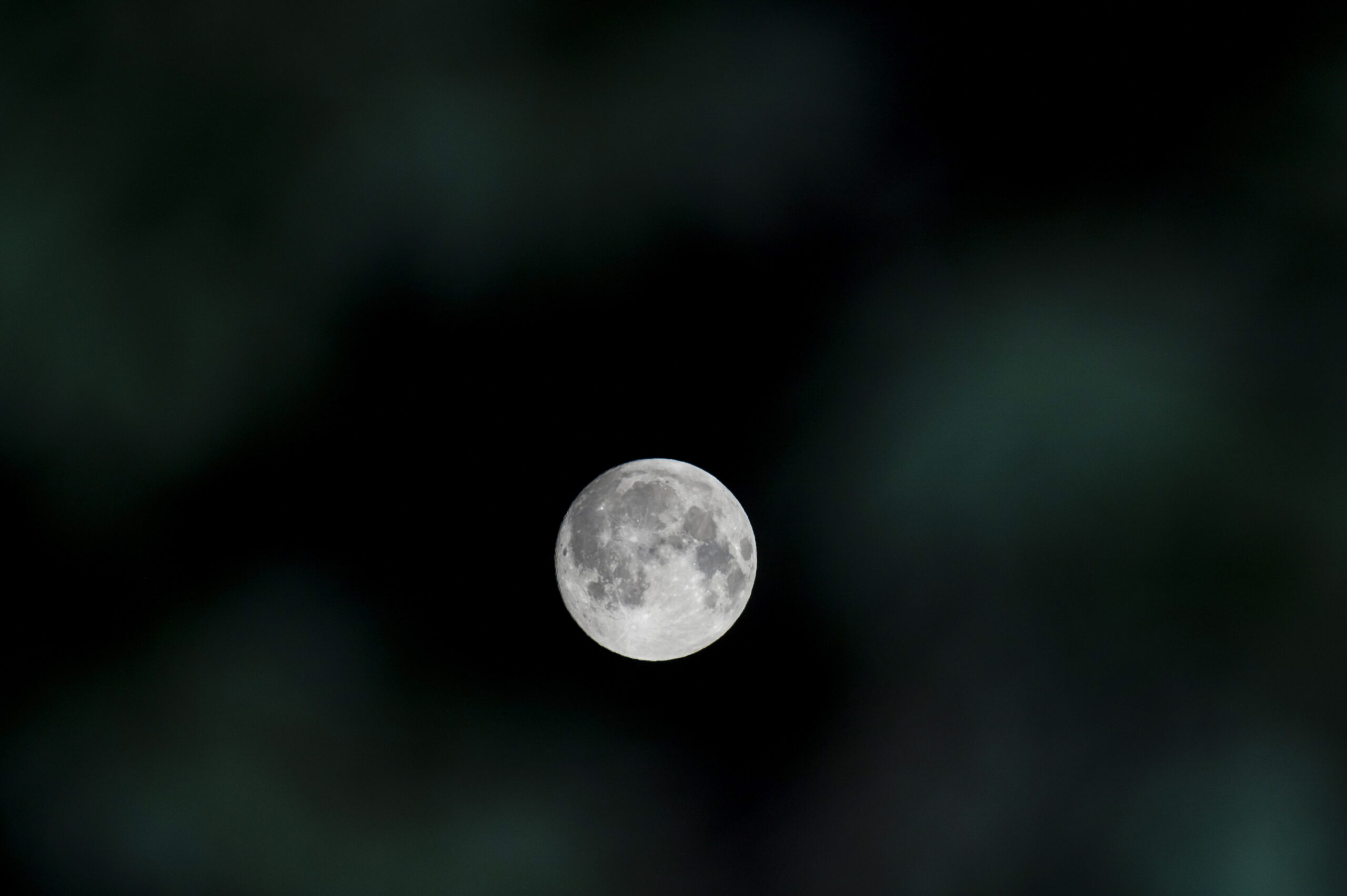
The night sky on Friday, May 1, will offer the first full moon of the month, popularly known as the Flower Moon. Additionally, this will be the first of two full moons that will occur in the same calendar month.
Unlike other full moons that attract more attention due to their apparent size, this one will have more discreet characteristics. It will occur near apogee, that is, at one of the furthest points from Earth, so it will be perceived as a micromoon, slightly smaller and less bright than usual.
According to NASA astrophysicist Fred Espenak’s micromoon calendar, in 2026 there will be micromoons on May 1, May 31 and June 29.
From the point of view of its position in the sky, according to the Star Walk site, the full Moon on May 1 will shine in the constellation of Libra, which does not host bright stars of the first magnitude.
Why is it known as the Flower Moon?
According to the Argentine media The Nationthe full Moon in May is known as the Flower Moon, a name that comes from the native peoples of North America, who followed the passage of time through the phases of the natural satellite.
The name Moon of the Flowers has its origin in the traditions of North America, where this lunar phase was linked to the moment of maximum flowering in spring.
During May, the vegetation reaches its greatest splendor, which explains this name, which has lasted to the present day.
A month with two full moons
This astronomical event on May 1 will not be the only one of the month. The second full moon can be seen on May 31 and is called the Blue Moon.
NASA explains that “the lunar cycle lasts 29.5 days, slightly less than the average length of a month. This difference results in a full moon at the beginning of the month with enough days remaining for another complete cycle, that is, a second full moon in the same month.”
Despite its name, the Blue Moon will not present color changes; Its relevance lies in the rarity of the phenomenon, not in its appearance.
The president of the Guatemalan Astronomy Association (AGA) explained to Free press This phenomenon is known as this, since it consists of the appearance of an “extra” full moon within the same season.
Astronomy fans should take advantage of the opportunity, since, after the event on May 31, the sky will not show two full moons in the same month again until December 2028.