
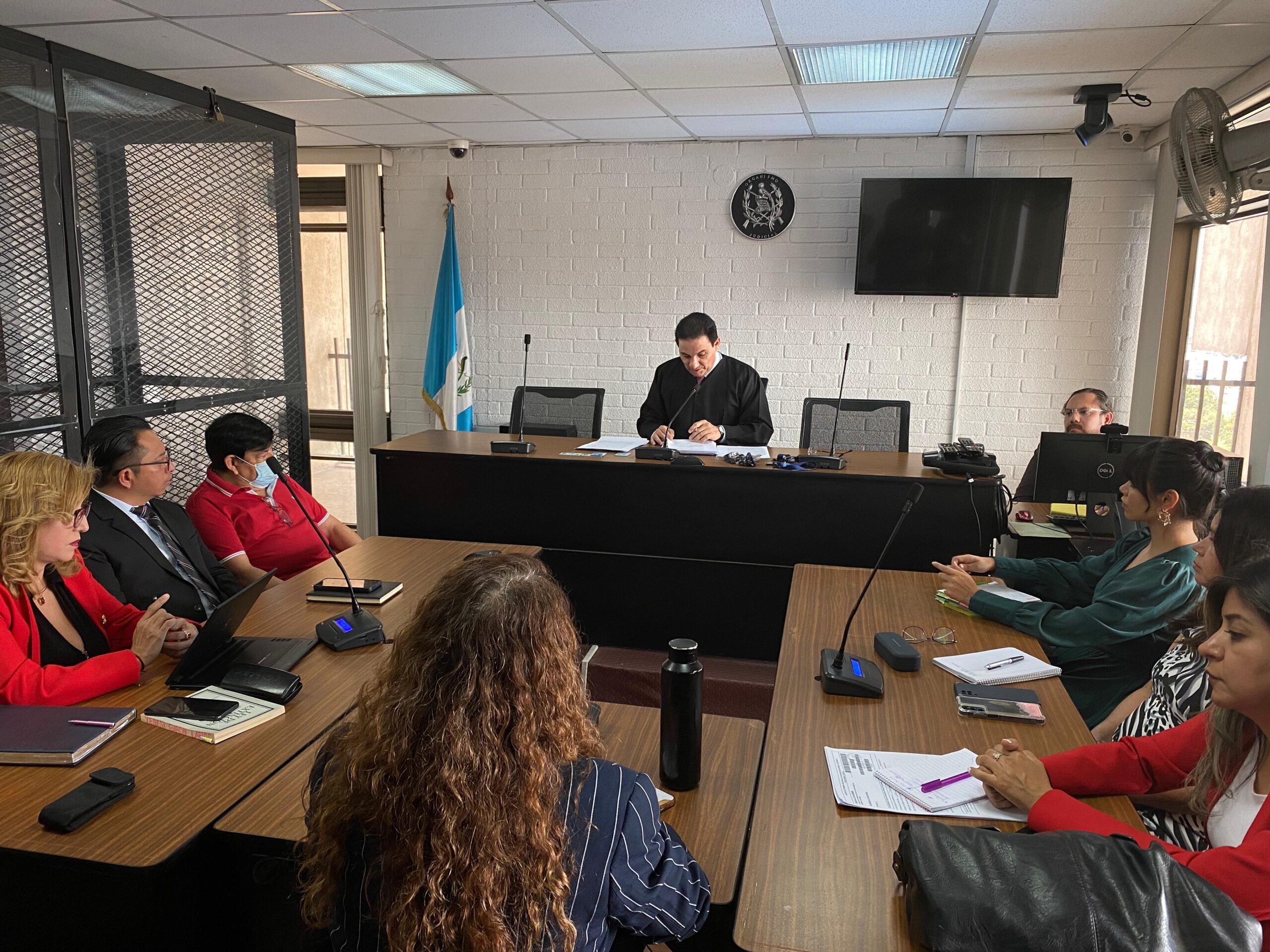
This debate is old about whether the exercise of the judiciary can be equated to the exercise of the profession. The origin of the magistrates was discussed, categorizing them as “from home” (professional career) or “those from the street” (law firms, corporations, state institutions, companies).
To the extent that the judicial career was legislated, the application processes were made public and information was available about the candidates for positions of magistrates of the Supreme Courts of Justice and Appeals, this debate was accentuated. The first protections and objections were presented that questioned the participation of judges in the election of magistrates, including the Supreme Electoral Tribunal and the attorney general.
Despite this, career judges such as Yassmín Barrios were nominated to the Supreme Court and on the lists of candidates for attorney general there were judges such as Marco Villeda, Miguel Ángel Gálvez, Patricia Gámez, among others. Even in 2014, the CC blessed the election to the CSJ of Felipe Baquiax, a career judge, who even presided over the judiciary. It was clear that the judiciary is a way of practicing the profession.
In 2022, the CC held an opposite criterion. By granting provisional protection, he cast an anathema on the judges, when the participation of Miguel A. Gálvez and Erika Aifán, among others, was “feared.” The fact is that now, in 2026, the same thing happens. The career judges insist on their right to participate and three CC magistrates prohibit it, following spurious motivations, as in 2022.
There are seven or eight commissioners who came to the process with the obvious intention of selecting a roster that did not include independent and honorable professionals. Five of the candidates for office are seriously questioned due to party ties, undemocratic practices, and submission to groups and people with political power.
They cannot prevent President Bernardo Arévalo from choosing the prosecutor of the Republic 2026-2030, but they took away the true power of choice. The first thing was to attack Judge Marco Villeda, whose profile was considered ideal, beyond any doubt. His judicial career was administratively annulled: zero points in experience in criminal justice, preventing him from being placed among the first three or four with the best qualifications. Villeda, other judges in the process and the judiciary in general paid the price of the political dispute, because they annulled their right to run for relevant positions.
The second was the provisional protection of the CC, which opened space for them to reconfigure the list of candidates and select a bishop from the current MP leadership. The president does not have much room to choose. Many think that their only option is the candidate Gabriel García Luna, close to officials and trusted advisors of the president. In the end, the damage for Bernardo Arévalo is temporarybut the nomination of unsuitable candidates causes serious long-term damage to the population and institutions.
There is also the possibility that the list of candidates, except García Luna, has been left out for a future government, since the multi-sector alliance for impunity and control of institutions hopes to recover all its spaces in the general elections of 2027. If they recover the presidency of the Republic, their allies in Congress could modify the MP Law before 2028, in order to expand the causes for dismissal of the attorney general.
It is possible that this spurious list is part of a projection of that powerful dark alliance to recover, in the medium term, the MP.
In September 2024, the deans and rectors each issued statements on the need to not continue trampling on the judicial career and to improve the application processes, but so far there have been no proposals in this regard.
The debate about judges has been analyzed on several occasions. Read some at https://www.movimientoprojusticia.org.gt/index.php/fads