
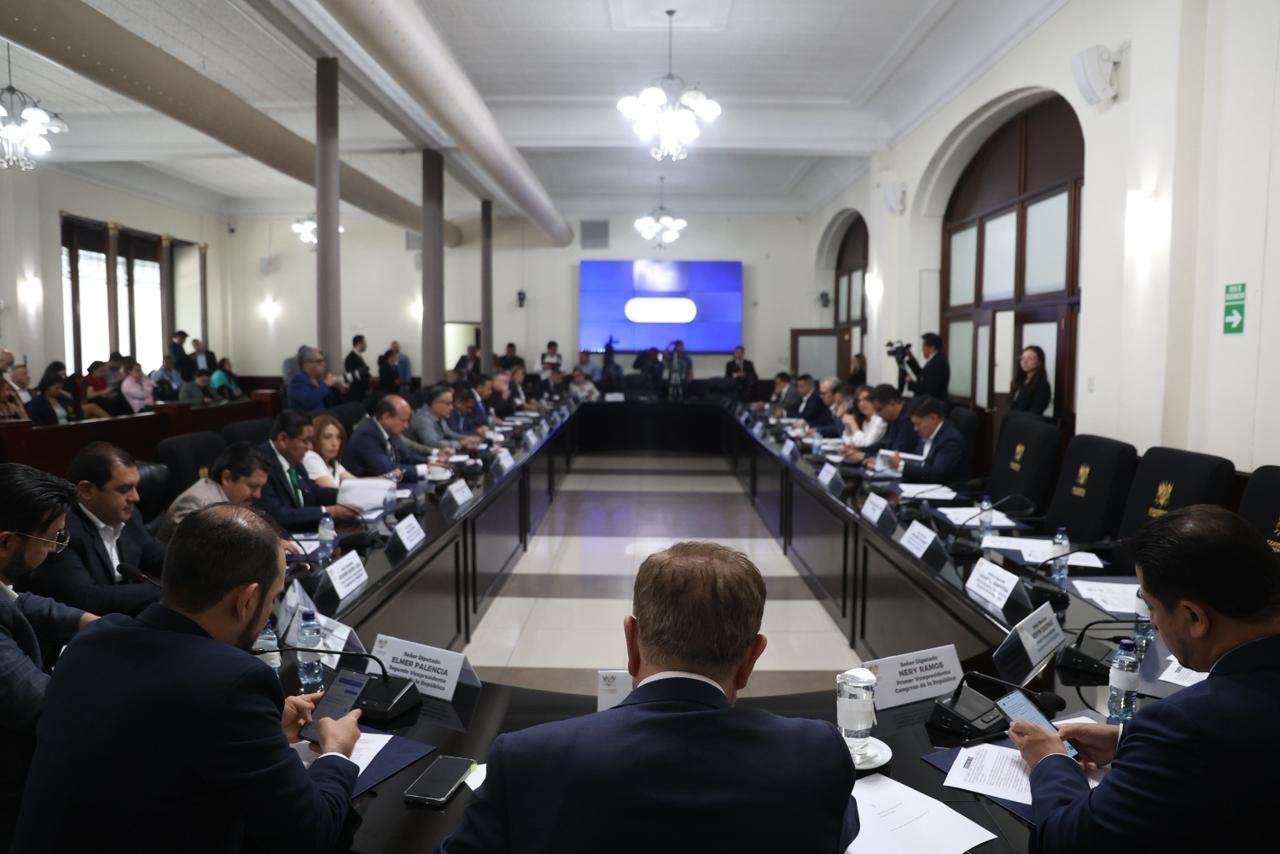
This week Congress will only meet once, this Tuesday, April 28 at 2 p.m., with an agenda full of topics in which the approval of a package of initiatives that former Army combatants have requested stands out.
The session would be expected to take place amid protests, for the second consecutive week, by these military veterans, who a week ago surrounded the Legislative Palace as a measure of pressure to have their demands met.
This Tuesday, April 28, the work agenda includes the approval in first reading of initiative 6723, which proposes reforms to the Temporary Law of Comprehensive Development, the program through which the State pays Q36 thousand to military veterans. The beneficiaries request that the payment be completed regardless of the temporality, since for now the Q36 are paid at a rate of Q1 thousand per month for three years.
The proposal seeks to guarantee the continuity of payments, even if the beneficiaries stop complying with the community programs to which they committed for some time, without exceeding six months.
The group of ex-combatants also includes among their protests that the State Civil Passive Classes Law be reformed, with the objective that pensioners cannot receive less than the minimum wage as financial compensation.
Both initiatives are on the agenda and with the support of the president of Congress, who has already expressed his willingness to approve national emergency regulations, if required.
Also included in the agenda for the session this Tuesday, April 28, was the approval in the second debate of the exemption from payment of the Single Property Tax, which seeks to exempt the owners of their first home and the elderly from paying.
Anti-money laundering law without consensus
While progress is made in the laws of economic benefits for ex-combatants, Congress approved for the second consecutive week the final draft of the anti-money laundering law, a norm in which several financial sectors have agreed that delaying it could have consequences for the country in terms of investment.
This week, as explained by the president of Congress, Luis Contreras, the rule was not included because there is still no consensus between the different blocs to approve a package of amendments. Meanwhile, the ordinary legislative period includes two more sessions before ending. “Between today and tomorrow the discussion of the amendments ends and as soon as they are received they will be distributed to the deputies with the aim of reaching the necessary consensus,” Contreras explained.