
According to the Guatemalan Association of Gasoline Retailers (Ageg), the majority of stations have not yet applied the fuel subsidybecause they have not received new shipments with the benefit. The executive director of the association, Enrique Meléndez, indicated that the process could take between two and three days to normalize, although in some cases it could take longer.
The authorities of the Ministry of Energy and Mines (MEM) indicated that stations that already sell fuel with a subsidy must reflect the discount in the final price and record it on the invoice. On the other hand, if a gas station decides to lower the price on its own to sell inventory without a subsidy, it should not include any reference to the state benefit.
The MEM also indicated that irregularities can be reported to telephone number 1544 or on the platforms of the institution and the Directorate of Consumer Care and Assistance (Diaco).
Verifications
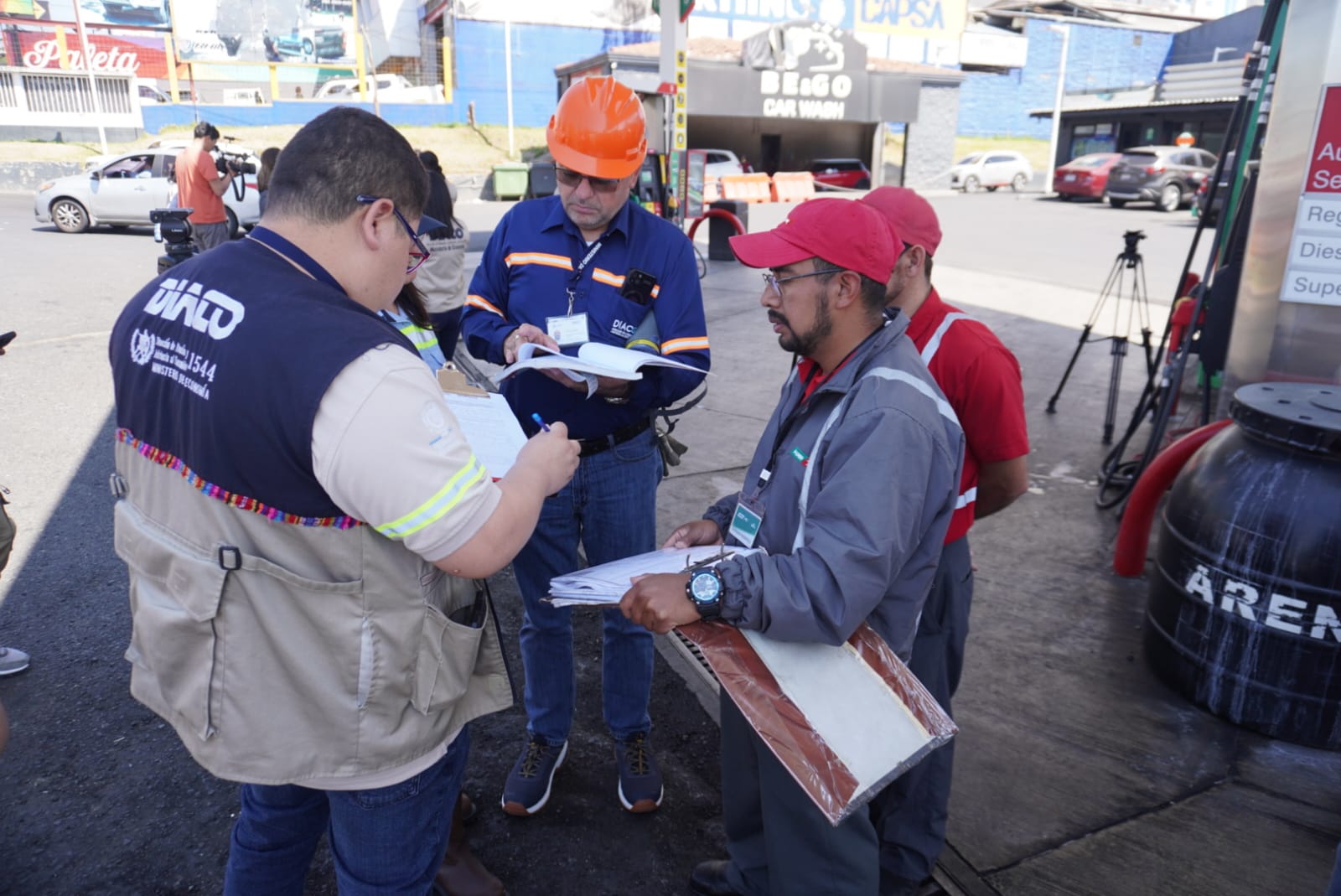
Leslie Yvonne Tzicap, director of the Directorate of Consumer Care and Assistance (Diaco), indicated that they have carried out 94 verifications and drawn up minutes, but they are not sanctions, the official clarified.
In the departments, the Diaco will verify compliance with the application of the subsidy, although prices will vary with respect to those of the metropolis.
During monitoring at a gas station located in zone 7, it was verified that the final consumer already receives subsidized prices.
The motorists interviewed indicated that they already notice the change in their tanks; Another said that it is just a strategy, because before the subsidy was applied, the price of gasoline increased. A family that came from Puerto Barrios said that they are traveling for medical reasons and that the subsidy already benefits them to continue their travels.
A diesel user said traffic will most likely increase now because more people will take out their vehicles.
Additional factors in implementation
The process has been affected by uncertainty in the start date, as it had originally been announced for May 1, but was brought forward to April 28. This made the preparation of the stations difficult, especially in aspects such as billing and consumer communication.
In addition, experts consider that it will be necessary to maintain constant monitoring to ensure that the subsidy is effectively passed on to the final consumer, given that the benefit implies public resources intended to reduce the cost of fuel.
Reference prices
- The MEM, through the General Directorate of Hydrocarbons (DGH), will calculate weekly the reference price for terminal sales (Ex Rack) and the reference price to the final consumer of diesel and gasoline in the departmental capitals and their municipalities.
- The MEM will publish these prices in its electronic system.
- Service stations must publish the reference price to the final consumer in a visible, clear and accessible manner for consumers.
Definitions
Article 1 establishes the fundamental concepts that govern this reference price and subsidy mechanism:
Reference price in terminal (Ex Rack):
It is the price of fuel at the storage terminal and includes temporary social support. It serves as a basis for market control and verification.
Reference price to the final consumer:
It is the estimated price at service stations, with the subsidy applied, which reflects what the user pays.
Variation ranges:
They allow us to understand why prices can change between departments, due to factors such as distance, transportation and logistics.
Methodology
The DGH will calculate the reference prices based on the international prices published in the S&P Global Energy (Platts Oilgram Price Report). Article 3 establishes the methodology. It is based on the international prices mentioned and other items are added such as:
- FOB or international reference price
- Sea freight
- Insurance and import costs
- Conversion to quetzales (exchange rate)
- Storage and distribution costs
- Marketing margin
- Taxes such as VAT and the distribution tax on petroleum products (IDP)
Based on this, the structure that makes up the calculation of the price of each fuel is established.
Municipalities, departments and controls
- The DGH will establish the reference range for the variation in price to the final consumer in the municipalities of each department.
- These will serve as technical parameters for market supervision and identification of unjustified deviations in price formation.
- Diaco must use these parameters for verification and compliance, in order to avoid abusive practices or distortions in the market.
Importers
Importers are required to submit to the MEM the documents relating to the local purchase of diesel and gasoline through the email address comercialaciondgh@mem.gob.gt, within a period not exceeding 24 hours after the local purchase is made.