
On the occasion of commemorating World Press Freedom Day, next May 3, lhe organization Reporters Without Borders (RSF) published its annual report on the 2026 World Press Freedom Index.
For the first time, more than half of the countries evaluated are in a “difficult” or “very serious” situation, according to the report.
Furthermore, the average score of the countries evaluated “had never been so low”in the 25 years of history of the classification, emphasizes. This situation is due to increasingly restrictive legislative measures in different countries, which are mostly hidden behind national security policies that erode the right to information, even in large democracies.
This classification is based on the evaluation of five indicators that measure press freedom around the world: political, legal, economic, social and safety of journalists.
According to the publication, The “legal” indicator is the one that has had the greatest decrease during this yearsince a “growing criminalization” of journalism is evident.
The legal indicator evaluates the legal framework and the use of laws against journalists, it is the one that has deteriorated the most globally, reflecting a growing judicialization of journalism.
It also highlights that, at the level of the American continent, there is a change from significant to “worse”, with the United States dropping seven places in the ranking and the fall of several Latin American countries that, according to it, are “submerged in a spiral of violence and repression.”
The case of José Rubén Zamora
Unlike countries like Peru or Ecuador, where violence and murders are the main threat facing journalism, Guatemala stands out for a phenomenon that, according to it, is “equally lethal” for democracy, which is judicial war or “lawfare.”
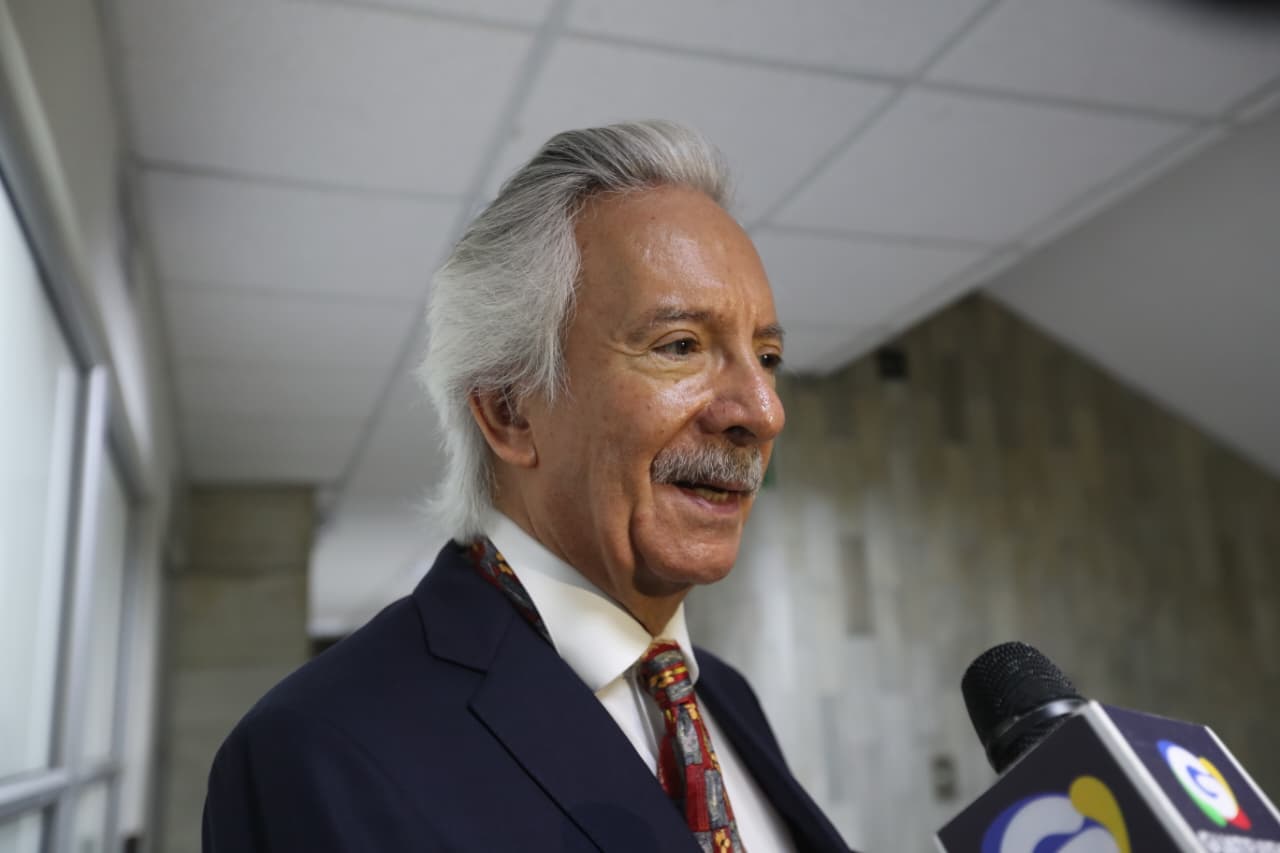
In this sense, Reporters Without Borders highlights the case of journalist José Rubén Zamora as a global example of the “recrudescence of intimidating demands.”
The report highlights that Zamora, who was imprisoned and subjected to multiple judicial processes, represents how justice systems can be instrumentalized to silence the critical press.
According to Reporters Without Borders, the case of José Rubén Zamora directly affects the legal indicator, which, according to the report, is the one that has deteriorated the most in 2026 globally, in more than 60% of the countries evaluated. It also highlights that, in Guatemala, strategic lawsuits and the excessive use of legal figures have created a climate of fear among journalists, who fear facing long, expensive judicial processes with a high risk of preventive detention.
Guatemala is, according to Reporters Without Borders, a country where press freedom shows signs of timid political recovery, although no murders were reported in 2025, but remains at risk under a legal system that is used as a weapon against journalists.
Guatemala Situation
Guatemala is ranked 128 out of 180 countries evaluated around the worldin the lower middle part of the ranking, with a slight improvement in the “political” indicator compared to previous years, but overshadowed by the criminal persecution to which journalists have been subjected in the country.
Guatemala advanced 10 positions, from position 138 in 2025 when a “hostile environment” and deterioration in conditions for journalism were already noted. The improvement is explained by relative changes compared to other countries or in specific indicators.
According to the document, This slight improvement in the political indicator is associated with changes in government or less “discursive hostility.” direct from the Executive. However, it is noted that these advances occur “despite the continued persecution of journalists.” In this sense, it is emphasized that any improvement is fragile and has not implied the cessation of practices of criminalization of journalistic practice.
The Reporters Without Borders World Press Freedom Index is built on five indicators: political context, legal framework, economic conditions, sociocultural environment and safety of journalists.
Pressure on public media and intimidating demands
The report indicates that the deterioration of the “legal” indicator is also due to “abusive” use of current legislation to bring journalists to court. In this regard, countries stand out in which there has been an “intensification of intimidating demands”, such as Bulgaria, in 71st place, and Guatemala, at 128. It also points out that in countries such as Thailand (92), Singapore (123) and Indonesia (129), political or economic elites take advantage of a legal framework that has “little guarantee” with the press. Likewise, Reporters Without Borders indicates that these legal maneuvers also occur in relatively well-ranked countries, such as France, which occupies 25th place.
Hearing postponed
Within the case being pursued against journalist José Rubén Zamora, Judge Maximino Morales, head of the Second Criminal Court, postponed the intermediate stage hearing that would take place this April 29 to next May 28.
This suspension is due to the fact that a challenge raised by Raúl Falla, of the Foundation against Terrorism, against Judge Erick García, Judge Mario Hichos and the staff of the Second Court is still pending resolution.
This challenge must be resolved by the Third Chamber of the Court of Appeals, led by Judge Alejandro Prado.
Regarding the rescheduling of the hearing, Zamora commented:
“On the one hand, I feel frustrated even though the judge who is hearing my case now has been very serious and when he has proposed a date he has honored it and now I have left a date for the end of this month. It fills me with emotion to have this date because this case was fabricated in such a ridiculous way that as soon as they make the presentation it will surely fall apart and now I will only have the one that is a trial because in this I only had a first hearing and it has been more than three years since I had what is now at the end of the month and I think that “The judge is very serious and we are going to have it this month,” said Zamora.