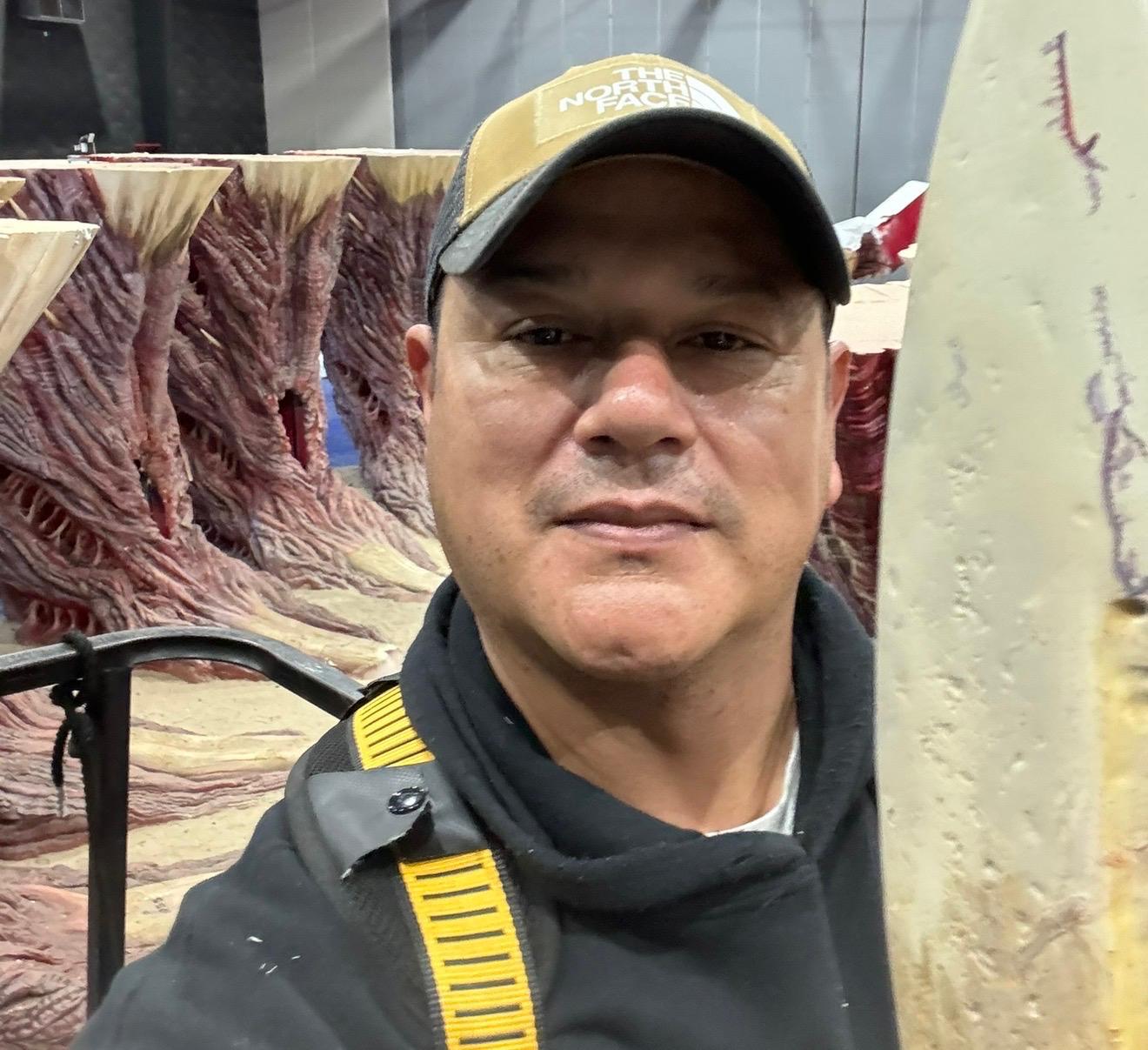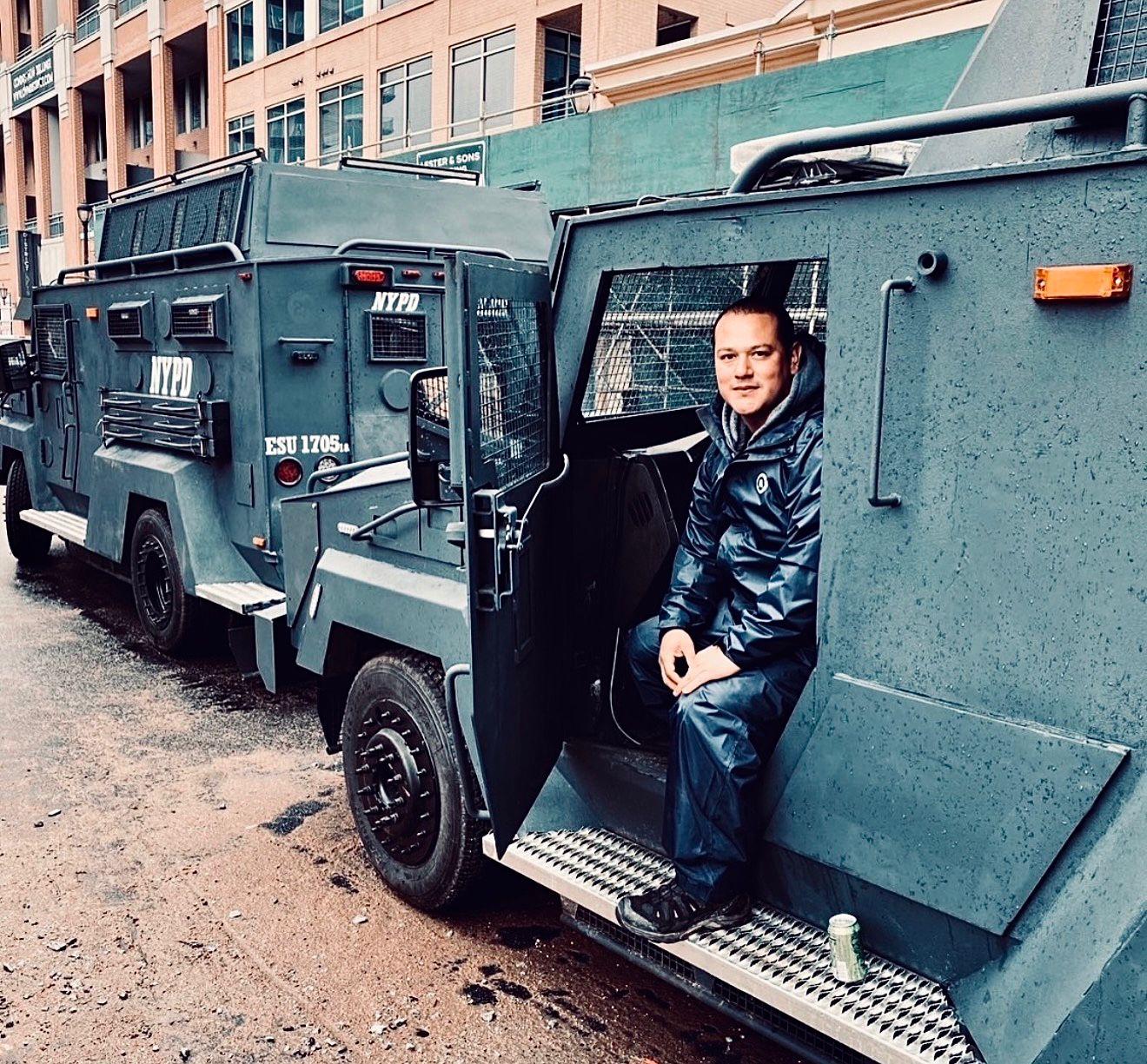
From spaceships to complete sets, Guatemalan José Pineda brings his art to the big screen with creations for productions such as Black Panther: Wakanda forever and Stranger Things.
Originally from Chimaltenango, José Pineda has made his way into the film industry, where he works as a prop maker—specializing in the creation of props.
He currently resides in Atlanta, Georgia, USA, and works for film production companies, where he has transferred his creativity and technical skills—such as electricity, carpentry, and other knowledge acquired in his professional training—to the development of elements for film productions and streaming platforms.
The set designer remembers that his first participation in the cinema was not within the art team, but as the driver of Optimus Prime’s vehicle in Transformers. After that experience, he began training in the creation of props on recording sets, where his work now opens doors for him in large productions in the industry.
His career has led him to participate in productions such as Avengers: Endgame, Superman and Guardians of the Galaxy. In an interview with Prensa Libre, Pineda highlighted that the technical training acquired during his education was key to developing the skills that he applies today in his creative work.
When did you enter the world of props?
I came to the United States to visit my cousins and, during that stay, I traveled to Georgia, where little by little I entered the world of scenography, although I did not start there directly.
It was around 20 years old when I began to approach the world of productions. A cousin, who was working on a film in Georgia, invited me to support him in the transportation area. I accepted the opportunity, since I could perform different tasks. Additionally, I drive trucks and have licenses to operate various types of equipment.
At that time, Atlanta was establishing itself as one of the main centers of film production. From that experience, I began to interact with people in the environment; My work was well received and I was generating connections. Opportunities even arose as an extra in films, although later I decided to focus on building sets.
Little by little I got involved in learning how to create props for audiovisual productions. Over time, I worked my way up to becoming a set construction foreman.
Although I do not work directly for Hollywood, I collaborate with studios such as Warner Brothers, Universal Studios and Fox. My career has also led me to participate in productions linked to DC, Marvel and Lionsgate.
Black Panther: Wakanda forever is one of the productions in which the Guatemalan has been part of the set design team.
(Free Press Photo: courtesy José Pineda)
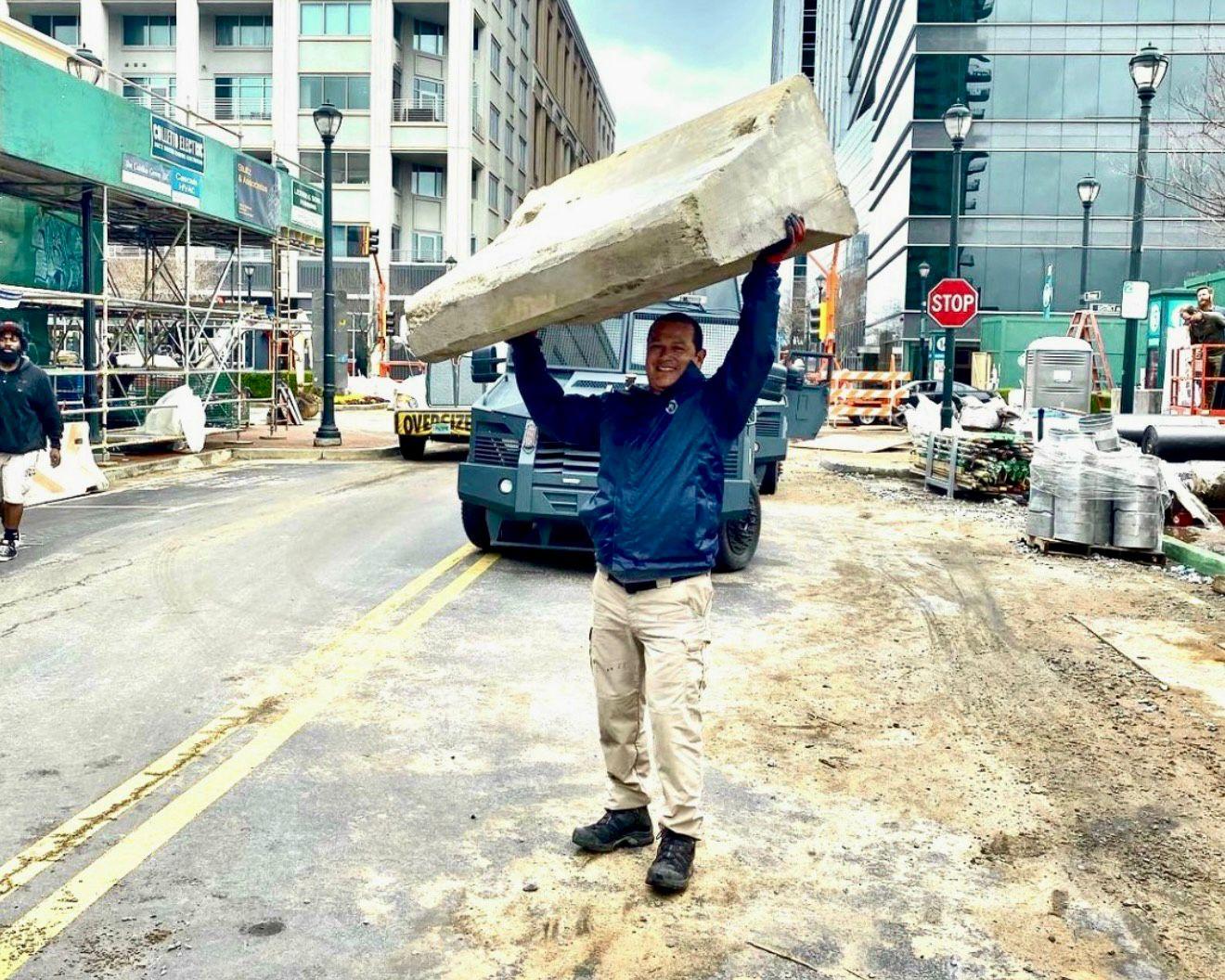
José Pineda, photographed on the set of The Falcon and the Winter Soldier, where he participated as part of the set design team.
(Free Press Photo: courtesy José Pineda)
Do you remember what was the first production in which you participated?
Yes, I remember it very well because it was the fulfillment of a dream. I worked on Transformers 4 and my start was as a driver; At that moment I had to drive Optimus Prime’s truck. Although I didn’t appear on camera or do any craft work, I remember the feeling of witnessing something I previously only saw on television.
Over time, productions such as Alien, Insurgent, Divergent and Hunger Games arrived. Then came other projects such as Godzilla: King of the Monsters, Stranger Things, Ozark and Black Panther, as well as Marvel series such as Loki and WandaVision. In many of these productions I was already involved in the creation of props and sets.
This work is not done by a single person, but by teams that, with their skills, manage to represent and capture the ideas that arise from the script.
Each production has been different and has challenged ingenuity to develop props, a process that requires time and learning. Therefore, I consider that the knowledge acquired during my high school education in Guatemala provided me with key skills to perform in the productions in which I have worked.
(Free Press Video: courtesy José Pineda)
What was that learning process like?
The truth is that everything takes time, effort and desire. For me, learning has been part of the desire to get ahead. You could say that I developed a career without formal studies, where learning was more practical than theoretical.
In many cases, to do this job you would need to be an engineer or have studies in different areas. However, thanks to God and the support of the people I worked with, I learned to develop each scenic element. It has been a long, but constant process, in which I continue to learn every day.
Thanks to that learning and, above all, the desire to improve myself, today I can build whatever is asked of me: spaceships, helicopters, boats or complete sets. We have even made wooden trucks within productions. All this comes from learning with patience, discipline and boldness.
I also believe that learning never ends. On the sets there are always new challenges; Each project has its own level of difficulty, and that is part of the process.
The development of a set depends on its size, materials and type of production. For example, when working in a complete studio, on a stage, you can build large sets like a spaceship. These sets are large and are designed mainly for scenes where the actors interact: where they walk, fight or develop the action. The rest, like complete cities, are often done with blue screen technology.
In other cases, we work in real locations that require greater intervention. I remember when I worked on the movie Live by Night, starring Ben Affleck, set in the gangster era. There a town was taken over, streets were closed, signs were changed, dirt was thrown on the asphalt and everything was transformed to recreate the 40s.
There are times when an entire city is built and others when a real location is adapted. It all depends on the production budget.
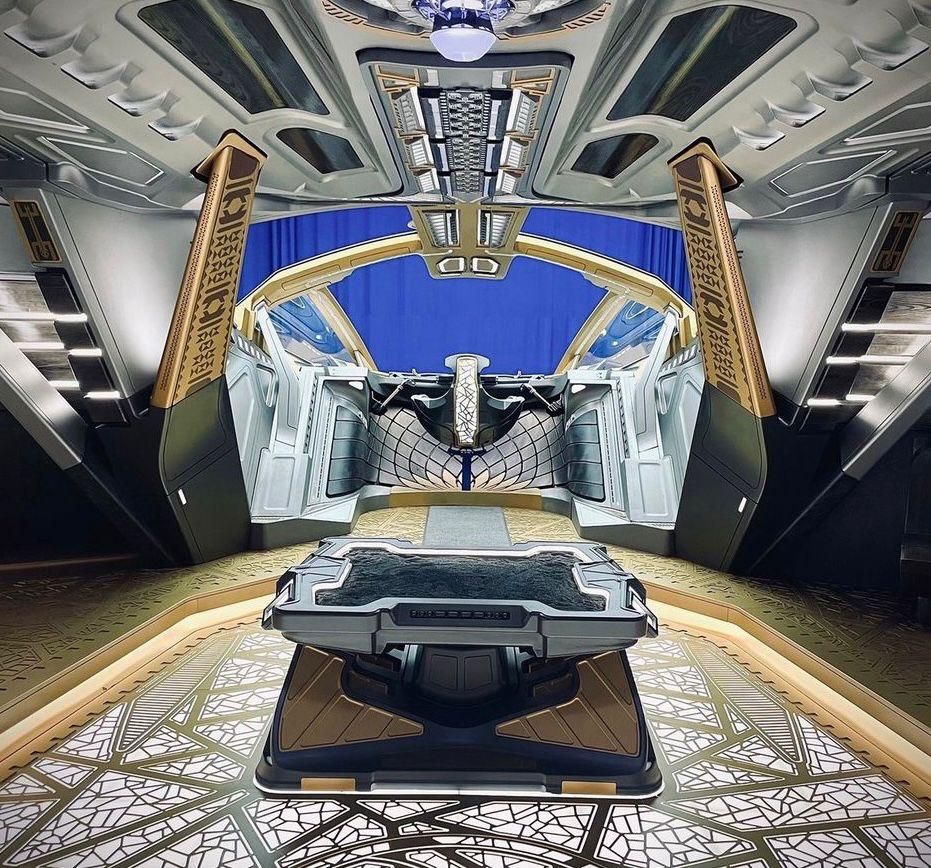
(Free Press Photo: courtesy José Pineda)
How many people work on a set and how long does it take to build a set?
The truth is that it depends a lot on the project. For example, the set design of Wakanda took around five months, because in that production electricians, builders, special effects specialists and a large technical team in charge of the development of sets and scenery worked together.
In that case, there were approximately 15 prop makers, about 20 in the special effects area, in addition to the lighting staff, doctors assigned to the team and lifeguards when the scenes involved water, as occurred in the fight with Namor. These are enormous productions, in which a large number of specialists participate, each one fulfilling a specific role to achieve the final result.
(Free Press Video: courtesy José Pineda)
Have you managed to incorporate cultural elements from Guatemala in your work?
The truth is, being able to insert your own elements is complicated, since in productions everything has been thought out, but when the producers and managers allow it, one can contribute. For example, in Bad Boys 3 I included Maximón de Itzapa, since ideas could be proposed, and if the art directors like them, they adapt them to their vision.
Although it is difficult, because they already have a clear idea and are the ones who decide everything, at times one can contribute; In others, it must be governed by the design already planned for each set or scenery.
They give us plans—blueprints—with exact measurements, materials and specifications. Everything must be done as indicated.
Sometimes one can suggest changes, but there is not always time. It is a job against the clock, and that is why it is also well paid.
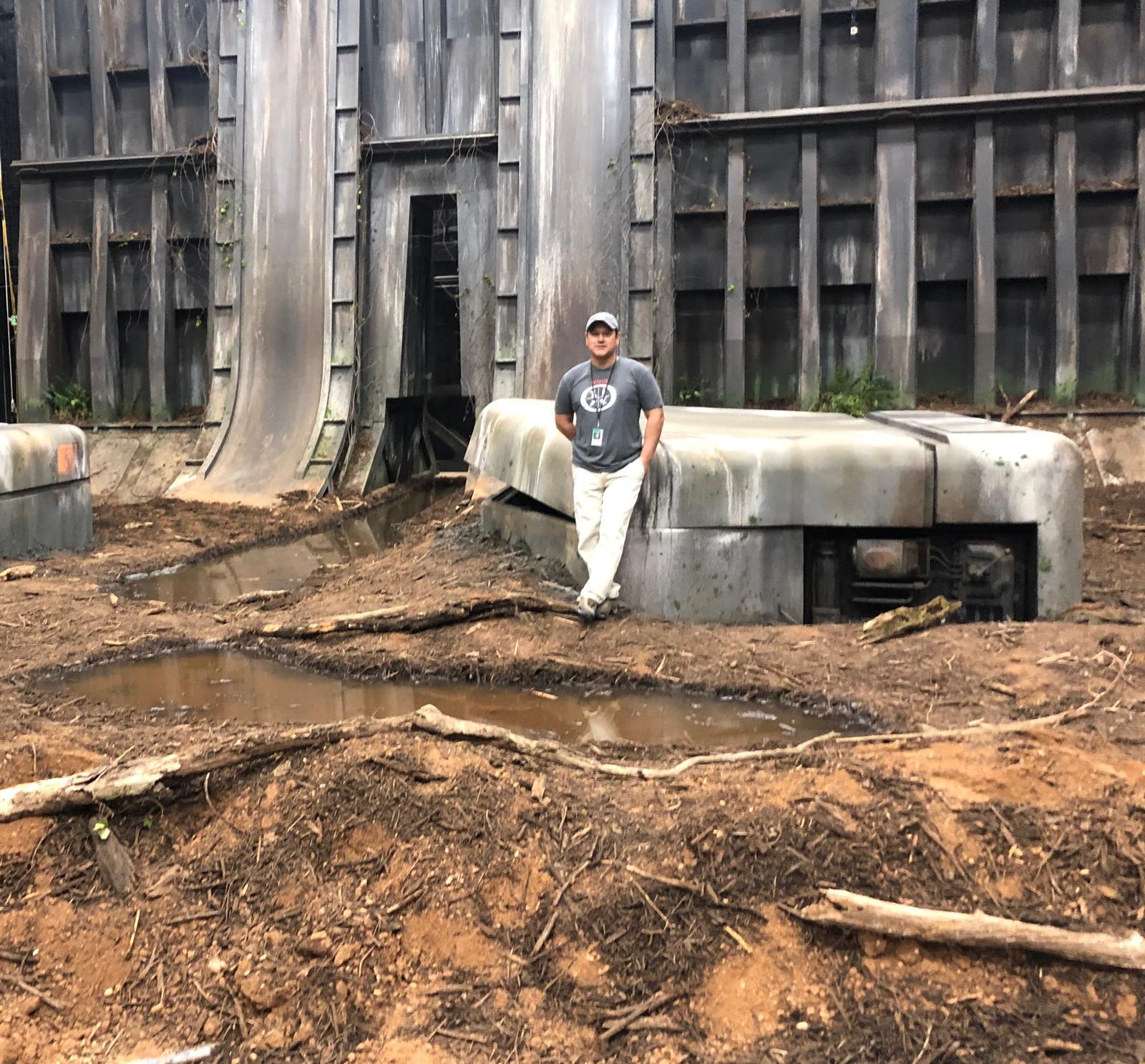
(Free Press Photo: courtesy José Pineda)
Is there a difference between working in movies and in series?
Yes, it depends on the level of production. For example, a first season may have a low budget, but if it works, the following ones grow a lot.
Series like Stranger Things or The Walking Dead become huge franchises. And then there are even bigger productions like Star Wars or Marvel, which already have a very high standard.
Have you thought about creating opportunities in Guatemala?
Yes, I would like that very much. I think that in Guatemala there is talent, but there is a lack of training in set construction. I could replicate many things, even with a small budget, that help to better develop the quality of the films and give Guatemala those touches of professionalism, but I think we have to continue training for this.
I would like to contribute so that cinema in Guatemala grows, of course, but I think that the spaces have yet to open, although I am waiting for the time to contribute.
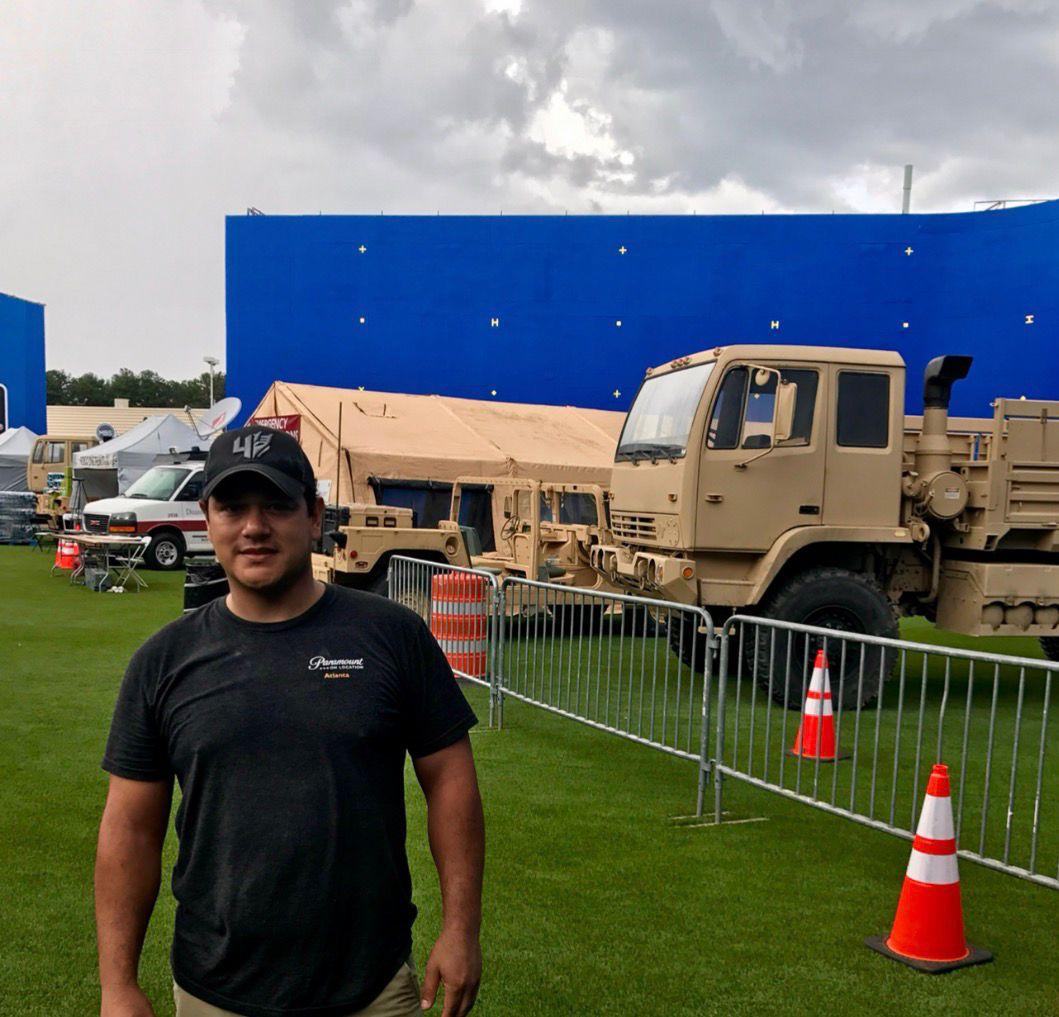
(Free Press Photo: courtesy José Pineda)