
With more than 120 spaces that protect, investigate, interpret and exhibit the country’s material and intangible heritage, museums are meeting points between history, culture and knowledge. However, in recent years they have faced a lack of resources and unfinished remodeling processes.
Currently, the Ministry of Culture and Sports indicates that in Guatemala spaces such as The Museum of Antique Books, the National Museum of Modern Art “Carlos Mérida”, the Museum of Santiago de los Caballeros and the Museum of Colonial Art (MAC) remain closedwhether due to court orders, due to renovations that have not been completed for years or other reasons.
Archaeologist Javier Castillo, from the Miraflores Museum, points out that museums must be at the service of the community, but They face problems such as the lack of dissemination and the absence of a museum culture in society. Furthermore, it indicates that there is no policy that allows its expansion, which affects both public and private museums.
The Association of Museums of Guatemala and the local committee of the International Council of Museums indicate that there are more than 120 museums in the country – archaeological, art, ethnology, history, natural history, science and technology, university and sports – where the knowledge, legacy and roots of the country are preserved.
The General Directorate of Cultural and Natural Heritage reported that the museums under the administration of the Ministry of Culture are:
- National Palace of Culture
- National Museum of History
- National Museum of Natural History “Jorge A. Ibarra”
- National Museum of Archeology and Ethnology (Munae)
- Regional Museum of Santiago Sacatepéquez
- Royal Cultural Center Palace of the Captains General (Munag)
- Regional Museum of Archeology La Democracia “Rubén Chévez Van Dorne”
- Mundo Maya Regional Museum
- Southeast Petén Regional Museum
These spaces are the ones that must have a budget for their conservation, protection and dissemination, in addition to four others that remain disabled.
One of these cases is the National Museum of Modern Art “Carlos Mérida”which has been closed since the end of 2022. Although it was initially attributed to damage to the roof and remodeling work, the venue has not been reopened, despite the fact that it was scheduled to be delivered in 2024.
For its part, The Museum of Colonial Art was affected by the removal of pieces during raids carried out by the Public Ministry under judicial orderal, between the end of 2025 and the beginning of 2026, and is currently in a legal process.
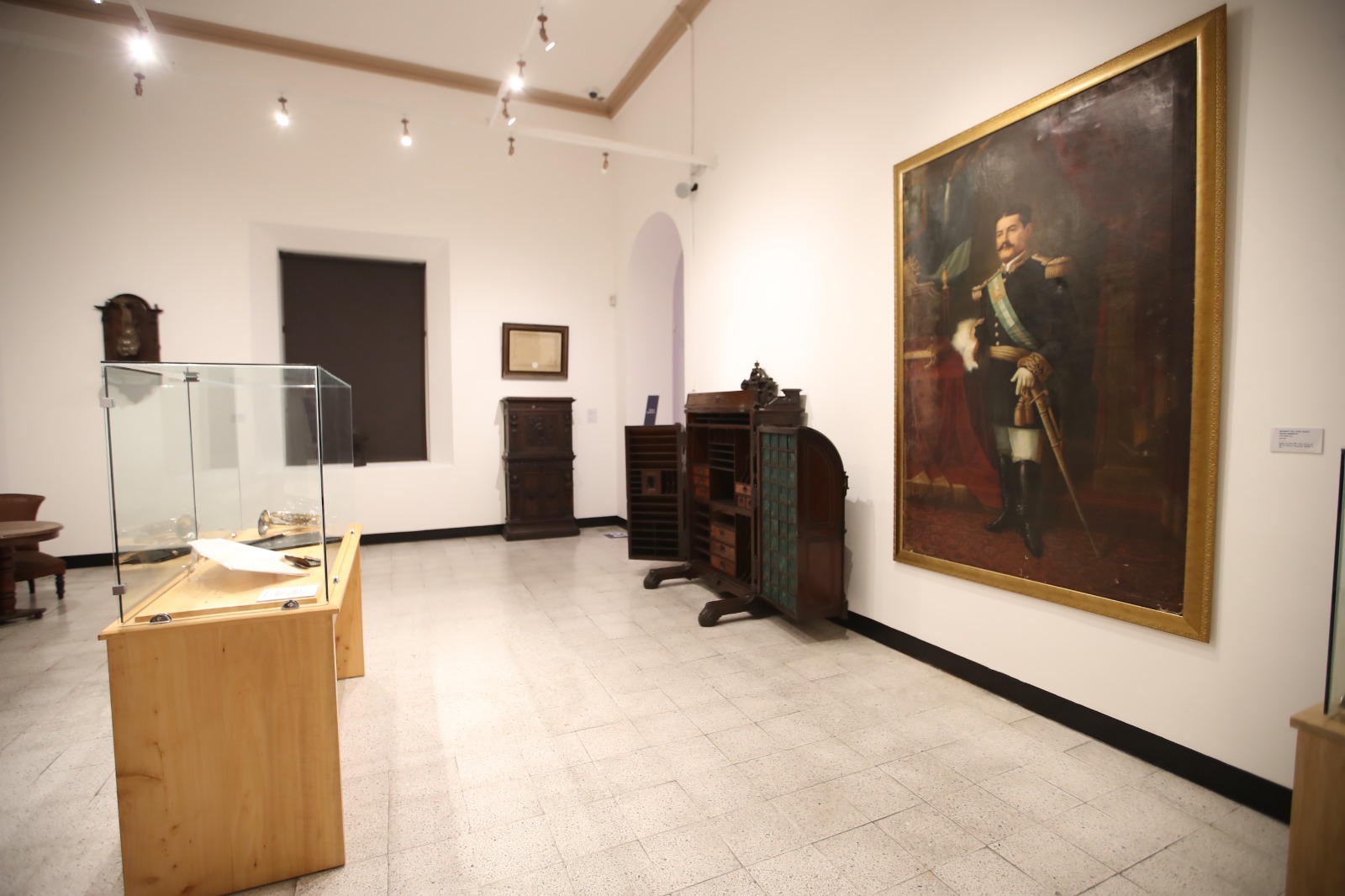
Photograph from the Museum of Modern Art of Guatemala. (Free Press Photo: Newspaper Library PL)
The cultural manager Roberto Broll points out that There is a lack of investment, multiple closures and inadequate handling of pieces, which puts assets at risk.. “Although in some cases there are experienced personnel, the constant transfers of objects alter the conditions necessary for their conservation,” he says.
He adds that there has been no sustained investment in infrastructure and that the closure of museums limits public access to cultural heritage.
Given this scenario, the Minister of Culture and Sports, Luis Méndez Salinas, recognized that the budget allocated to museums is reduced. He indicated that the ministry’s total budget amounts to Q1,001.2 million, one of the lowest in the Government.
Despite this, he emphasizes that there is time to channel priorities so that attention to museums is a priority and highlights that it is part of the plans for their management at the head of the portfolio.
Castillo explains that no museum is self-sustaining, so the lack of budget affects the conservation of heritage and its educational function. In the case of private museums like Miraflores, he explains that they try to maintain the collections with funds from foundations, while public museums depend on the State.
Broll also emphasizes that the problem is not only the allocation of resources, but their execution, since low execution limits key actions.
Researcher Rafael Carlos Castillo Taracena indicates that Guatemala has a rich heritage and the capacity to have high-level museums; However, there is no updated museological tradition consistent with the cultural and social diversity of the country, and heritage culture has historically been linked to private collecting.
The vision we have about the social function of cultural heritage in Guatemalan museums responds to a large extent to this.
What happens to museums that have been closed or disabled?
Regarding the “Carlos Mérida” National Museum of Modern Art, the minister indicated that priority will be given to evaluating the remodeling process and the state of its collection, which protects more than 100 years of art history in Guatemala, as well as the state of the property.
In the case of the Museum of Colonial Art, whose pieces are kept in the National Palace of Culture, he pointed out that actions are already being proposed to intervene in the pieces that require it, maintain their protection and initiate conversations with the Municipality of Antigua Guatemala to define a route for the use of the property, as well as legal actions to return these spaces to the public.
Regarding the heritage pieces, he indicated that those from the Museum of Colonial Art are located in the National Palace of Culture, while the large format ones were transferred to the Museum of Art of Guatemala. The collection of the Museum of Ancient Books is also kept in that facility, where daily temperature controls and conservation techniques are applied.
Given the closures, the cultural manager warns that the main risk is the dispersion or loss of pieces. Even if records exist, the loss of objects implies irreparable damage. Furthermore, keeping works stored and out of display can deteriorate them and make them disappear from the collective imagination.
“It directly affects their social function. Museums are spaces of memory; when they disappear, that memory is also lost. History is no longer accessible to the population and becomes the property of a few,” says Rafael Castillo Taracena.
From their perspective, these closures respond, in part, to a logic of privatizing heritage, added to budgetary limitations and institutional weaknesses.
What are the main gaps facing the museum system?
According to Broll, the main gaps are related to the lack of government attention, which impacts human resources, budget and planning.
Although each museum must manage its resources, it is considered essential that the authorities lead concrete actions to strengthen them.
An example is the Museum of Modern Art, which remains closed despite remodeling processes initiated in previous administrations, which generates concern about the state of the works.
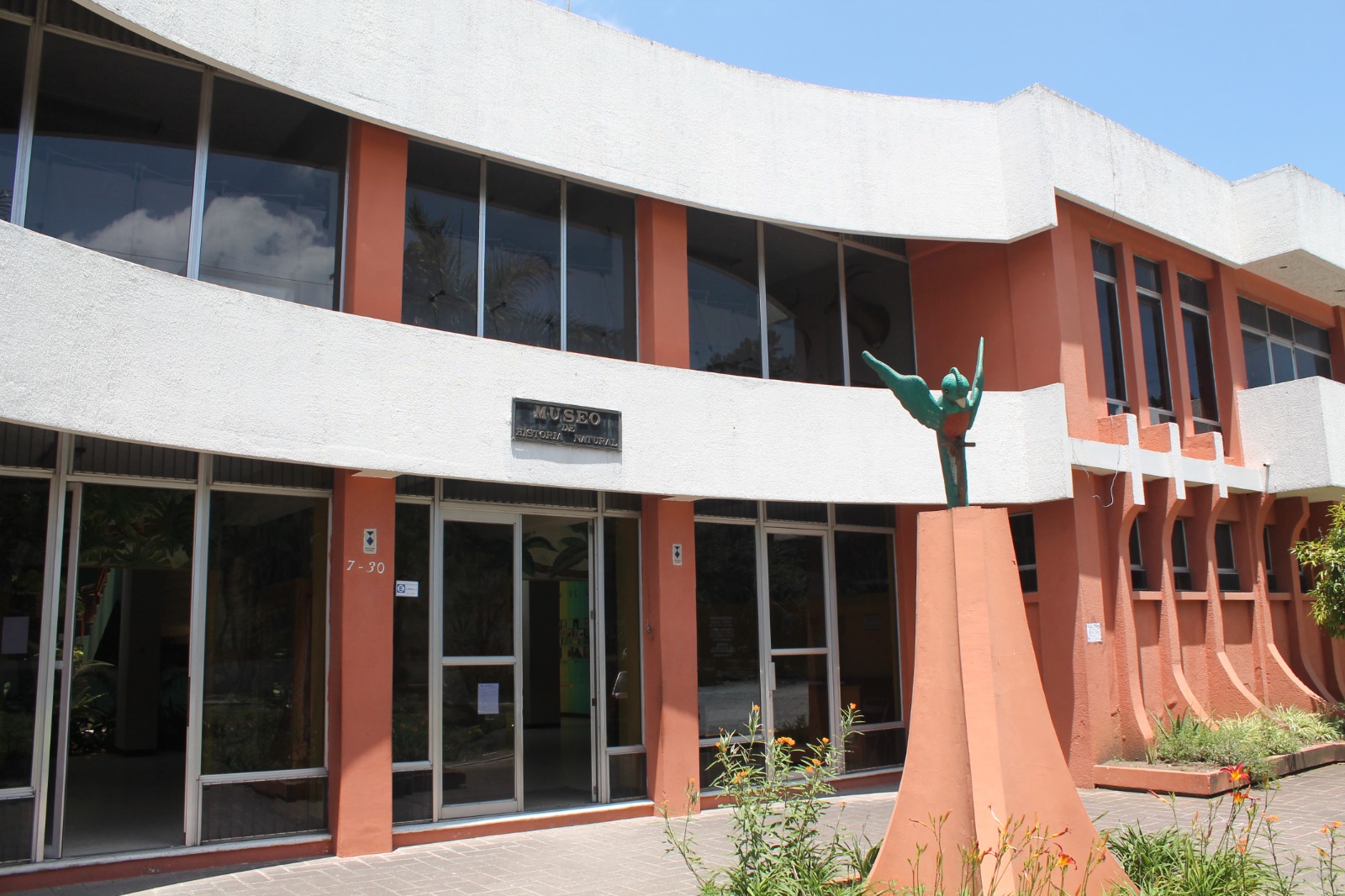
Photograph from the National Museum of Natural History of Guatemala. (Free Press Photo: Newspaper Library PL)
Museum decentralization
Regarding decentralization or the creation of new spaces, the Ministry of Culture highlighted the role of the Directorate of Cultural Development, which has around 60 cultural development houses in the country, with the goal of establishing at least one in each municipality.
“These houses can serve precisely to decentralize culture. It is necessary to be creative and explore mechanisms such as traveling exhibitions or projects that do not require permanent infrastructure, which facilitates their implementation,” said the minister.
Its implementation would allow expanding access to art, memory and history in different territories.
Specialist Carrillo points out that decentralization is necessary, but warns that a distinction must be made between the creation of museums and the conservation of heritage, since opening new spaces does not guarantee their adequate protection if there are no solid standards.
Future of museums
Castillo warns that the continuity of closures can affect the identity and historical memory of the population, since museums allow us to know and value the cultural legacy.
For this reason, he emphasizes that allocating an adequate budget is key, since without resources, conditions such as controlled environments or restoration materials cannot be guaranteed, many of which must be imported.
Rafael Castillo Taracena adds that this scenario could lead to greater participation of the private sector, even with international capital, in the conservation of heritage, which would imply transferring responsibility from the State to other actors.
Broll emphasizes that there are opportunities, especially due to the available infrastructure, but the lack of institutional coordination limits their use. For example, tourism promotion efforts lose effectiveness if museums remain closed or inactive.
Technology for museums
Given the advancement of technology, the General Directorate of Heritage recognized the importance of incorporating digital tools in museums to strengthen management, conservation and the visitor experience, which is why their implementation is part of future plans.
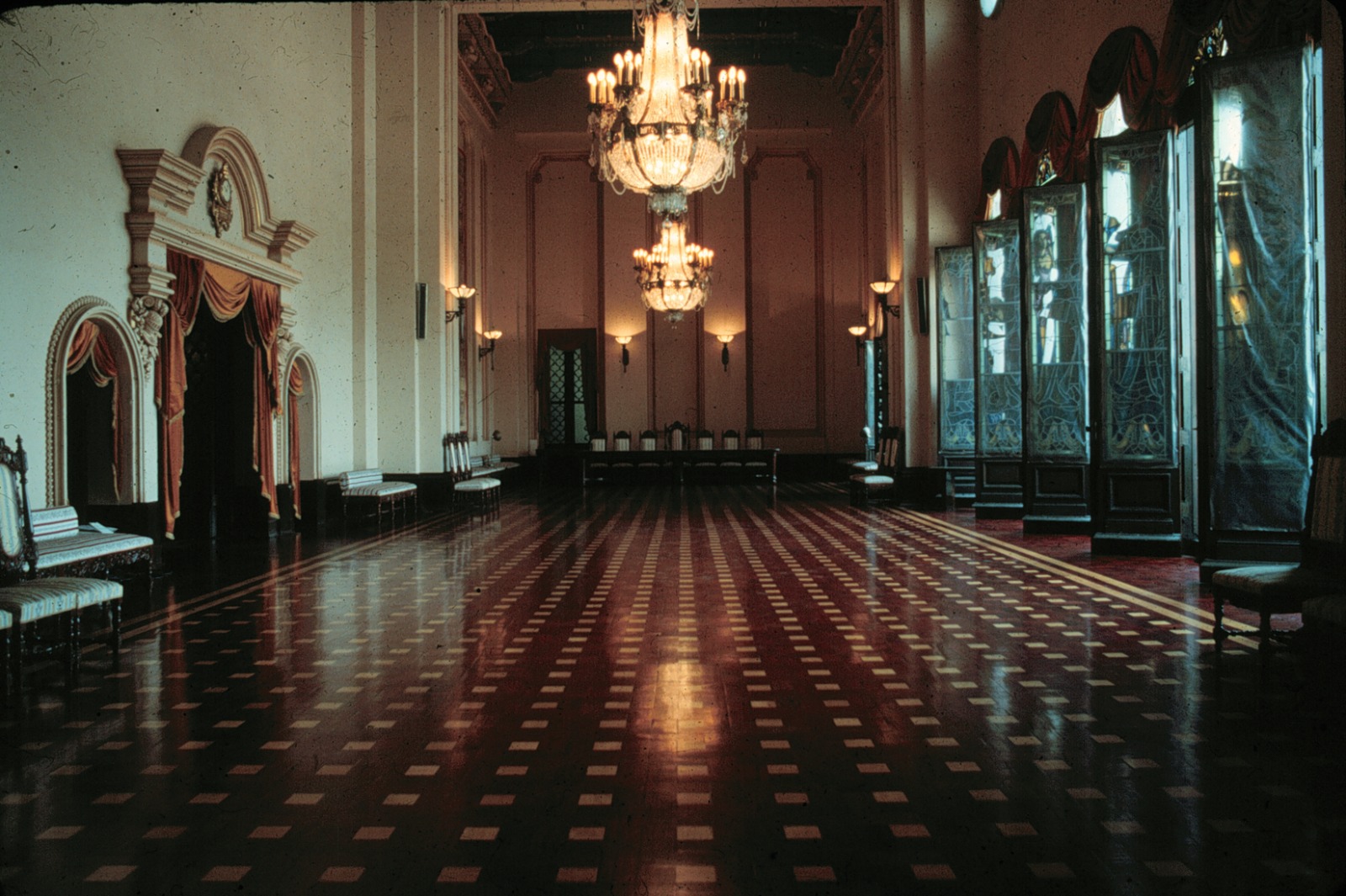
Photograph of the interior of the National Palace of Culture of Guatemala. (Free Press Photo: Newspaper Library PL)