
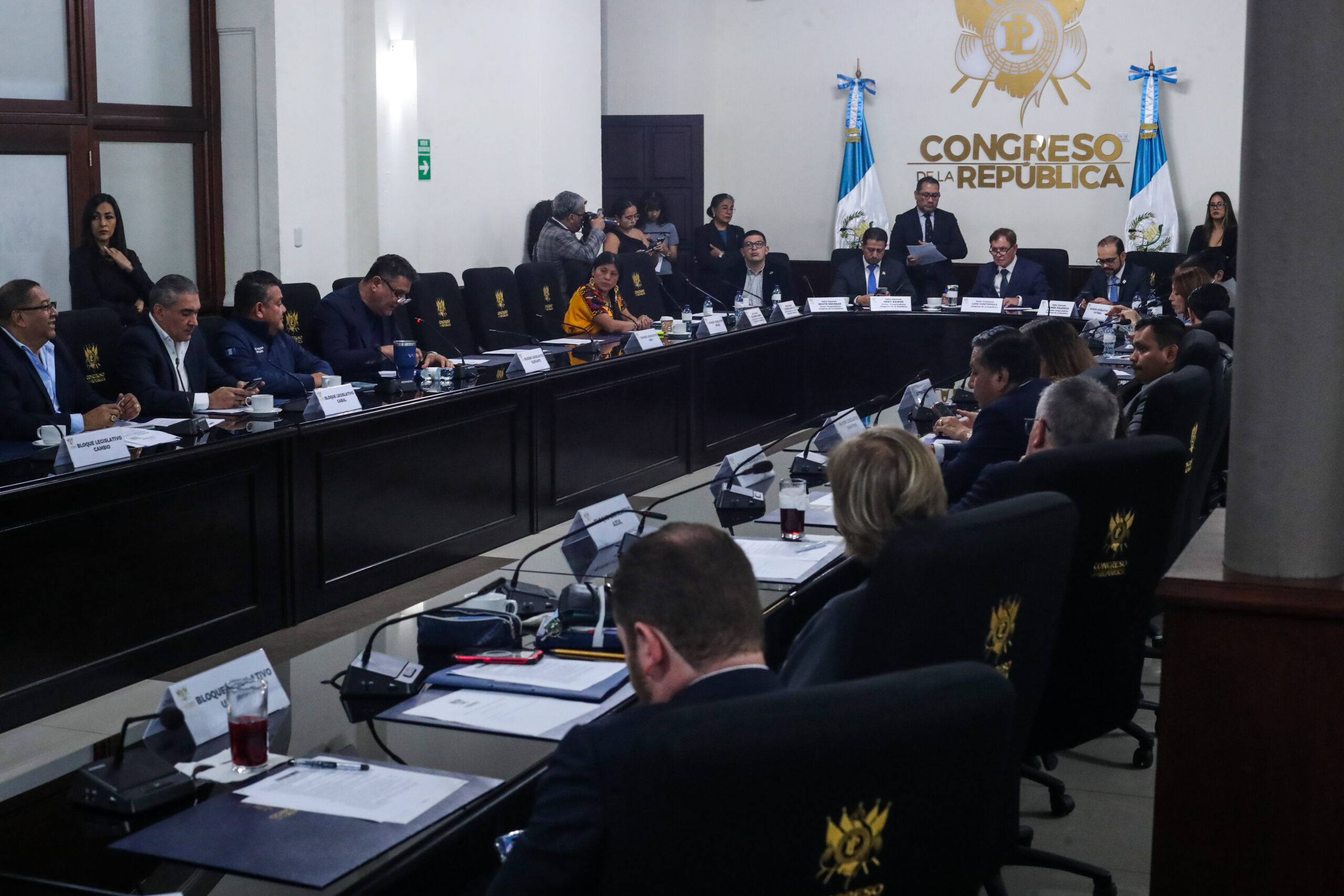
With low productivity in terms of laws and decrees and with a division that does not respond to a common strategy, but to agreements and negotiations in accordance with their interests in each vote, will close the first regular session of Congress, according to analysts.
The first regular session ends on May 15, which has been marked by a very different dynamic than that observed in the first two years of the tenth legislature, where there was consensus, agreements and prioritization of common issues, which revolved around a common agenda. This was due to the alliances of those blocks that sought to promote priority issues for the government, they say.
However, they assure that During this year the opposite of that dynamic start has been seen, with agreements and consensus observed in the previous two years, as a consequence of the different topics and interests that have begun to move the different groups within Congress during this third year.
Unproductive and transactional period
According to the political scientist Renzo Rosal, The work carried out during this first period of 2026 by the tenth legislature has been “really unproductive” and marked by a “transactional” dynamic to approve certain issues. It also points out that it has become evident that the multiparty integration of the Board of Directors “does not translate into concrete actions,” since there is a deficit in legislative productivity.
“Not a large number of decrees have been approved. To a large extent the work has focused on the above-mentioned inspection actions, which are basically just summonses to officials and some other interpellation. That is to say, these actions are ineffective, they are extensive, they are long and exhausting for officials, but there are no tangible results in terms of inspection. This is what we could call legislative activism with many meetings or subpoenas to officials”, he states.
Regarding approvals, Rosal states that During this year it has become more evident to grant votes in exchange for benefits for the deputies, especially in the negotiations of Executive issues, this in the absence of an official bloc, as such, within Congress.
“I believe that the current government has lent itself to this transactional mechanism to be strong. Firstly, because it does not have players in Congress, there is no pro-government bench in Congress, and therefore in the face of this vacuum, what the Executive has done is ingratiate itself with several deputies from various benches under the assumption that, with that support, these deputies are going to vote or support initiatives of the Executive. That is the transactional mechanism that operates today and which is a mechanism in which the Executive has fallen as if into a mistake,” Rosal says.
Capricious, erratic and volatile
According to Cristhians Castillo, analyst at the Institute of National Problems of the University of San Carlos (Ipnusac), During this third year, the tenth legislature has been capricious, erratic, volatile and had little impact on the productivity of laws and decrees that benefit Guatemalans.
“It seems that this tenth legislature is very capricious, extremely capricious. Above all, because there has been a level of fragmentation that has never been seen in the past, which has forced practically every approval to entail a negotiation. There are no steamrollers, there is no leadership,” he says.
Castillo warns that so far this third year “There is no desire for general consensus, but rather particular agreements,” on the part of the deputies.
“They advance on the issues in which they reach consensus through very specific negotiations or that they negotiate in ‘combos’, that is, the approval of laws together with the election of a position or some designation that corresponds to Congress. There is no desire for general benefit, but rather for very particular consensuses and agreements,” he says.
Pending issues
Regarding the issues pending approval in the first legislative period, analysts warn that It is necessary for deputies to approve laws such as the one that combats money laundering, the cybercrime law and the reforms to the Electoral and Political Parties Law, the latter with very little possibility of being discussed in the current legislature.
“The money laundering law has been moving slowly, although it is not perceived as a law of national interest, it does have that connotation and it also has to do with commitments that the State of Guatemala must fulfill at the international level. The cybercrime law, everything that now has to do with these hacks that occurred in Digecam and other institutions,” says Rosal.
“I do not see the possibility in this legislature of a comprehensive reform of the Electoral and Political Parties Law and what that does is postpone issues that have been transcendental in the last 10 or 11 years and that continue to put the credibility of the elected authorities at risk, since the current electoral law is very porous and really very unstable,” Castillo said.
Second semester with an electoral tone
The experts consulted agree that The dynamics of the deputies in Congress during the second legislative period and during the second half of 2026 will be especially focused on the electoral issue and their reelectiondue to the elections that will be held next year, leaving aside the issues of interest and benefit for citizens.
“The concern is that this dynamic is going to increase in the second semester, already with an increasingly electoral sense, that is, to seek to further wear down the Executive, to seek to increase the bonuses of the deputies who want, most of them are surely betting on their re-election, and what they are going to be then is privileging those personal or party agendas, instead of legislative work that is beneficial for the country,” says Rosal.
On the prioritization of electoral issues over the approval of laws on the part of the deputies during the remainder of the year, Castillo comments:
“It seems to me that the biggest concern is that there are no legislative blocks, there are interest groups negotiating votes and negotiating agendas within the Legislature and then that puts a particular pressure when the pressures of the electoral year begin to force some of these actors to think about their re-election more than about social benefit,” says Castillo.
Latest approvals
During the ordinary session held on April 28 The deputies approved three decrees and a legislative agreement. Decree 12-2026 by which the Law of Cooperative Institutes is modified so that these study centers have the same benefits as public educational establishments such as school meals, educational bags and textbooks. Decree 13-2026 that modifies the Tax Update Law so that all workers who earn the minimum wage in the different productive sectors of the country. and the decree 14-2026 that declares National Respiratory Therapist Day on May 17 of each year.
While the last legislative agreement approved was the 14-2026 through which a financial contribution of Q500 thousand and Q250 thousand, respectively, will be granted for the boxers Lester Martínez and Joshua Kevin Antónfor his high merits and sporting achievements achieved last March 21, in California, United States.
Anti-money laundering law and port law, priority
The president of Congress, Luis Contreras, stated that the initiatives proposed The creation of the anti-money laundering law and the port law will be included in the agendas of the last ordinary sessions that will be held on May 5 and 12, Therefore, he hopes that they can be approved before the start of the extraordinary period.
“I am going to schedule the two laws, I cannot guarantee, but I do believe that we have the consensus to approve them. If they are not approved in plenary, what I can guarantee is that I am going to vote for those laws and the Board of Directors is going to vote for those laws and all the deputies who want to give a valid legal body to the State of Guatemala,” said Contreras.
Ordinary and extraordinary periods
Legislative work during the year is divided into two ordinary periods and two extraordinary periods. The first ordinary period runs from January 14 to May 15 and the second ordinary period is from August 1 to November 30.
Regarding extraordinary periods The first of them begins on May 16 and ends on July 31, while the second runs from December 1 to January 13 of the following year.
Decrees and legislative agreements approved in 2026
So far in 2026, Congress has approved 14 decrees and 14 legislative agreements.
Approved decrees:
- 01 – 2026 Ratification of Government Decree Number 1-2026 that declares a state of siege throughout the Republic of Guatemala
- 02 – 2026 Reforms to Decrees Number 101-97, 11-2002 and 7-2025, all of the Congress of the Republic
- 03 – 2026 Reforms to the General Budget of State Income and Expenditures for the year 2026
- 04 – 2026 Law on Normal Schools and Institutes with Specialties
- 05 – 2026 Reform to Decree Number 12-2002 of the Congress of the Republic, Municipal Code
- 06 – 2026 Repeal of the Law on Inheritance, Legacies and Donations Tax, Decree Number 431 of the Congress of the Republic
- 07 – 2026 Organic Law of the Attorney General’s Office
- 08 – 2026 Integration of the Constitutional Court for the constitutional period 2026-2031, with the regular and alternate magistrates.
- 09 – 2026 Law for the Dignification of Retirees and Pensioners of the Military Pension Institute
- 10 – 2026 Law to prevent child sexual abuse
- 11 – 2026 Emergency Support Law for Diesel and Gasoline Consumers
- 12 – 2026 Law on Education Institutes by Teaching Cooperative
- 13 – 2026 Tax Update Law (reform to exempt from ISR workers who earn the minimum wage)
- 14 – 2026 Law Declaring National Respiratory Therapist Day on May 17 of each year
Approved agreements:
- 1 – 2026 Call for the integration and installation of the nomination commission for the election of attorney general and head of the Public Ministry.
- 2 – 2026 Declare closure of the second phase of the annual period of sessions. Declare the 2026-2027 legislative period inaugurated.
- 3 – 2026 Express signs of regret and regret for the events that occurred on January 18, 2026, in which agents of the National Civil Police died.
- 4 – 2026 Call for professionals to apply for the position of regular and substitute magistrate of the Constitutional Court by Congress.
- 5 – 2026 Approval of the distribution of the ordinary work commissions of the Congress of the Republic, to the different legislative blocks, period 2026-2027.
- 6 – 2026 Declare elected members of the Human Rights Commission of the Congress of the Republic, for the legislative period 2026-2027.
- 7 – 2026 Declare elected and designate lawyer Roberto Molina Barreto as magistrate of the CC for the constitutional period 2026 – 2031.
- 8 – 2026 Declare the lawyer Luis Alfonso Rosales Marroquín elected and appoint the lawyer Luis Alfonso Rosales Marroquín as the titular magistrate of the CC for the constitutional period 2026 – 2031.
- 9 – 2026 Declare elected regular and alternate magistrates of the Supreme Electoral Tribunal for the period 2026-2032.
- 10 – 2026 Call the elected judges of the Constitutional Court to take the oath to the Political Constitution of the Republic of Guatemala.
- 11 – 2026 Reform the first point of Legislative Agreement Number 6-2026, only in the designation of the representative of the Elephant Community political party, declared elected as a member of the Human Rights Commission of Congress.
- 12 – 2026 Confer the Decoration of the National Order of the “Sovereign National Congress”, in the rank of Knight, to the outstanding Guatemalan athlete Lester Normandy Martínez Tut.
- 13 – 2026 Confer the Decoration of the National Order of the “Sovereign National Congress”, in the rank of Knight, to the outstanding Guatemalan athlete Joshua Kevin Antón.
- 14-2026 Financial contribution to boxers Lester Martínez and Joshua Kevin Antón, for their high merits and sporting achievements achieved on March 21, in California, United States.