
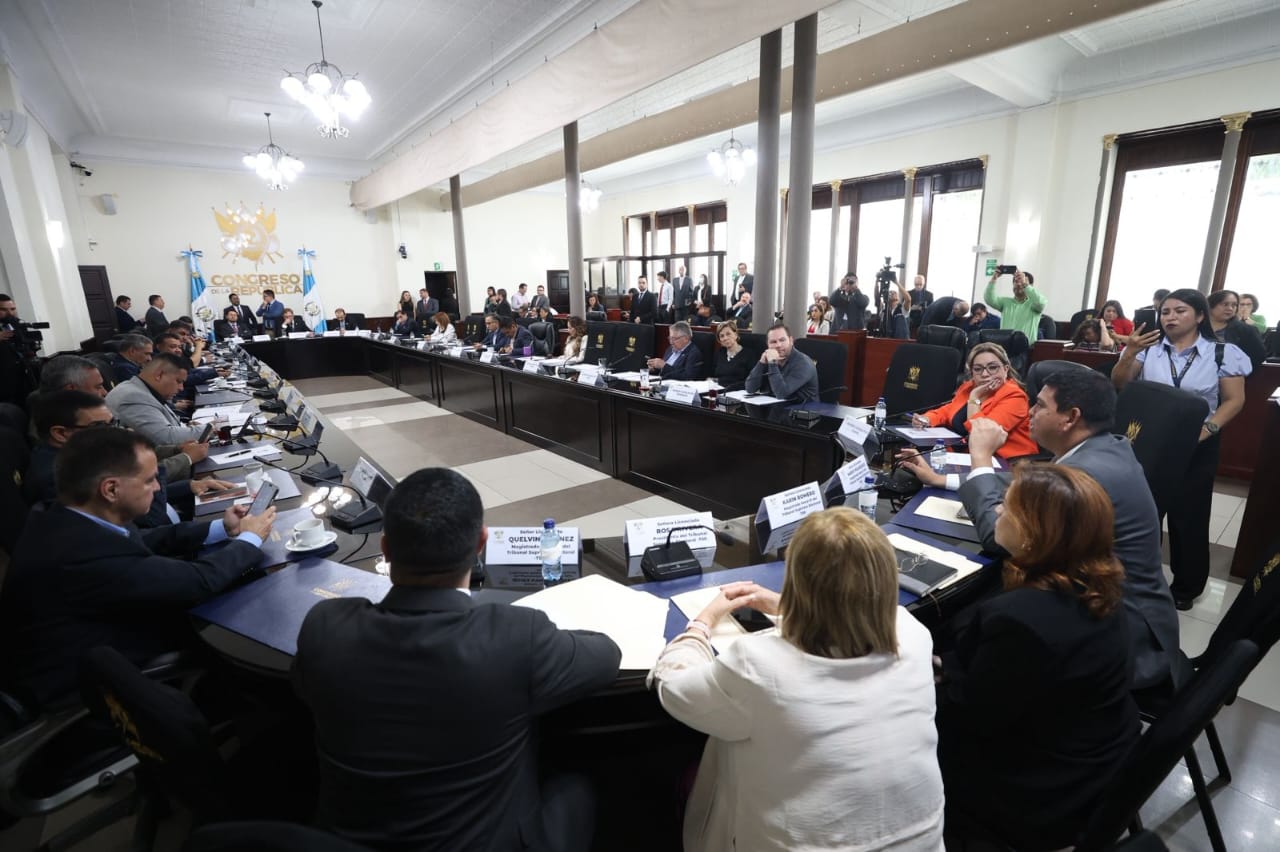
The judges of the Supreme Electoral Tribunal (TSE) had a first approach with Congress, to obtain financial resources and a better purchasing modality to comply with the preparations for the 2027 general elections.
The new TSE authorities who took office on March 19 arrived at the Block Heads meeting, where they explained to the Congressional deputies the need to have more money for this year.
But in addition to financial needs, they also require a temporary reform that allows them to have other times in the Purchase and Contracting Law, so as not to delay any purchase with a view to the electoral process.
In relation to the money required by the TSE, the magistrates explained the need to have Q122 million, because it was an amount that was not taken into account with the last budget expansion.
An imbalance that, if not corrected, could affect the planning of the electoral event and the institutional functioning of this year, which is why they hope to have the full support of the Legislature.
Next Wednesday the TSE will appear again in that body, but it will be in front of the deputies who make up the Economy commission, to continue explaining the details of its economic needs.
They discard the Trep
Different deputies expressed their openness to supporting the TSE so that there are no setbacks in the future electoral process, but they made it clear that there are doubts about the past event that have not been resolved.
“We are just a little over a year away from the elections. Democracy has a cost, and trust must have a cost. What the parties have stated since the election of the magistrates is that there be certainty of participation,” stated Jairo Flores, from the Will Opportunity and Solidarity (VOS) group.
The congressman gave an example of how other countries are “doing well” in aspects where Guatemala is not yet. “In the Dominican Republic they have a very agile computer system, it was possible to obtain results quickly. This is because each voting center had a Tablet that sent the results to a central server, to almost have the results in real time,” he said.
In 2023, the country used the Electoral Results Transmission system (Trep), which had a cost of Q148 million, but which caused a series of doubts that even left a criminal case against the former authorities.
“We are facing a new process, you have a great task of raising the image of a TSE that was trampled in the last elections,” added deputy Sonia Gutierréz, from the Winaq bloc.
Last week, the TSE said that it is analyzing about 12 options proposed by its own General Directorate of Information Technology, which to date does not have a director, and now before the deputies it has once again ruled out using the Trep again for the 2027 elections.