
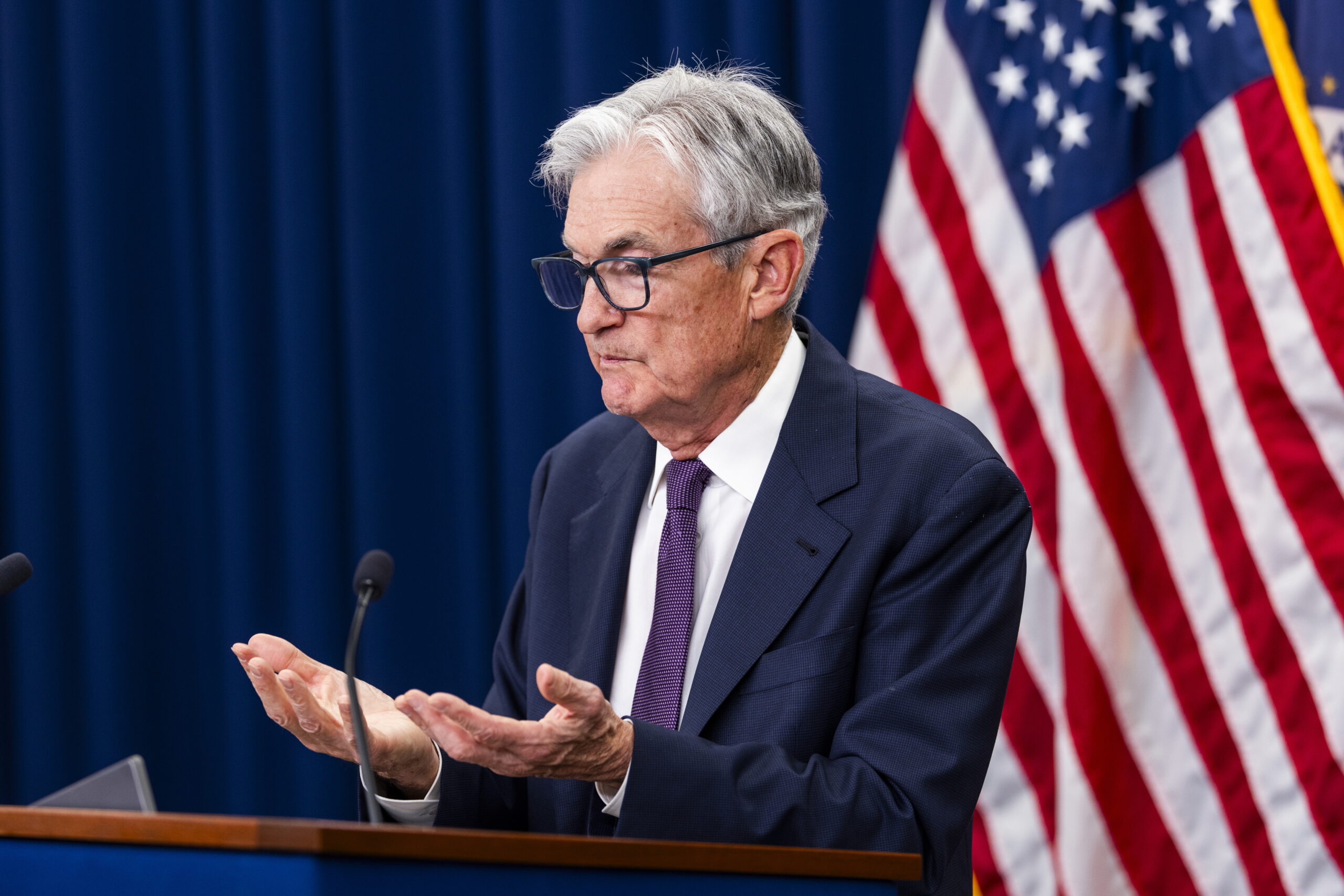
History is likely to be as kind to Jerome Powell, the outgoing chairman of the US Federal Reserve Board, as it has been to Winston Churchill. Today, Churchill is best remembered for his courageous leadership during World War II, when he mobilized the British to repel the Nazi onslaught.
Never mind that Churchill made serious political mistakes early in his career. Let us forget his role in the catastrophic British military failure at Gallipoli during the First World War. Let us not take into account his decision, as Chancellor of the Exchequer in 1925, to put Britain back on the gold standard with a considerably overvalued exchange rate, which made the Great Depression even more painful. Let’s ignore all that: as responsible for Britain’s “moment of glory”, he is forgiven for those mistakes.
Powell’s legacy could be similar. Although it played a non-negligible role in allowing the genie of inflation to come out of the lamp after the covid-19 pandemic of 2020, He went on to bravely and principledly defend the independence of the Fed against the attacks of President Donald Trump. Powell has emerged as a vigilant, dignified and patriotic public servant at a time when those traits are all too rare in the United States Government.
Never has a Fed chair faced—and resisted—so much pressure to make inappropriate policy changes. In addition to vulgar public insults and relentless calls for monetary policy easing, Trump even had the U.S. Department of Justice file trumped-up criminal charges against Powell for alleged misconduct related to the $2.5 billion renovation of the Fed’s headquarters. All of this was done with the obvious goal of intimidating Powell into cutting interest rates.
Fortunately for all Americans and investors around the world, Powell remained steadfast in his efforts to impartially fulfill the Fed’s dual mandate: price stability and maximum employment. At no point did he even consider appeasing the demagogue. He stood up to Trump when virtually no one else dared to do so. If we look at the Republican-controlled Congress of the United States, we will find nothing but cowardly acquiescence in the face of Trump’s political excesses and undermining of essential institutions. If we look at the corporate universe of the United States, we will only find chief executives who have sold their souls to continue counting on Trump’s favors.
Powell also deserves praise for achieving what few economists thought possible. In the last two years, The Fed has managed to reduce the inflation rate from its 40-year high to close to its 2% goal. Likewise, it has managed to keep inflation expectations well anchored, even at a time when Trump was raising tariffs on imports to their highest level in a century, carrying out mass deportations and imposing on Congress an expansionary fiscal policy at levels that bordered on the reckless.
Given these achievements, history may well overlook the policy mistakes Powell made in managing the economy during the pandemic. To his credit, he helped the country avoid a depression by quickly cutting interest rates to near the zero bound in March 2020 and resuming large-scale expansion of the Fed’s balance sheet. But he and his colleagues then made the mistake of keeping monetary policy too loose for too long.
Clinging to the mistaken belief that the inflation crisis caused by Covid-19 supply chain disruptions would be temporary, Powell’s Fed only began raising interest rates in March 2022. Worse still, the Fed continued to expand its balance sheet by about $125 billion a month for most of 2021, even as the economy was recovering well and receiving significant fiscal stimulus from the American Rescue Plan. US$1.9 trillion from President Joe Biden.
The net result was that between the beginning of 2020 and the beginning of 2022, the broad money supply increased by a staggering 40%. And that, in turn, contributed to a spike in consumer price inflation, which peaked at 9.1% in June 2022.
Powell will soon hand over the Fed chairmanship to Kevin Warsh. And it will do so at a time when the economy is once again suffering a serious inflationary crisis, this time caused by Trump’s chosen war against Iran – which has disrupted the global supply of energy, fertilizers, helium and other essential goods – his aggressive and uncontrolled tariff policy and his expansionist budget policies.
In a final show of patriotic resolve, Powell will retain his position as one of seven Fed governors. Hopefully Warsh can muster the same courage as Powell to resist Trump’s demands for premature interest rate cuts. If it doesn’t, we should be prepared for another bout of inflation.
Desmond Lachman, a researcher at the American Enterprise Institute, was deputy director of the Policy Development and Review Department at the International Monetary Fund and chief economic strategist for emerging markets at Salomon Smith Barney.