
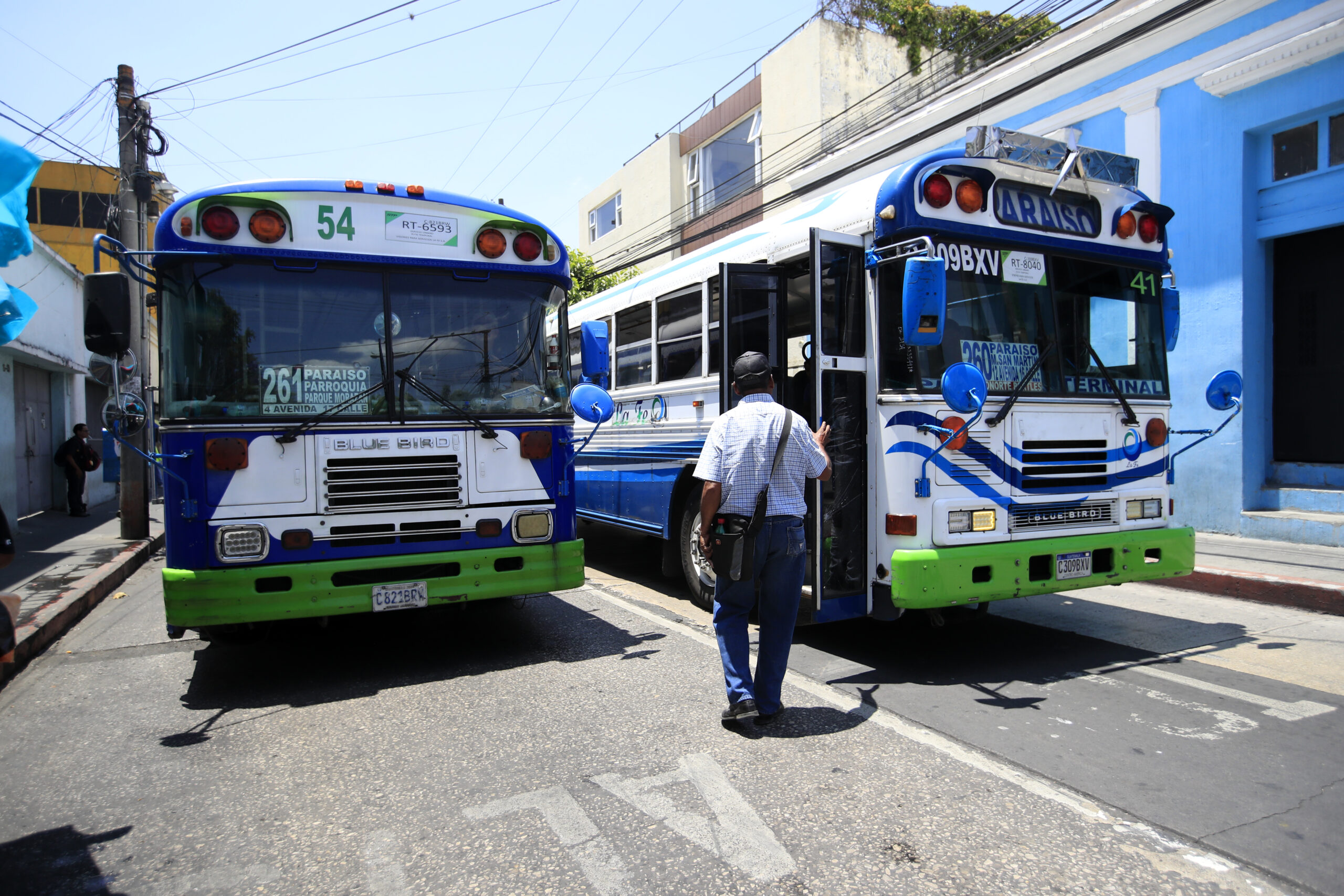
The collective emergency due to the rise in the price of oil began in Guatemala in May, when a large sum of money was allocated to cover a subsidy of Q8 for a gallon of diesel and Q5 for gasoline, for a period of three months that will end on July 31. The program is temporary and is equivalent to a daily average of Q22 million.
The state response does not yet include other areas of support, such as food security or targeted monetary transfers for people who may be affected by the constant increase in refined products that Guatemala imports and that will generate inflationary pressure.
Guatemala, like other countries in the region, has entered a phase to address the social and economic impact on vulnerable families, the informal sector and the preservation of employment.
Energy crisis threatens economic stability
The sustainability and conservation of a state subsidy program has several nuances and sets economic scenarios for 2026 and 2027, but it is subject to whether the conflict continues in the second half of the year in a pessimistic scenario.
CONTENT FOR SUBSCRIBERS
A panel of analysts consulted by Free press, They stated that at this juncture they are coming together a pressure on inflationincreases in energy products such as diesel, gasoline, propane, electricity, fertilizers among others, effects of the El Niño phenomenon that can prolong drought and affect agriculture and industry, as well as problems in food security.
On the other hand, the 2027 electoral process is approaching and the call for general elections will be next January, in a context of the energy crisis.
Subsidies increase tax pressure
Sergio Recinos, former president of the Bank of Guatemala (Banguat), declared that Q2 billion have already been approved to cover subsidies on gasoline and diesel, taking as an example what other countries have done. He added that a balance must be maintained to avoid a greater impact on public finances and, at the same time, curb the effect on the population.
He exemplified that, in this case, the approved subsidy is generalized, so it also benefits owners of high-end vehicles or yachts, but that in the end “you have to look at it more slowly, because it ends up affecting public finances.”
On this occasion, the indicators indicate that resources are available by the central Government and that greater execution of public spending has not been observed, especially in large-scale projects, such as roads, ports or airports, and others that generate multiplier effects and spillovers in the economy and the population in general.
Energy crisis exposes state vacuum
For Maynor Cabrera, economist and consultant at the Economics for Development Foundation (Fedes), the cost of energy has already begun to directly impact gasoline prices, despite the fact that a subsidy is applied. It is still not clear what the impact will be for the final consumer or the costs for companies.
At this juncture, there is pressure on inflation, an increase in energy products such as diesel, gasoline, propane, electricity, fertilizers, among others, the effects of the El Niño phenomenon that can prolong the drought and affect agriculture and industry, as well as problems in food security.
On the other hand, There will be indirect effects that will manifest themselves over time, since, in addition to the geopolitical factor, there is the El Niño phenomenon, which would have implications on the cost of foods such as corn, beans and some export products, as well as on the generation of electricity through hydroelectric plants.
“There is a delicate problem with greater impact on the level of the cost of living for the population and the climate impact, especially in populations that depend on crops for self-consumption and that compromise food security, problems of hunger and social impact,” he emphasized.
Cabrera warned that the central government must have an emergency plan and that it should not be the deputies of the Congress of the Republic who decide what can be done, as happened with the approval of the diesel and gasoline subsidy last April.
CONTENT FOR SUBSCRIBERS
“The government has technical staff and can propose a focused response, much more economical and effective, for the sectors of the population that could be affected by this situation. The dry corridor is a main candidate that could be affected. It is true, in general the entire population will be affected by the prices, but another point is that the subsidy is designed for a very temporary problem, but it is a very onerous subsidy and what is going to be done,” Cabrera explained.
There may also be problems due to the lack of access to some goods for sectors of the population in certain geographic areas, said the Fedes representative.
They ask for a reaction from the Executive
Hugo Maul, from the National Economic Research Center (Cien), stressed that it is worrying that the The central government does not have concrete proposals from the Executive to address the crisis.
“Letting the Congress of the Republic take the lead will have its democratic legality, but technically the proposal must come from the Executive and then be negotiated. Who is going to lead? Finance or Economy? The problem is the future of the price of oil and the inconsistencies that will exist in salary matters. That is what the Economic Cabinet is for and it may correspond to the Ministry of Finance, as it has the greatest weight and leads,” he considered.
Maul stressed that all this falls into a “populist tone” because the electoral process has begun and a lot of promises will begin to be offered, which represents a high risk.
Cabrera stressed that The proposals that are emerging from Congress are completely “clientelistic”, with a focus on ingratiating themselves with the population, without any evaluation of what their impact could be in the future.
“The Legislature is aiming for next year’s electoral campaign and trying to wash its face from the population’s general rejection of the salary increase,” Cabrera added.
The government has technical staff and can propose a focused response, much more economical and effective, for the sectors of the population that could be affected by this situation.
He added that, on the part of the central government, there is already experience and that it is important to assume leadership, because many factors influence the current crisis and it is best to have more focused contingency programs appropriate to the reality of the general budget, in addition to recognizing that prices will continue to rise in the coming years.
He cited as an example that in the Executive there are technical staff that they can well reorganize the discussion, socialize issues with the population for the implementation of measures and provide guidance, “which is a role that at the moment seems empty.”
Maul added that there are good technicians in the central government, such as in the General Secretariat of Planning and Programming of the Presidency (Segeplán), and that they can lead an emerging program.
They foresee more pressure for subsidies
Independent analyst Douglas González provided a political scenario on the Government’s response to the energy crisis and the proximity of the general elections.
How is the response of the Executive and the approval of the subsidy by the deputies of the Congress of the Republic interpreted with respect to the real existence of an emergency program?
The Executive did propose the fuel subsidy. However, several groups proposed eliminating VAT and the tax on hydrocarbons. Another legislative block proposed a revolving fund of Q1.5 billion plus 1% fuel tax, which would serve to recapitalize that fund. In fact, several groups opposed the fuel subsidy precisely because it was a proposal from the Executive.
CONTENT FOR SUBSCRIBERS
What can happen when the Q2 billion subsidy for diesel and gasoline ends, at the gates of the 2027 electoral process?
The conflict aims to extend for several more months, which means that fuel prices will not drop in the short term.
Therefore, It is very likely that the real effect of the Q2 billion subsidy will be diluted.
The big problem with this subsidy is that it will most likely lose its effect even before the Q2 billion runs out, which would represent a very strong blow once the three months are over. On the eve of an election year, the population will surely be going through an increasingly difficult economic situation. It will not only be the prices of fuel, but also those of the basic basket and fertilizers, which warns of a possible food security crisis.
What attitude can Congressional deputies adopt, knowing that there are unused fiscal cash balances?
Deputies, under pressure from citizens, could once again be forced to either extend the amount and term of a new subsidy or consider the possibility of granting a direct bonus to Guatemalan families, similar to the one delivered during the covid-19 pandemic in 2020 and 2021.
During the second half of this year there will be a better overview of cash balances and underexecution that the different ministries register. With this large pocket, some measures could be adopted to alleviate the escalation of prices and the looming food security crisis.
In your opinion, what fiscal risks may it entail?
If the funds used come strictly from cash balances and sub-executions of the different ministries, there should not be a greater fiscal pressure.
This could occur if loans were used again to finance subsidies in times of crisis or if the constitutional clause that allows inorganic issuance by the Bank of Guatemala in times of crisis was applied.