
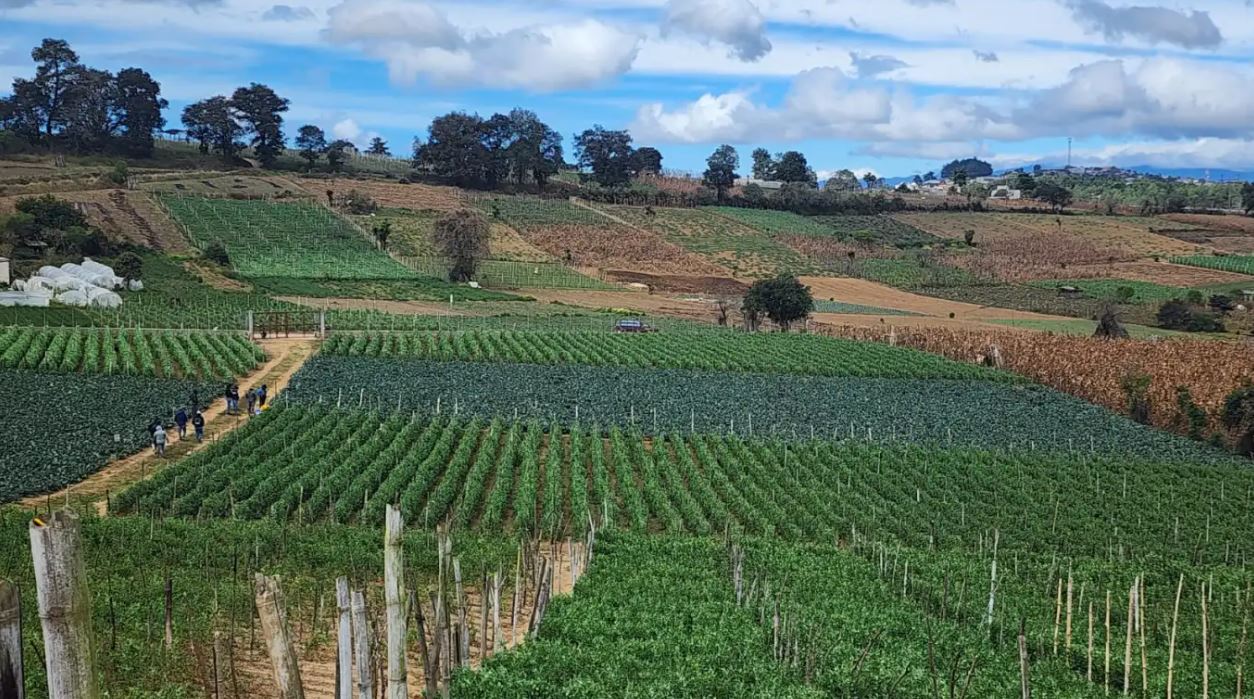
The Federation of Agricultural Chambers (Fecagro) of Central America and the Dominican Republic carried out a regional survey about the fertilizer crisis, its impact on costsproduction and profitability.
The survey was responded to by 120 agricultural producers from six countries, of which 18% corresponded to large operations, 56% to medium-sized operations, and 26% to small ones. Sectors such as livestock, dairy production, coffee, sugar cane, as well as basic grains and other crops participated.
Among the main findings, it is mentioned that cost pressure is already regional and multisectoral, and 82% indicated significant increases in their production costs. Among the items that have increased the most, 23% point to fertilizers; 21%, fuel; followed by laboragricultural inputs and transportation and logistics, with 14%, 11% and 10%, respectively.
By grouping these costs, the increase in fertilizers and inputs reaches 34% of those consulted.
Affects production decisions
Derived from these costs, another of the main findings is that 62% said that the increase already affects production, purchasing, planting or programming decisions. The majority cannot acquire everything they need and readjust or delay their purchases.
“The majority of producers told us that they have not been able to secure the necessary inputs for this season and for advance purchases,” said Carla Caballeros, executive director of Fecagro, who announced the results during a virtual conference.
25% indicated that they managed to buy all the fertilizer they need for this season, and the remaining 75% said they only purchased part or did not make advance purchases.
Regarding the reduction in the use of fertilizers, Fecagro managers, as well as the executive director and other exhibitors, agreed that when producers reduce or delay these purchases, the risk is to generate direct impacts on production due to crop yield.
CONTENT FOR SUBSCRIBERS
This could cause lower production in the next harvest and high prices.
HE warned that prolonged pressure could affect both production and food security.
“If current conditions persist, the impact will be transferred to the supply and availability of food,” was mentioned in another of the findings.
Another aspect addressed is that the impact is reflected in the liquidity and profitability of production.
In this case, they report that the increase in costs and uncertainty are already deteriorating the financial situation of agricultural operations in the six countries of the region, since, according to the survey, 71% foresee a worse situation than last year; 24% indicate that it is the same and only 5% said they are better than the previous year.
Among the main financial barriers pointed out by producers are: prices or costs too high, with 38% of the responses; liquidity and financing problems, with 27%; uncertainty or lack of certainty about markets and prices, with 20%; and lack of availability of inputs, with 7%.
“Liquidity, financing and lack of certainty are critical risks for regional production,” according to the survey.
Meanwhile, Caballeros, as well as the president and vice president of Fecagro, Agustín Martínez and Héctor Ferreira, mentioned several concerns. Among them, that The main concern is no longer just the price of fertilizer, but the financial capacity to sustain production.
In addition, Fecagro managers and other exhibitors agreed on the need to work together in the development and promotion of long-term regional public policies to strengthen food sovereignty and security, reduce vulnerability to global crises and promote the resilience of the agricultural sector.
Added to these difficulties is the forecast of the effect of the El Niño phenomenon, mentioned Máximo Torero, chief economist of the Food and Agriculture Organization of the United Nations, and David Martínez, executive secretary of the Central American Agricultural Council (CAC).
Also participating in the event were Adoniram Sánchez, FAO subregional coordinator for Mesoamerica; Lloyd Day; and José Perdomo, CropLife executive.
The exhibitors indicated that the reduction in the use of fertilizers will affect the yield of the crop, which will cause lower production, the effects of which will be reflected in the 2027 cycle. They also explained that the current crisis is a supply crisis and not a demand crisis as happened during the pandemic, so the mitigation measures should not be the same.