
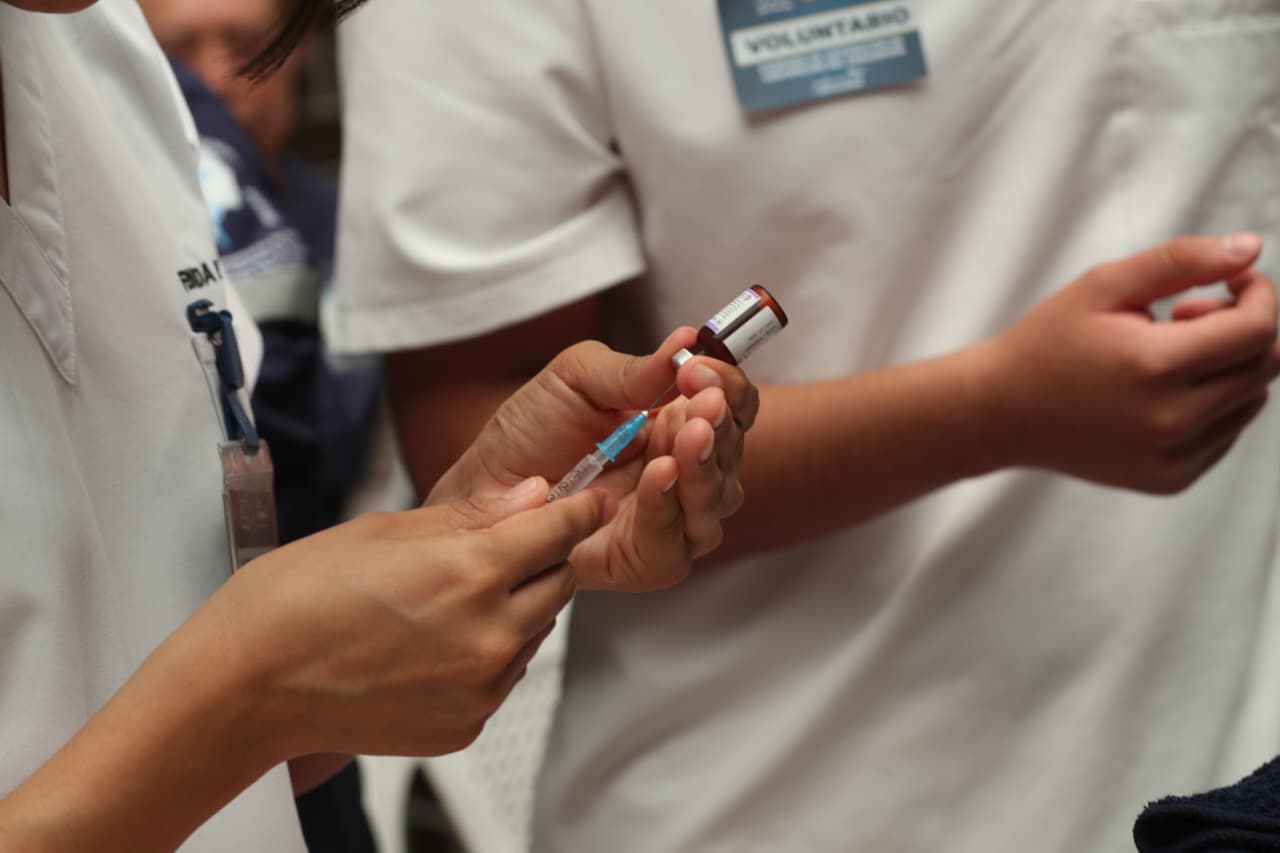
Guatemala is in a critical phase of surveillance after the detection of measles cases in urban areas.
Measles is not a simple flu. It is an extremely contagious viral disease that is easily transmitted through the air to cough or sneeze. According to official data, The virus can remain suspended in the air or on surfaces for several hourswhich facilitates contagion in closed spaces even without direct contact with a sick person.
If a person is not vaccinated, the risk of contracting the disease is very high.
The clinical picture usually begins with fever, cough and red eyesfollowed by the appearance of red welts throughout the body. The danger lies in its complications, which can include serious problems in the lungs, ears or, in the most critical cases, death.
This May 14, 2026he Ministry of Public Health and Social Assistance (MSPAS) launched the campaign “Vaccination in Action!”. This initiative seeks close immunity gaps in the most affected municipalities, remembering that the disease is preventable through a safe and free vaccine.
The campaign will have an initial duration of nine weeks focused on containment. Authorities call for immediate action, especially for those young adults who may have incomplete schemes.
Doubts about the vaccination schedule
- What if I don’t remember if I was vaccinated as a child? If you do not have your card, the official recommendation is get vaccinated again. There is no risk of receiving an additional dose; the body assimilates it as a security reinforcement.
- At what ages can you be vaccinated? Although the vaccine is applied from 6 months, currently priority is given to people between 15 and 39 years oldwhere the highest number of infections is concentrated. If it is not in that range, you can go to a center, hospital or health service and request it.
- Does it have side effects? No, there is no risk from getting vaccinated twice. The effects are minimal: mild pain in the arm or very brief fever. It is much safer to get vaccinated than to risk complications from the virus.
Responses from the Minister of Health, Joaquín Barnoya
During the launch activity this May 14Minister Joaquín Barnoya clarified the logistical details.
- About the requirements: “If you don’t know if you have been vaccinated, it is best to come. By presenting your DPI is enough,” he explained.
- Location and hours: The initial day is in CUM (9th avenue 9-45, zone 11)of 7:00 a.m. to 3:00 p.m..
- Dose availability: there is more than 900 thousand doses to cover the municipalities of Guatemala, San Juan Sacatepéquez and Mixco.
Saludjuntos.gt, the digital tool to resolve your doubts
He Ministry of Health has made the website available healthtogether.gta platform designed to guide the population quickly.
In this portal you can answer questions such as:
Are my symptoms measles?: a guide to identifying warning signs.
Do I need to get vaccinated?: The site helps verify if you have received the vaccine SPR (measles, mumps and rubella) or MR (measles and rubella).
Quick queries: The tool serves as an immediate guide to decide when to go to a health center.
Why 95% is the relevant figure
To understand the magnitude of this alert, it is necessary to look at the international panorama.
Data collected by Washington Post They highlight the historical effectiveness of immunization and the risks of letting our guard down:
- Deadly figures: Before there was a vaccine, measles caused approximately 2.6 million deaths per year globally.
- Lifetime Protection: Two doses of measles vaccines (such as MMR or SR) usually provide lifelong protection.
- Herd immunity: It is required that at least the 95% of the population be immune to achieve “herd immunity.” This is essential to protect those who cannot be vaccinated, such as babies under 12 months.
- The threat of outbreaks: the decline in vaccination rates allows the disease to reappear; Even regions with rates above 90% are currently experiencing outbreaks due to these coverage gaps.