
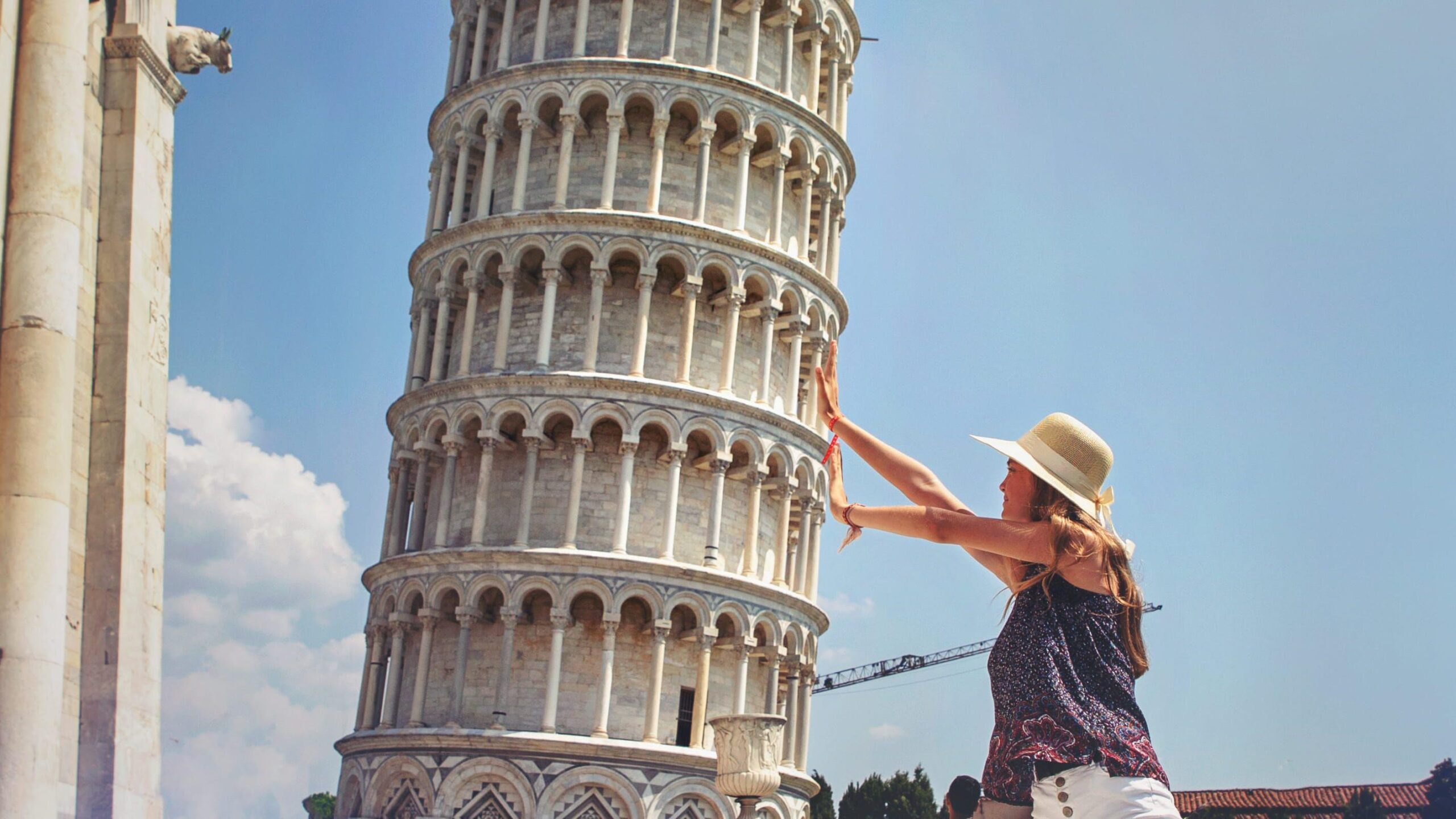
It’s not the only structure that leans to one side: from the Dancing Houses in the Netherlands to the Tiger Hill Pagoda in China, there are crooked monuments all over the world.
But why do they lean? And why doesn’t that necessarily mean they’re going to fall?
Why do some buildings lean?
There are several reasons why structures lean to one side, according to Mandy Korff, associate professor of geotechnical practices at Delft University of Technology in the Netherlands.
In some cases, such as the emblematic Dancing Houses of the Netherlands, it is due to the type of foundations used for their construction.
“In the center of Amsterdam, most houses are built on wooden stilts,” says Korff.
He explains that piles are installed in pairs under the walls and facades of buildings.
They go 12 meters into the soil, which is composed of soft clay, peat or sand.
“If they are like that and the piles are kept in good condition, then nothing happens to the houses,” he says.
But he adds that if they begin to degrade or rot, cracks can appear, and uneven deterioration or unbalanced weight distribution can cause buildings to lean over time.
The case of Pisa
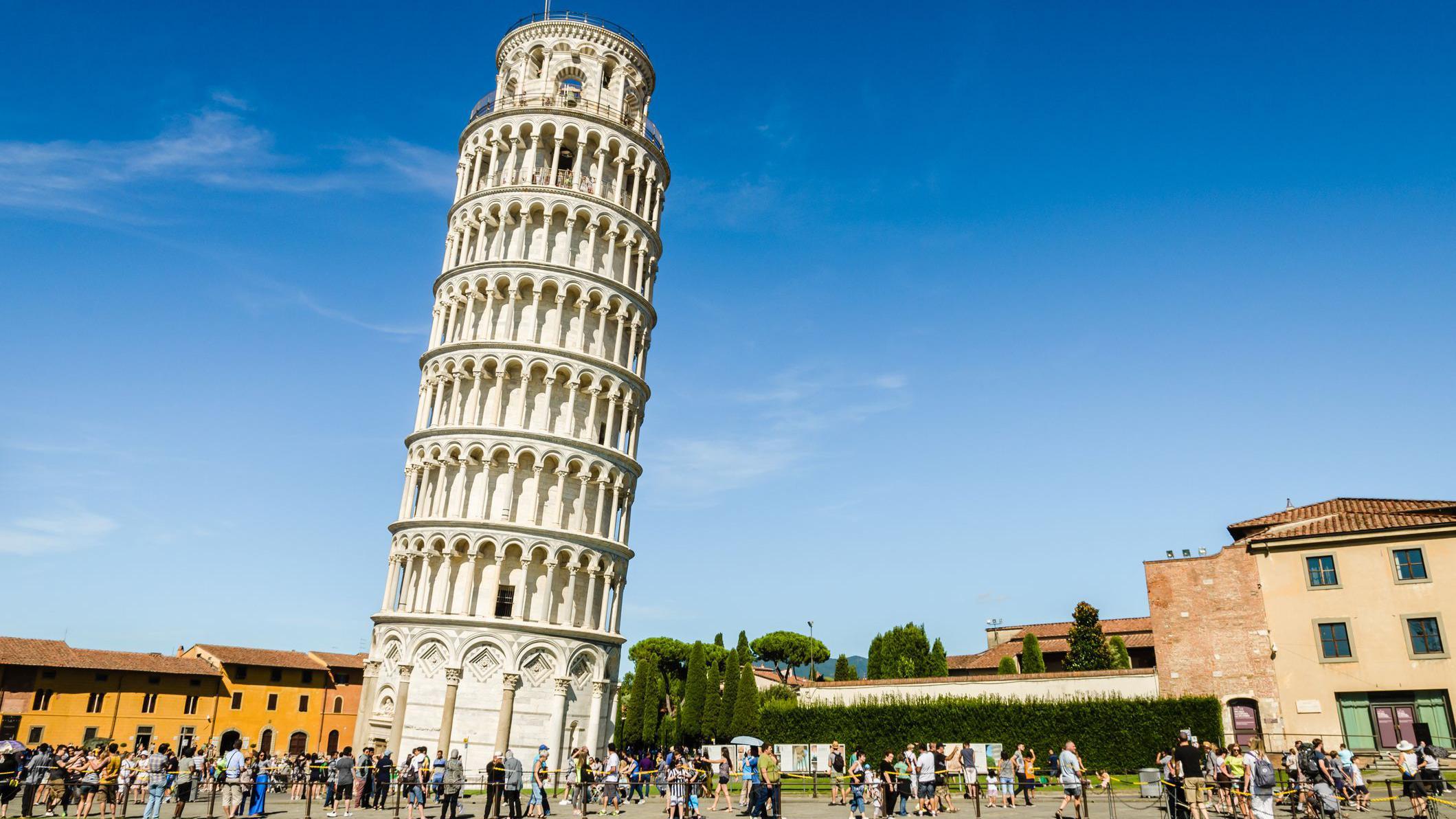
Ground conditions can also cause buildings to lean to one side, as is the case with the iconic Tower of Pisa.
Nunziante Squeglia, professor of soil and foundation mechanics at the University of Pisa, is part of a team monitoring the tower’s tilt.
“The tower began to lean from the beginning of its construction because the ground is extremely soft. [Se hundió] between 3 and 4 meters,” Sgueglia told the BBC radio program Witness History.
Buildings can also lean due to man-made changes in the ground. For example, the tower of the Oude Kerk, or Old Church, in Delft.
“It is much less known, [pero] “It leans more or less the same way as the Tower of Pisa,” Korff noted.
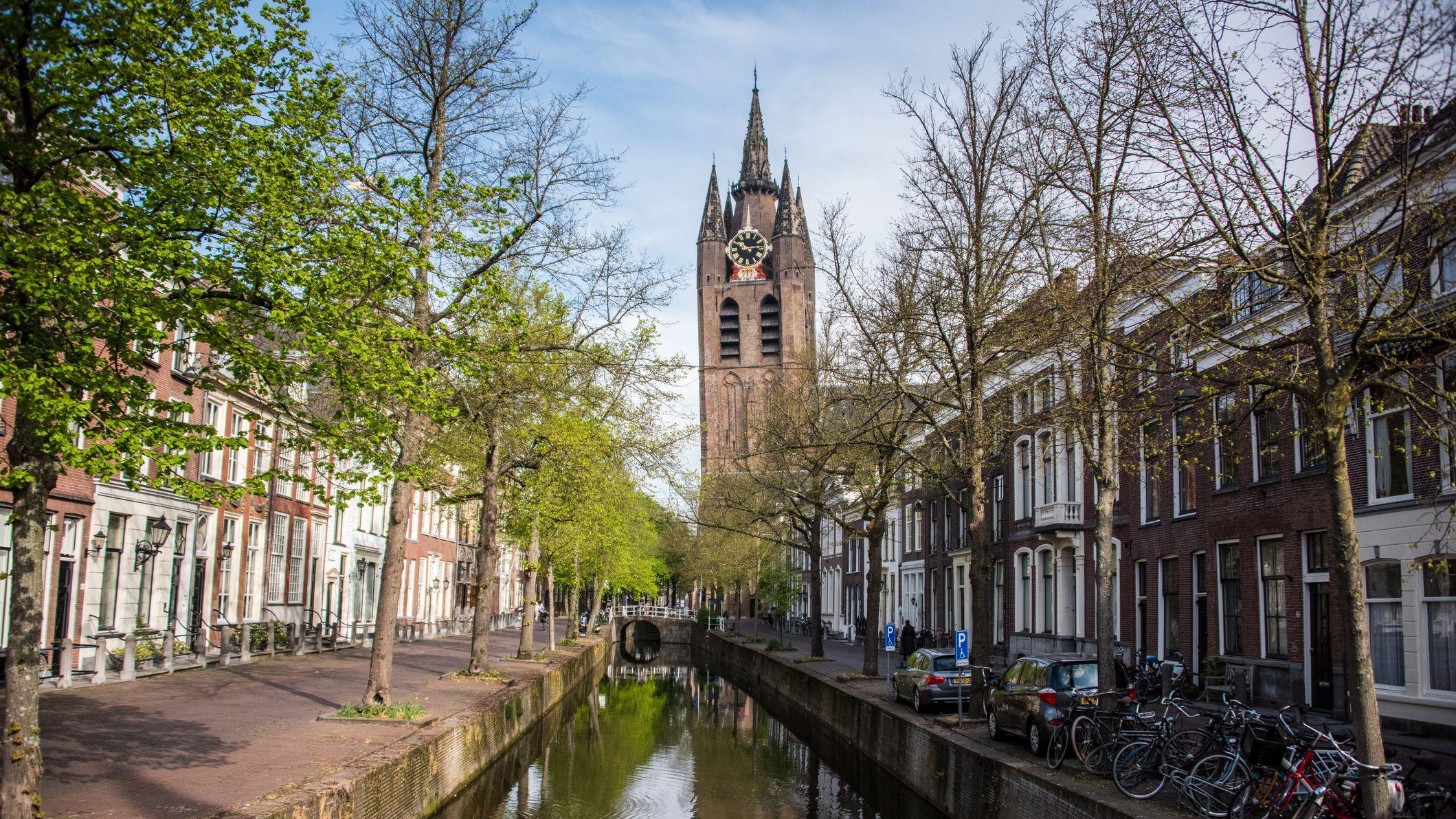
“It leans towards the canal because the ground on one side was excavated to build it and it’s softer there. So there’s less pressure to keep it upright and when they built it, it started to lean.”
Changes in groundwater can also cause a building to lean. Korff cautioned that sometimes buildings lean by design.
“Many houses in Amsterdam are built leaning forward because that’s how merchants’ houses were built in the past,” he explained.
“They were often built along canals for storage. They were built to lean forward to facilitate transportation into the house,” he said.
“If they lean forward, it doesn’t mean there’s a problem. But when they lean to one side, you know for a fact that that wasn’t the intention.”
Correct tilt
Why aren’t we more concerned about these tilted structures?
According to Korff, a leaning building does not necessarily mean that it is not structurally sound.
“It has to lean quite a bit to be structurally unstable,” he says.
But sometimes you have to correct the inclinations, as was the case with the Leaning Tower of Pisa.
Although the tower began to lean very early, measurements showed that the situation worsened in the 20th century, with a constant increase in the inclination.
“The situation was very worrying,” Squeglia recalls.
And then, in 1989, the Civic Tower in the Italian city of Pavia collapsed.
According to Squeglia, that was the “trigger” and the Tower of Pisa was closed a year later.
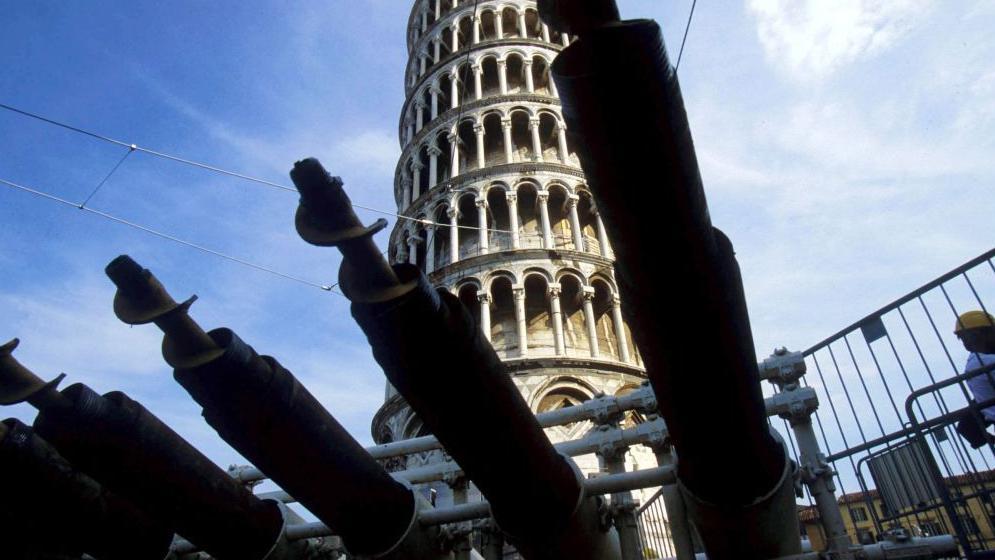
There were many ideas about how to slightly straighten the Leaning Tower of Pisa so that it would be safe again.
“The technique chosen was earth extraction,” explains Squeglia. “Without touching the tower, 37 cubic meters of earth were removed from the north side of the foundation.”
And the tower reopened 11 years later.
A “special” case
But this method of straightening a building is not common, according to Korff. “That is very special for Pisa; it wouldn’t be done like that under normal conditions.”
If a leaning building has wooden stilts, like the houses in Amsterdam, replacing the foundation can prevent the lean from getting worse, but it is “invasive” and involves removing the ground floor.
It’s also possible to correct a lean by lifting the house with hydraulic jacks, the same way you would do with a car, Korff notes, but sometimes that can cause more harm than good.
“If it is very tilted, it is also dangerous to straighten it because the house has somewhat adapted to the tilt,” he says. “You have to be very careful, at least not to make things worse.”
Although some buildings can be stabilized, there are also drawbacks.
“You can do all kinds of things with buildings, everything is possible,” notes Korff. “But it costs a lot of money and it’s complicated.”
The impact of climate change
Korff’s research reveals that in the Netherlands alone there are around 75,000 houses built on wooden stilts that are at risk of damage and almost three times as many are at risk due to shallow foundations.
And these problems could get worse.
“With climate change and changes in groundwater, we sometimes see more rapid changes,” Korff says.
If the water table drops, the wooden piles are exposed to the air, which can accelerate damage.
Changes in groundwater can also affect soil layers, which has a ripple effect on homes with different types of foundations.
However, he added that it is a slow process.
As for the Leaning Tower of Pisa, its inclination was reduced by more than 40 centimeters after 11 years of works, which ended in 2001.
Engineers believe its future is assured for at least the next 200 years.

click here to read more stories from BBC News Mundo.
Subscribe here to our new newsletter to receive a selection of our best content of the week every Friday.
You can also follow us on YouTube, instagram, TikTok, x, Facebook and in our new whatsapp channel.
And remember that you can receive notifications in our app. Download the latest version and activate them.