
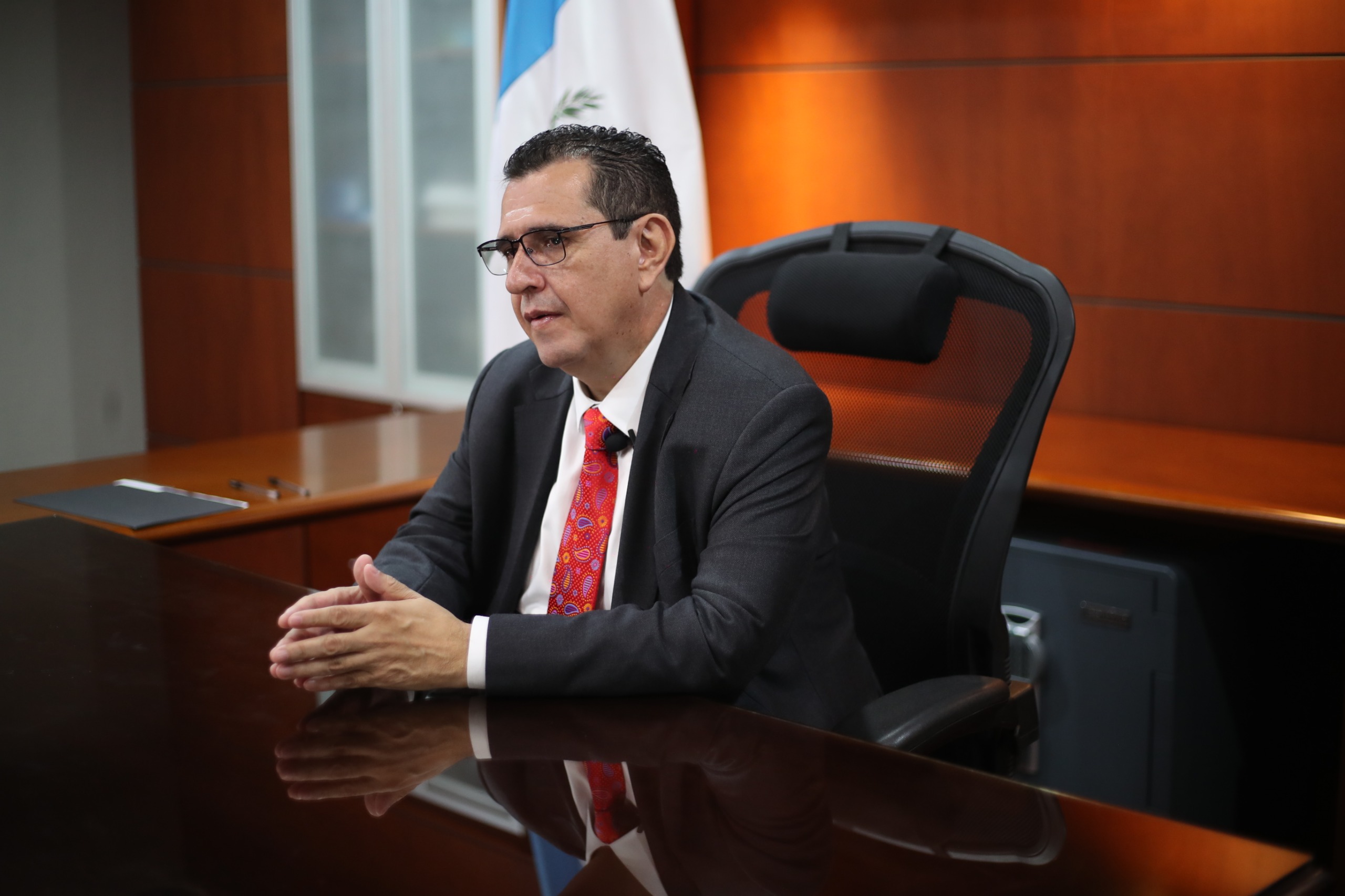
Gabriel García Luna was in the office of the attorney general of the Public Ministry on his first day at the head of the institution. On his desk there was only a folder and two pens; the rest was empty. The previous attorney general, María Consuelo Porras, had vacated that space less than 24 hours before.
In an interview with Free pressGarcía Luna spoke about the internal review that he will carry out in the Public Ministry, and warned that the investigations could reach any official, including the former attorney general, María Consuelo Porras.
The new head of the MP also announced that the Special Prosecutor’s Office Against Impunity (FECI) will be subjected to a restructuring, and assured that those who run the prosecutor’s offices will be held accountable. In addition, he said that they will review files related to corruption, organized crime and money laundering, because he believes that in several cases no important results were obtained.
You announced the liquidation of the FECI. What will that process be like?
If it were a brand, one of the main objectives is to regain the trust of the population, and the brand is not seen in a good way; Unfortunately, due to decisions that have been made in cases that I would still have to see personally, but resolutions that I have seen, which are not in favor of what could have been a case to be prosecuted to reach debate and seek a possible sentence. But, regardless of that, we have already seen a series of cases with resolutions in the same sense.
So it is also interesting to see the behavior of some members of the Prosecutor’s Office, because a structural part is ethics. Like the judiciary and the magistracy, the Prosecutor’s Office must not only act objectively, but also impartially.
What will happen to the FECI cases?
It is a strategic plan, since the brand—name of the prosecutor’s office—unfortunately generates distrust, generates a perception of selective persecution of cases, but it does not mean that a job has to be destroyed, because there are many prosecutor’s agencies there with many capable personnel, with those people who have had to live in anonymity these years, and we want to know what they have.
The brand can no longer be used as is. So we do believe it is necessary for there to be a prosecutor’s office with those characteristics. It is not a simple name change, but we are evaluating how to give it to them.
The current head of the FECI has said that he is interested in meeting with you. Is the interest mutual and do you consider it to listen to it, for its continuity?
I have not heard it, but I think that first we have to see what situation the prosecutor’s office is in. I think that whoever directs it should be held accountable. You must be accountable and then that is the parameter to be able to have an approach or make decisions. More than talking or getting closer, I believe that accountability will mark the future of the prosecutor in the institution.
As part of the liquidation of the FECI, the determination of legal responsibilities was referred to. How far would this go? The head of the Prosecutor’s Office?
No, to whoever is responsible.
The former attorney general?
To whoever is responsible. It can be the attorney general, the secretary general, whoever. If it is real, based on evidence, with concrete facts and making an objective analysis, it can be anyone.
Is the type of case review going to be external or internal? Is there already an outline of how the cases you have will be reviewed?
As we have just started and we are seeing how they are being formed, unfortunately one can perceive perhaps the most complete information from those who are leaving the institution, but not all cases are the same; I’ve been evolving, I think.
But first the case review includes reports and interviews with people. So here is a unit that has to follow my instructions in order to carry out investigations and analysis; Also, parallel to the report they provide, it is like supervision. And we hope to have communication even with members of the prosecutor’s office itself, with other members, to perceive how the management of the agencies themselves has been.
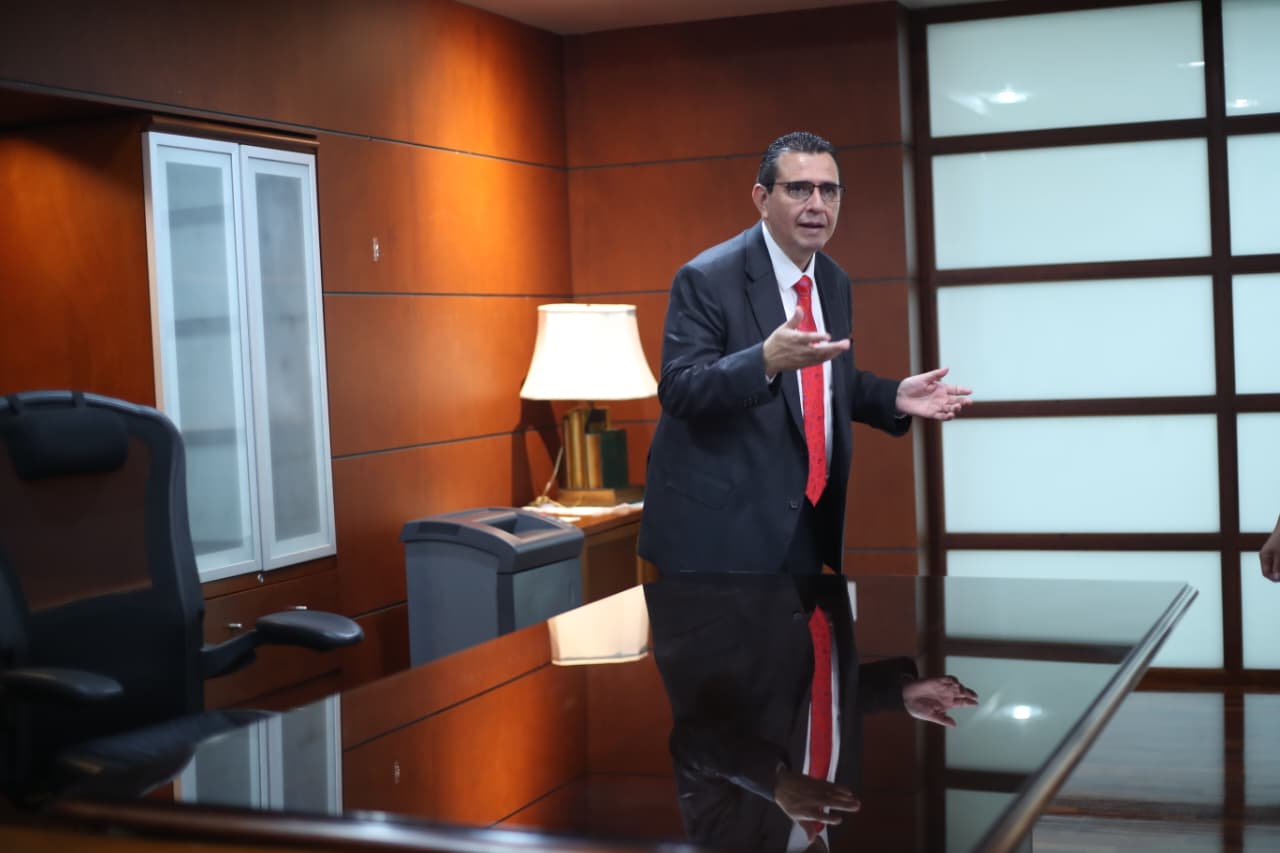
Evaluation and analysis of the Public Ministry
How do you see the Public Ministry? Do you see that the illicit networks have been advancing and entered the Public Ministry, and impunity is being sought from within?
My analysis is purely procedural and within that the investigative analysis. And I do think that in many criminal phenomena important results are not being achieved, and where mainly a lot of profits are generated, such as extortion, drug trafficking and money laundering from different actors; It could be corruption of the State.
And then, when there are no sanctions, there are no reparations, but apart from there being no sanction there is a psychological message for the offender which is: “Nothing is going to happen to me.”
The message is: “I have that one and that one is going to fix my nail.” And surely there are people who come and say: “Ah, I am a friend of that prosecutor” or “I appointed the prosecutor.”
It may be true, that there are people who do this, and that is impossible after so many years for him to reach this position.
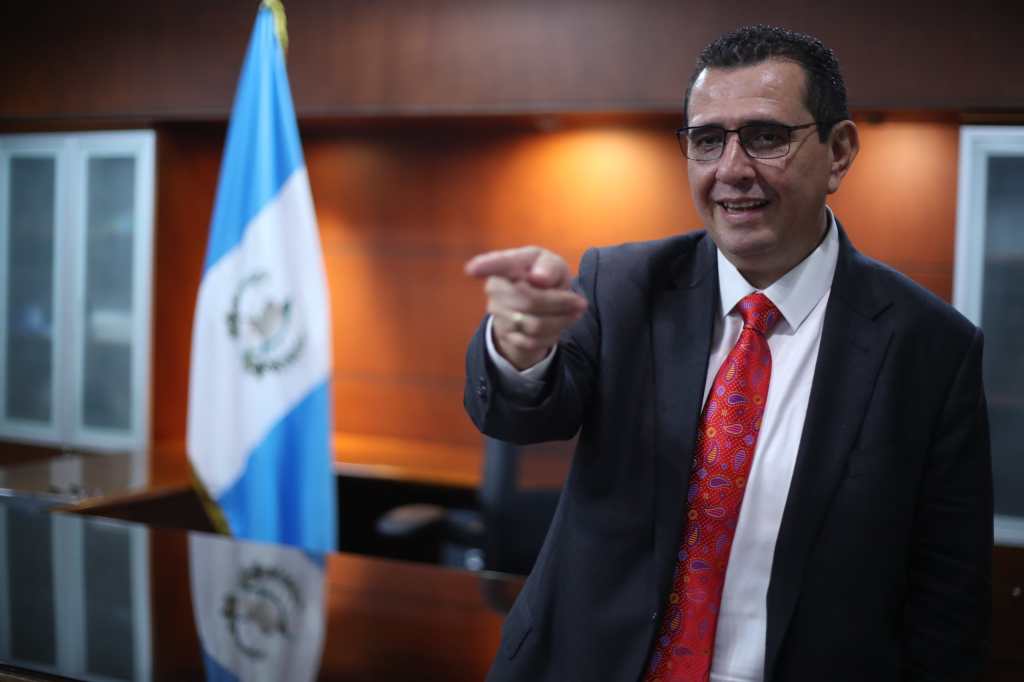
Organized crime, money laundering and lack of results
Regarding the agenda of crimes on which your management is going to focus, what are the thematic ways going to be? For example, organized crime, extortion, corruption?
There is organized crime and quite strong corruption crimes, which cannot stop anything, but we can focus on some with more attention.
There are things that belong to all the prosecutor’s offices. The investigative and litigation capacity belongs to all prosecutors’ offices.
So I know that they have the capacity, and I hope that many of the cases are because they have been blocked, because perhaps they would like to have already prosecuted them, for example.
In recent years, some PNC investigators mentioned that they delivered files and investigations, but the cases did not progress in the MP. How are they going to solve it?
Yes. It is fatal that there is no relationship and coordination, above all with the National Civil Police and the Ministry of the Interior, because in the end the investigation is directed by the Public Ministry and is carried out by the security forces.
So, I’m sure I would have to have a meeting as soon as possible, and also talk to prosecutors about it. It is very important, we consider it essential.
Because if there were prosecutors threatened with not receiving investigations from the Police, or vice versa, if there was no relationship with the Police, or if the Police were being hindered in some way, it is something that has to be corrected together.
How do you evaluate the handling of criminal cases within the MP?
This phenomenon of so many rejections is not normal, only due to quantitative accreditations. So I can have 100% of cases resolved because I dismissed them, but there was no justice in any of them.
In some percentage it was the dismissal that was appropriate, but there may be participation and, depending on the crime, a criterion of opportunity or a conciliation, because there was some conflict.
Now, if you have a phenomenon of cell phone theft in certain sectors, all the time, and you are going to dismiss everything as a maquila, you are not going to investigate the phenomenon that has been happening in the place for many years.
So how are these bands going to disintegrate? And if the criminal does not see investigation, prosecution and convictions, psychologically he is not receiving a message that the system is working.
How will you navigate the internal and external pressures on the MP?
What matters to me are the pressures from citizens or organized sectors, as long as they believe that they are acting objectively.
Now, on the contrary, I don’t care at all about organized crime or its representatives, but in the end it is what we want to combat.
So there are networks that have been embedded in different places, and due to the lack of accessibility with me, I believe that this final part was very hard and the attacks will surely continue. But they have to understand that it is not an MP of revenge or revenge, but rather an MP of objective, impartial investigation and non-selective criminal prosecution.
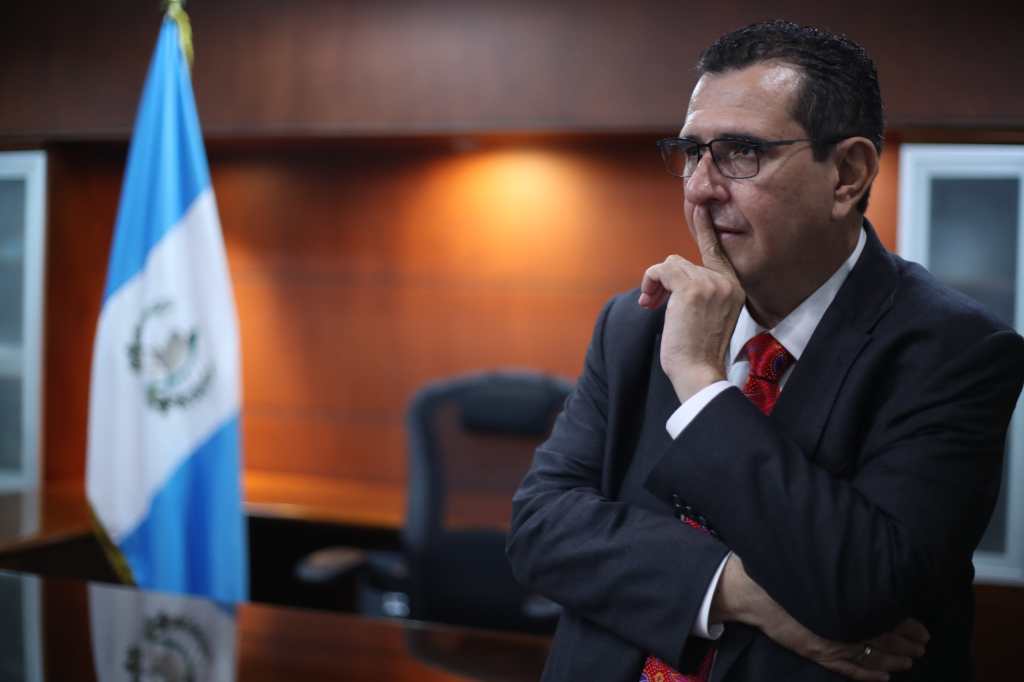
The first hours as attorney general
What have been your first decisions during the first hours at the head of the MP?
Upon taking office, I was presented with the resignation of the general secretary and the first deputy general secretary. Accept it immediately and be able to make the moves so that a person who meets the requirements could be taken on, which could be done legally and with the labor advisor and Human Resources involved.
I understand that all those who are trusted personnel are going to do the same, and I think it is the healthiest thing.
Do you have meetings on Monday, May 18, and who will you speak to?
It is a process not so short, but long, but it does include interviews and reports, although it begins with a message for everyone, so that it can be replicated to all workers on a national scale.
The personnel who act correctly, with the capacity with which they have worked, who have been within the institution and who, despite the blows, have maintained themselves and meet all the requirements, must be recognized.
It can be located, because then with file reviews, through supervision and through what I can do directly, we can see what type of actions they have had to investigate and prosecute.