
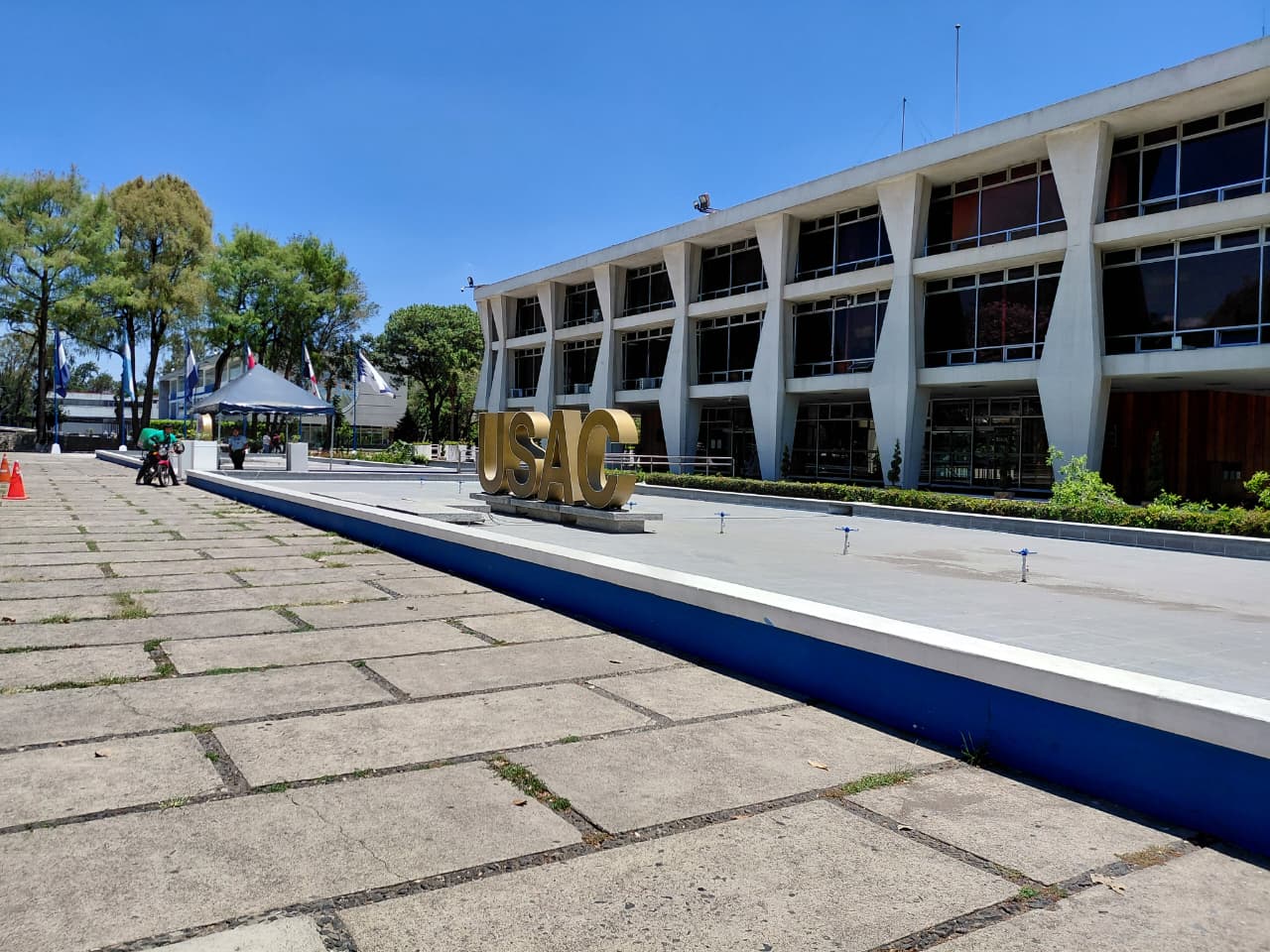
At least 31 postgraduate students from the School of Communication Sciences (ECC) of the University of San Carlos of Guatemala (Usac) reported to the Public Ministry (MP) that they had been victims of an alleged scam that exceeded Q105 thousand.
According to those affected, between 2025 and 2026 they made monthly payments, exams and other academic procedures related to master’s and doctoral programs in Communication; However, the money was never officially credited into the university financial system.
According to the complaints, the then secretary and accountant of the Postgraduate Department, Andrea Orozco Velásquez, allegedly delivered false payment slips and requested transfers to a personal account, under the argument of alleged failures in the institutional system.
Individual losses range between Q1 thousand and Q11 thousand. Some students claimed to have paid for the full year, but currently lack academic solvency, which prevents them from continuing their studies or completing graduation procedures.
The complainants also pointed out a lack of timely response from ECC authorities and demanded a transparent investigation, as well as the validation of payments made in good faith and the deduction of administrative and criminal responsibilities.
The Department of Graduate Studies confirmed that the aforementioned worker left the position in 2026 and that an institutional route is being analyzed to support the affected students, who represent approximately a third of the total students in the program.
Investigation
The MP reported that it has received 18 complaints related to this case, which is being investigated by the Anti-Corruption Prosecutor’s Office.
Additionally, two additional complaints were filed against the same person: one filed by the School of Graduate Studies and another related to the alleged theft of documents.
Fernando Lucero, secretary of the School of Communication Sciences, indicated that the first alerts arose from rumors among students and the situation was later verified in the classrooms.
“So far we have not received a formal status of the students’ case,” he said.
He added that the Postgraduate unit filed a complaint, in addition to those of two affected students, and noted that the ECC could join the process.
Lucero also reported that they requested an audit to determine what happened and establish possible responsibilities.
As he explained, depending on the results of the analysis, measures will be taken to avoid academically affecting students who would have been scammed.
Likewise, he stated that Orozco stopped working at the university due to the expiration of his contract; However, he indicated that he has not yet delivered documentation that he was responsible for, despite requests made on repeated occasions.
Student stories
The students reported that in November Orozco argued alleged failures in the ticket issuance system and requested deposits to a personal account to later make online transfers.
They added that initially they had no problems receiving classes; However, in January they discovered that Orozco no longer worked at Usac, although he continued to offer them support to make payments.
A student expressed concern about the handling of confidential documentation.
“With regard to the case of economic fraud, we consider it vitally important to express our deep concern as graduate students. The institution’s secretariat had and maintains access to our confidential documentation, such as degrees, resumes, copies of DPI and other registration paperwork; however, there is currently no formal record of said files,” he said.
He added: “We are extremely concerned about how this information may be used and the risk of further inconvenience, such as identity theft or mishandling of our personal data.”
Another student stated: “I am one of the students affected by Fabiola Orozco’s scam at the ECC Usac. Who not only appropriated our money, but also falsified official documents, including seals and signatures of the school director, as well as payment receipts from the Banrural bank and the Integrated Financial Administration System (SIAF) of the Usac.”
He also pointed out that, according to his version, the university held the students responsible and asked them to make the missing payments again.
Another affected person indicated: “The crime committed is much more serious than the authorities of the Usac School of Communication Sciences try to pretend. The person involved not only appropriated financial funds, but also stole highly sensitive confidential documentation.”
He added that the documents include authenticated copies of DPI and forms signed by the students.
“Currently we find ourselves in a situation of total vulnerability and with an uncertain academic future,” he said.
Another student criticized the institutional response.
“I am part of the affected students and it is incredible that the solution proposed by the School of Communication Sciences is to accuse us of having been too trusting and to affirm that what the secretary did or did not do did not represent the institution,” he indicated.
He also questioned how the university did not detect the lack of financial income corresponding to monthly student payments from a self-financing unit.
*Stay up to date with the Now newsletter. Key information at the moment it happens. Subscribe here.