
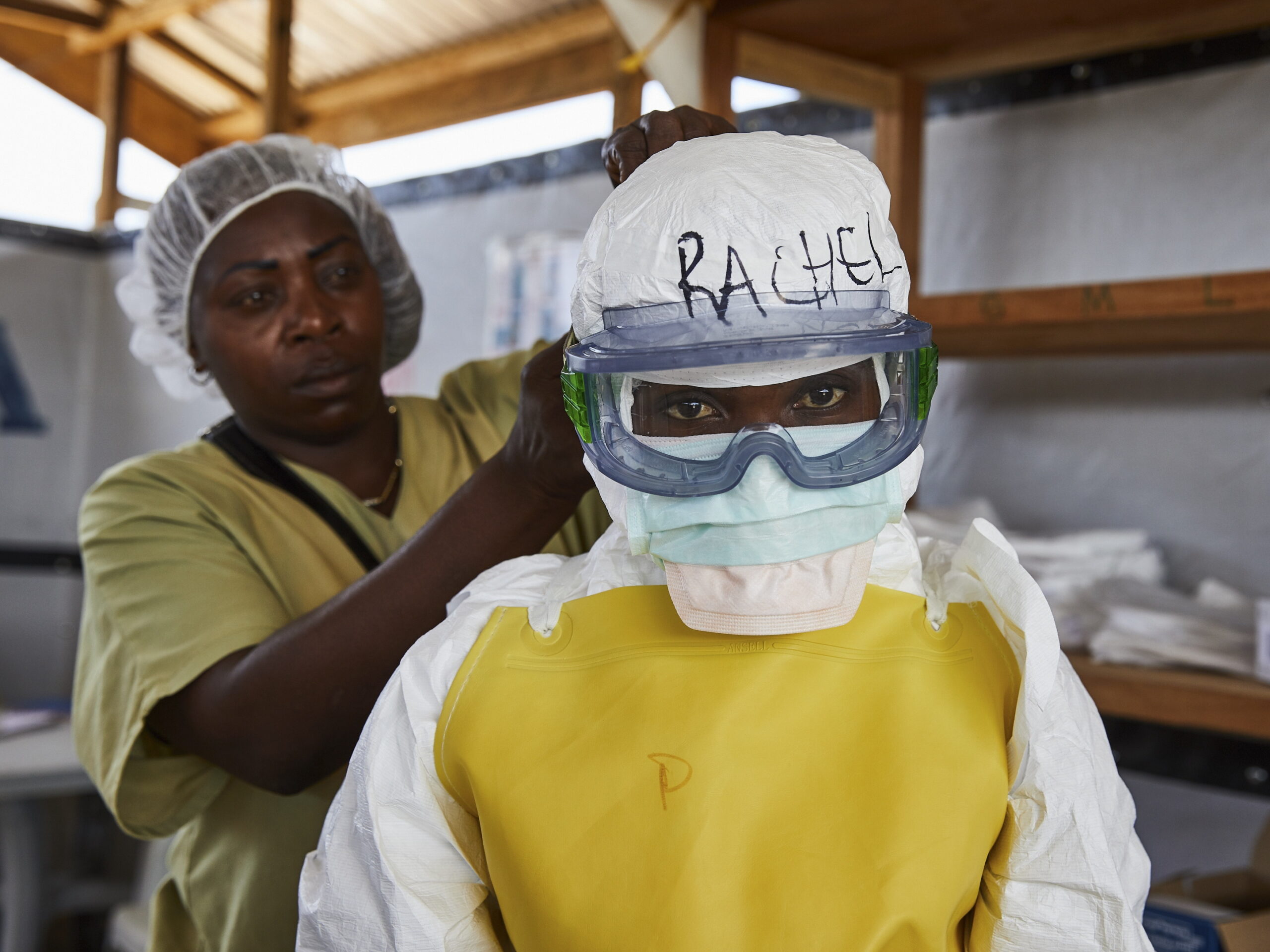
The NGO Save the Children called on Tuesday, May 19, for an “urgent global effort” to contain the outbreak of ebola declared last Friday in the east of the Democratic Republic of the Congo (DRC), which has caused – according to the World Health Organization (WHO) – at least 130 deaths.
“A race against time has begun to contain the Ebola outbreak in the Democratic Republic of the Congo before it spreads further in a country where decimated health systems were slow to detect the disease and lack the necessary resources to stop its spread,” the NGO stressed in a statement.
Save the Children recalled that the WHO has notified “at least 500 suspected Ebola casesincluding 130 deaths, in the DRC since the new outbreak began two weeks ago.”
In previous outbreaks, he warned, young children infected by the disease through contact with sick caregivers and family members often had high mortality.
Children are also at particular risk of trauma and exploitation during an Ebola outbreak, and many may lose one or both parents and face stigmatization, isolation or abandonment.
The outbreak, with its epicenter in the province of Ituri, “occurs in a conflict zone, an area of humanitarian crisis, with hundreds of thousands of displaced people and health systems already seriously compromised,” said the director of Save the Children in the DRC, Greg Ramm.
What is Ebola?
Ebola virus disease is a serious infection that spreads between humans through human-to-human transmission. Infection occurs through direct or indirect contact with blood or other body fluids or secretions – feces, urine, saliva and semen – of infected people, only when they present symptoms.
The Ebola virus is not transmitted through the air. Although the disease usually has a high fatality rate, in the current outbreak the rate is between 55% and 60%.
Since it was first detected in 1976 in a village near the Ebola River, in the Democratic Republic of the Congo (formerly Zaire), outbreaks have been recorded in different areas of Africa.
Formerly called Ebola hemorrhagic fever, this disease is transmitted to humans by wild animals and spreads in human populations through human-to-human transmission.
The virus is transmitted to people from wild animals—such as fruit bats, porcupines, chimpanzees, and other primates—and “then spreads in the human population through direct contact with the blood, secretions, organs, or other body fluids of infected people, and with surfaces and materials (e.g., bedding, clothing) contaminated with these fluids.”
Symptoms
The incubation period, or interval between infection and the appearance of symptoms, varies between two and 21 days.
The World Health Organization (WHO) explains that the symptoms of Ebola disease can appear suddenly and include fever, fatigue, malaise, muscle pain, headache and sore throat. These are followed by vomiting, diarrhea, abdominal pain, rash, and symptoms of kidney and liver failure.
It is important for healthcare and healthcare personnel to be aware of these symptoms.
Although bleeding is often thought to be a common symptom, it is less common and can appear in more advanced stages of the disease. Some patients may develop internal and external bleeding, such as blood in vomit and stool, as well as nasal, gingival, and vaginal bleeding. Bleeding may also occur at skin puncture points.
The impact on the central nervous system can cause confusion, irritability and aggression.
It may be difficult to clinically distinguish Ebola disease from other infections such as malaria, typhoid, meningitis and other viral hemorrhagic fevers, as the symptoms in the initial phase are similar.
Confirmation is made by diagnostic methods.
With information from EFE.