
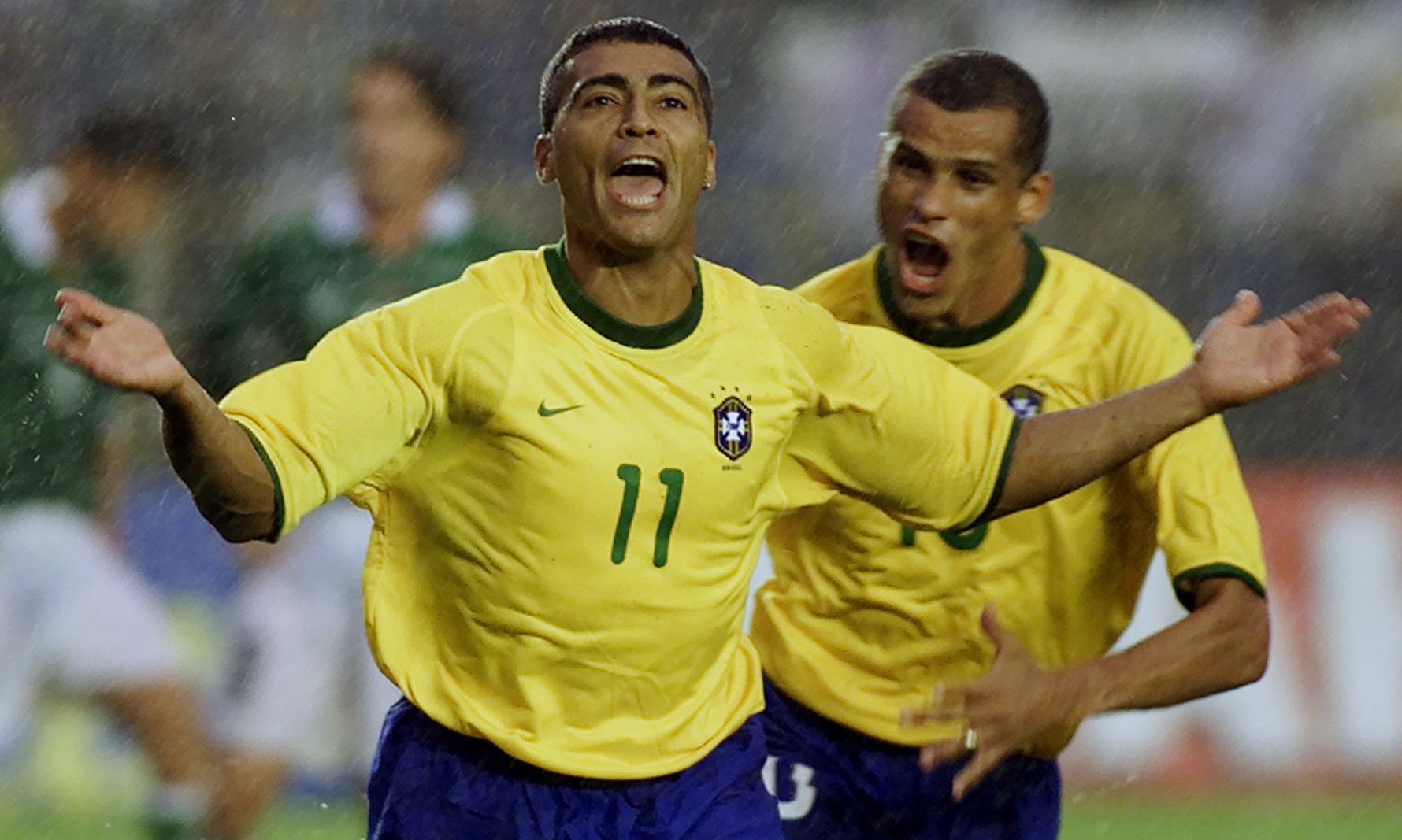
There are t-shirts that weigh because of history… and others that burn because of obligation. Brazil’s is both. The Verdeamarela, the Scratch du Oro, the Canarinha, the Seleção: Call it what you want, but get the gist: Brazil never travels to a World Cup just to participate. Travel to reign.
And today, with the 2026 World Cup in North America on the horizon—in United States, where they won their fourth title in 1994—the South American giant He looks at everyone again with that mixture of pride and urgency that only the five-time champion knows.
In this scenario, with Carlo Ancelotti as strategist and a list Of 26 chosen for the big event, Brazil presents itself with a clear mission: to seek the six-time championship and end a drought that already feels too long for the most winning palate on the football planet.
Because yes, Brazil is the greatest champion, with five World Cups in its showcase, and that fact is not an ornament: it is an identity, a constant pressure, a mirror that demands greatness in each generation.
History rules: the five-time champion wants to return to his throne
Brazil conquered the world in Sweden 1958, repeated in Chile 1962, celebrated again in Mexico 1970, touched glory again in the United States 1994 and completed his legend in Korea-Japan 2002. Five stars on the shield, five pages of gold and a narrative that made the Canarinha synonymous with the World Cup.
But time also bites. They have passed 24 years since the last Olympic World Cup round and, although Brazil never stops being Brazil, in recent editions the team has alternated talent with doubts, and glowed with frustration. The Seleção reaches 2026 with something that is not always seen: an emotional need, a desire for historical revenge, an open wound with several scars.
The eternal constellation: from Pelé to Neymar, the DNA of Brazil
Part of the Brazilian myth is not explained only with titles: it is explained with names. cwith players from different eras who formed an unrepeatable constellation: Edson Arantes do Nascimento (Pelé), Garrincha, Romário, Ronaldo Nazário, Rivaldo, Ronaldinho, Kaká, Cafú, Roberto Carlos and many others who made “jogo bonito” a global religion.
Now, the story is supported by another chapter: Neymar as an emotional flag, although no longer at his physical peak or at his best moment, but in the final stretch of his career, tries to lead Brazil towards the “hexa” with the support of a new generation that brings energy, vertigo and imbalance: Vinícius Jr., Raphinha and a competitive base that mixes hierarchy with hunger.
The question is not whether Brazil has talent – it always has it – but whether this time it will manage to turn talent into solidity, brilliance into structure and history into the future.
It was not a perfect tie, but the weight of the shield never disappears
Brazil does not arrive as the absolute favorite after a classification with ups and downs and stretches in which, at times, it struggled. However, there is one seal that never fades: it is the only team that has played in every edition of the World Cup. It may suffer, it may falter, it may go through criticism… but in the end, Brazil appears. And when it appears, the tournament changes temperature.
Rivals also know that: Verdeamarela is that team that no one wants to meet in a decisive crossroads, because even without dominating the entire way, it can turn on in an instant and turn you into ashes with one play.
The journey in the last World Cups: blows, frustrations and an indelible wound
Germany 2006 (quarterfinals): Brazil advanced with enormous expectations in the group stage, it was in group F together with Croatia, Australia and Japan, where it won the group in the round of 16 and eliminated Ghana, but in the quarterfinals it met France and fell 1-0 with a goal from , thus being eliminated before the decisive rounds. It was a hard blow for a team that came with the label of candidate and current monarch.
South Africa 2010 (quarterfinals): The tournament began with victories against North Korea (2-1) and Ivory Coast (3-1). Then came a 0-0 draw with Portugal and Brazil finished as group leader. In the round of 16 they beat Chile categorically, but in the quarterfinals, the Netherlands eliminated them 2-1, with a double from Sneijder, in another premature goodbye.
Brazil 2014 (semifinals: the great humiliation): It was local, it was favorite, it was national excitement… and it ended in a nightmare. Brazil advanced as the leader in the group stage, eliminated Chile in a dramatic series and beat Colombia in the quarterfinals, but in the semifinals came the match that remained tattooed in memory: 1-7 against Germany. A historic scene, a football earthquake, a wound as big as the country itself.
Russia 2018 (quarterfinals): Brazil surpassed the group stage and eliminated Mexico in the round of 16 with goals from Neymar and Firmino, but in the quarterfinals they met Belgium and lost 1-2. Another attempt that went out on the same step.
Qatar 2022 (quarterfinals): With Neymar as its banner, Brazil once again positioned itself as a candidate. They won the group, beat Korea Republic in the round of 16 and once again spread fear, but in the quarterfinals they clashed with Croatia, tied and ended up eliminated in the penalty shootout. One more chapter of the drought.
Brazil has repeatedly been on the verge of reaching the final stage and, when it has gone further, the blow has been brutal. That combination explains the spirit with which he lands towards 2026: wounded pride and obsession with closing the circle.
The 2026 World Cup: the calendar marks the beginning of the dream
Brazil will debut in Group C on June 13 against Morocco, in New Jersey. They will then face Haiti on June 19, in Philadelphia, and Scotland five days later, in Miami.