
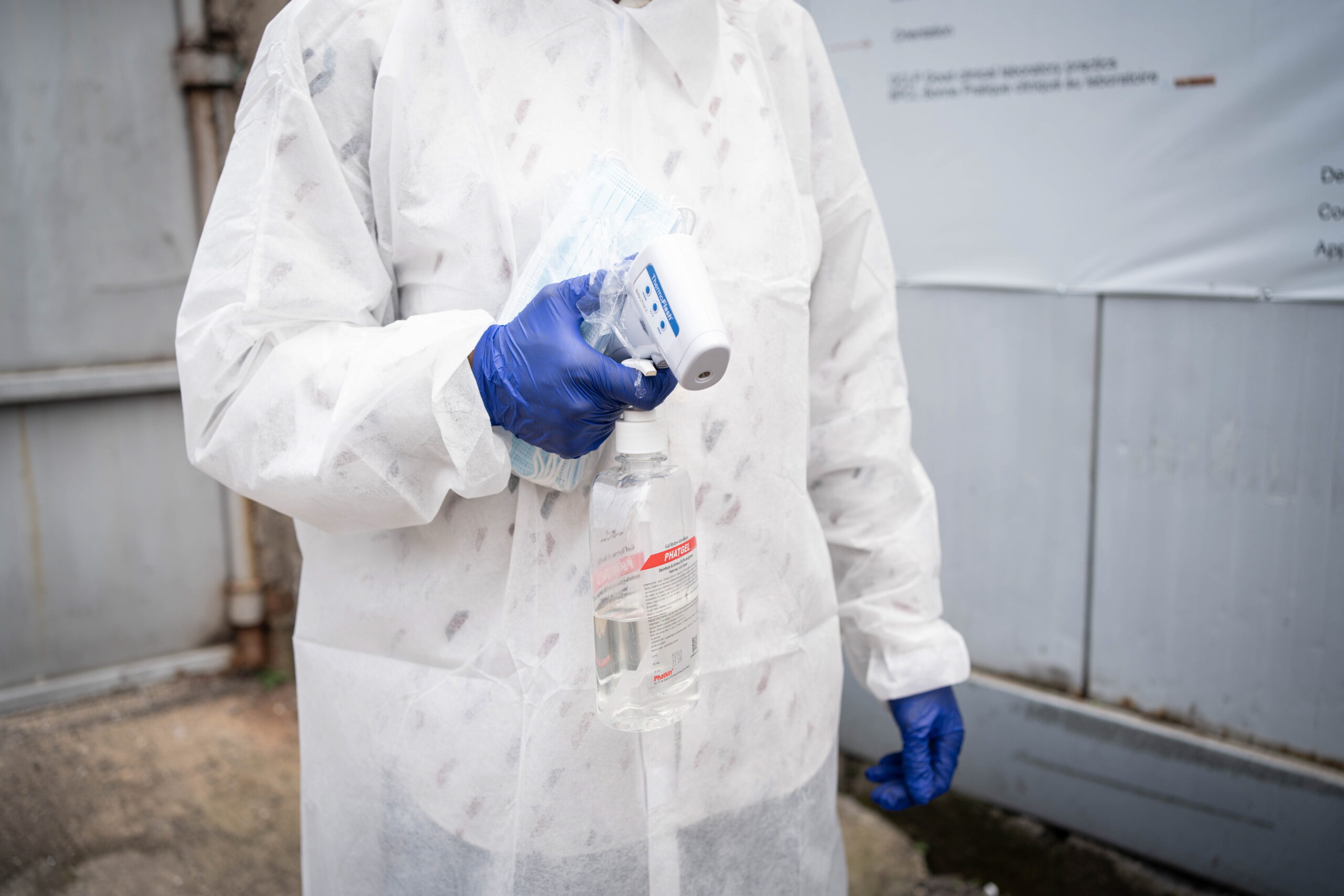
Since last May 5, the World Health Organization (WHO) was alerted about a possible Ebola outbreak in the Democratic Republic of the Congo (DRC) and Uganda.
Ten days later, on May 15, the DRC Ministry of Health officially declared the country’s 17th Ebola outbreak.
Since that date, both infections and deaths from this disease have increased. According to WHO estimates as of May 22, there are about 750 suspected cases and 177 suspicious deaths.
The entity in charge of promoting health and preserving global security declared this disease a Public Health Emergency of International Importance. However, WHO Director-General Tedros Adhanom Ghebreyesus noted that, although the risk remains “high” in the sub-Saharan Africa region, on a global scale it remains at “low levels.”
What is Ebola and what are its symptoms?
Ebola virus disease is a rare but serious infection that affects humans.
According to the World Health Organization (WHO), it is often fatal, although its fatality rate is around 50%.
The pathogens that cause this disease, detected for the first time in 1976, are viruses of the genus Orthoebolavirusfamily Filoviridae.
Although there are licensed vaccines and treatments against Ebola, survival can be improved through intensive symptomatic treatment, focused primarily on rehydration and addressing specific symptoms.
The incubation period of this disease ranges between two and 21 days, during which sudden symptoms such as:
- fever
- fatigue
- general malaise
- muscle pain
- headache and throat pain
Subsequently, symptoms such as:
- vomiting
- diarrhea
- abdominal pain
- skin rashes
- signs of deterioration of kidney and liver functions
Although it is known that this disease can cause bleeding, the WHO emphasizes that it is not a common symptom and that it usually appears in advanced stages of the disease.
These hemorrhages can be internal or external, such as blood in vomit or stool, as well as bleeding from the nose, gums, and vagina.
The disease can also affect the central nervous system and cause:
- confusion
- irritability
- aggressiveness
How is Ebola transmitted?
People can become infected with Ebola directly, through lesions on the skin or mucous membranes, through contact with:
- blood or body fluids of people sick or dead from this disease
- objects or surfaces contaminated with body fluids or secretions, such as blood, feces and vomit, from Ebola patients or people who died from this disease
The World Health Organization (WHO) emphasizes that people do not transmit the virus as long as they do not present symptoms and that they remain infectious as long as there is virus in their blood.
Additionally, fruit bats are believed to be natural hosts of the virus. Orthoebolaviruswhich can be transmitted to the human population through contact with organs, blood, secretions or other body fluids of infected animals.